If a dragon is a physical plane's will given a bloodline, an elemental is the same plane's raw material leaking through without the will attached. Elemental Flame, Elemental Gale, Elemental Ore, and Elemental Tide are not junior dragons, they are what happens when the boundary between the Prime and the Ember, Zephyr, Mineral, or Tidal planes thins enough for the substance itself to walk through. They do not scheme. They do not hoard. They react to the terrain that made them and to whatever is standing in it.
The rest of this chapter is stranger: a Gravity Mote drifting loose from Anchor dragon territory, a Rift Storm Creature born from a botched planar tear, a Stone-Gaze Basilisk whose petrifying stare answers to the Mineral Plane without being made of it. These are elemental-adjacent rather than pure, and they tend to be more dangerous for it, since a pure elemental is at least predictable.
At the table: elementals are terrain that fights back. Use them where the environment already suggests one, a mine that has gone too quiet, a coastline where the tide never fully recedes, and let the fight be inseparable from the location.
Ash Salamander
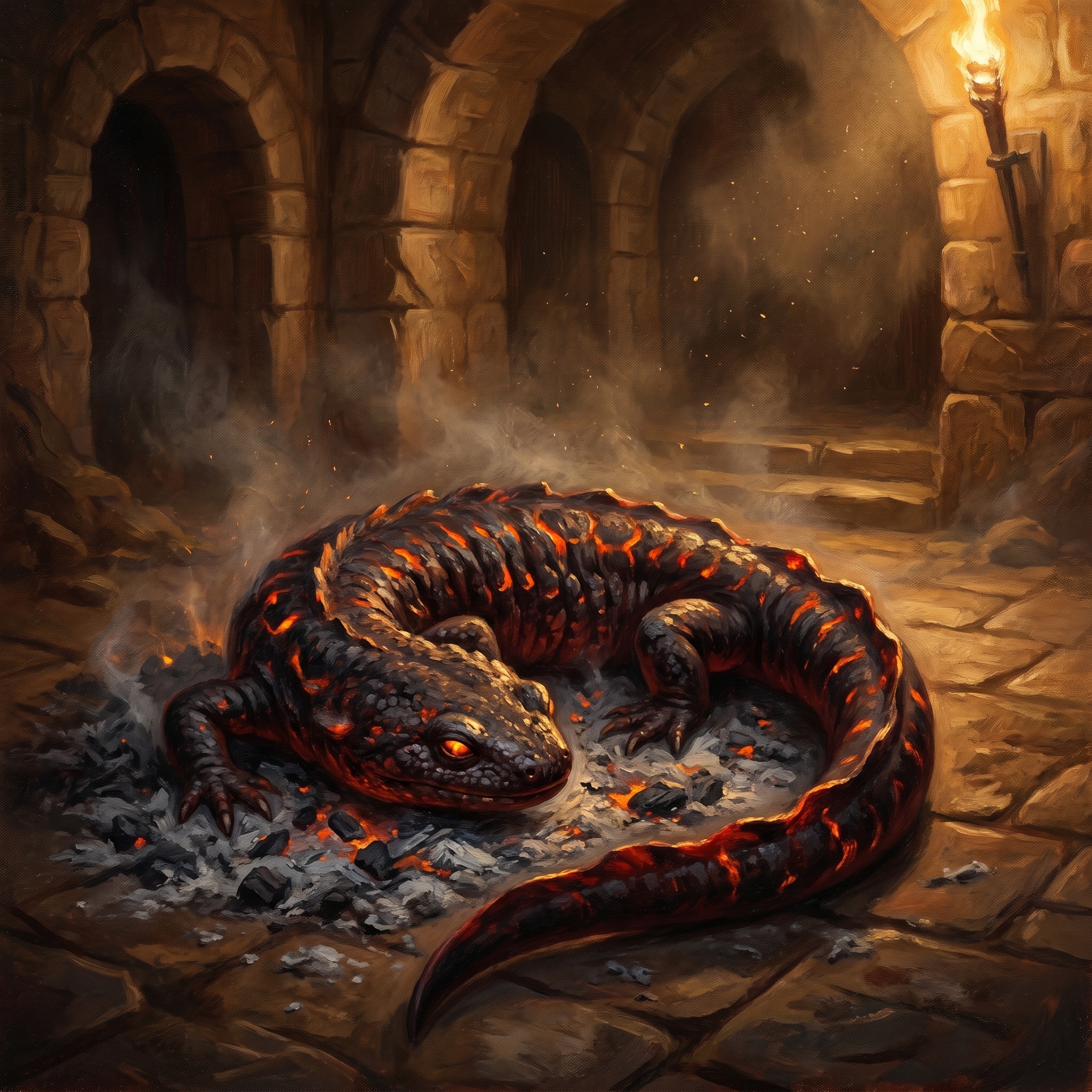
Role: Minion Fire Creature Where It Appears: Ember Dragon ranges, volcanic vents, burned ruins.
Ash salamanders are small fire-adapted reptiles that nest in warm ash and ignite dry debris when threatened.
Ash Salamander (Minion)
- Group Size: 3-10.
- Skills: Reflexes 3, Stealth 3 in ash, Unarmed 2.
- Attacks: Ember Bite (Unarmed; Damage 4; Crit 5; Burn 1).
- Abilities: Ash Nest — In ash or embers, recover 1 Wound per round.
- Soul: No claimable coin exists, an ash salamander is a fire-adapted animal rather than an elemental; at death canon does not specify (default).
- Tactics: Bite, scatter, start small fires.
- Harvesting and Trade: Ember glands sell for 100-300 gold Flargons.
Elemental Flame
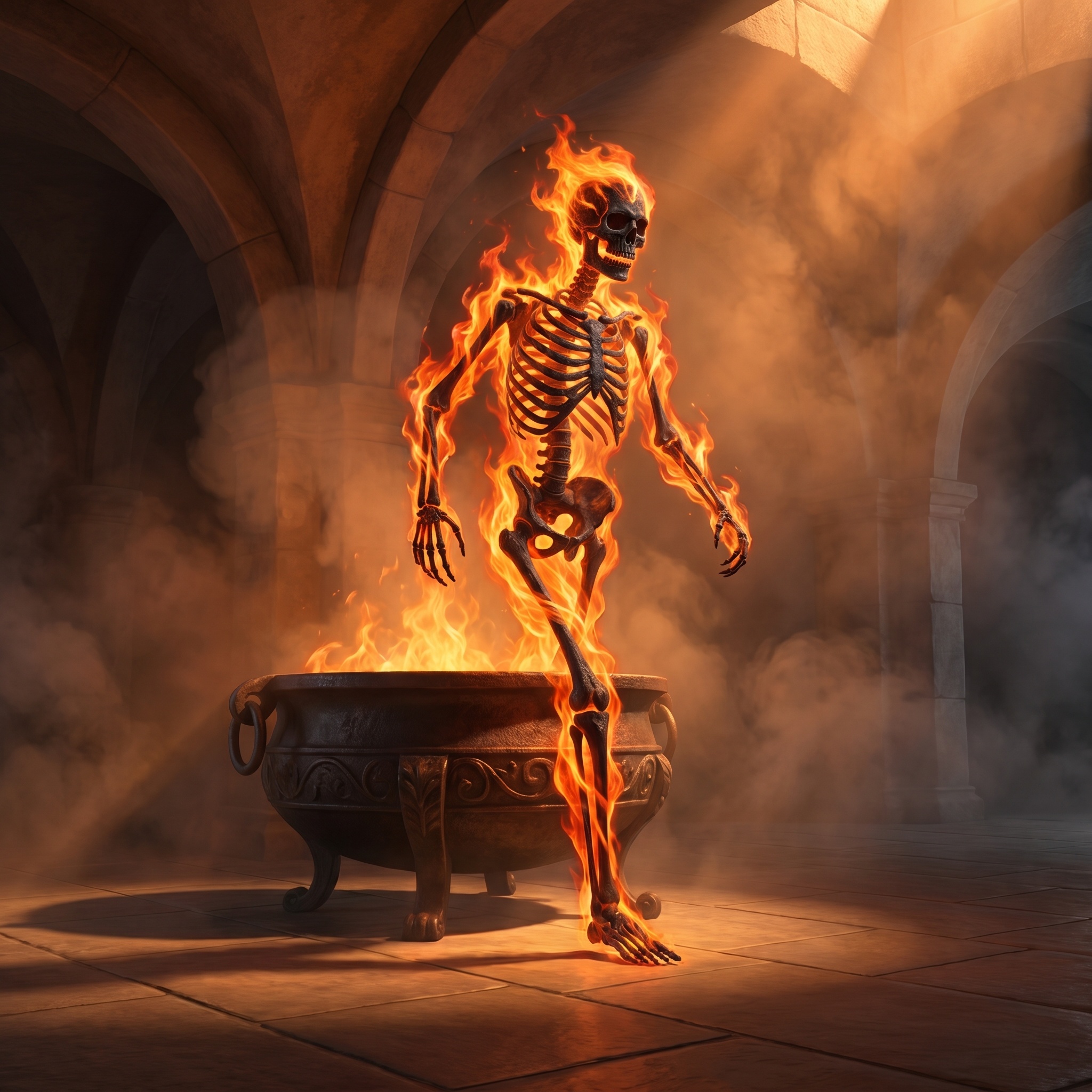
Role: Elite Elemental Bruiser Where It Appears: Ember rifts, volcano shrines, failed fire workings.
What It Is
Elemental flames are hungry motion. They burn what is available and resent confinement. They are not malicious in a human way; they express fire's nature with enough intention to choose fuel, route, and release.
An elemental flame is most interesting when the surroundings matter. Wood, oil, curtains, dry brush, scrolls, and panicked movement are all part of its body once the fight begins.
Ecology and Behavior
Elemental flames appear at ember rifts, volcano shrines, failed fire workings, forge accidents, and braziers used as planar doors. They seek air, fuel, and motion. Bound flames become erratic and vindictive, flaring at weak wards and whispering in heat shimmer.
They do not keep lairs, but they transform places into burn patterns that reveal what they wanted to reach: exits, offerings, stored oil, or the person who bound them.
Signs and Knowledge
Natural Philosophy, Survival, or Planar Lore (Average) identifies unnatural burn behavior. Craft (Hard) recognizes a failed containment vessel.
Other signs include flames leaning without wind, ash falling upward, heat around cold fuel, and scorch marks shaped like escape attempts.
Elemental Flame (Elite)
- Skills: Unarmed 4, Reflexes 4, Fortitude 4, Perception 3.
- Attacks: Burning Touch (Unarmed; Damage 8; Crit 4; Burn 3).
- Abilities: Living Fire — Immune to mundane fire; water, sand, or vacuum effects add 1 Boon against it.
- Soul: Not a soul in the mortal sense, only a plane's raw material without the will attached; at death it disperses, and canon does not specify a destination.
Tactics
An elemental flame ignites cover, moves through gaps, and punishes clustered targets. It tries to turn the battlefield into more of itself. If contained with sand, water, vacuum, or proper wards, it becomes less mobile and more desperate.
Use spreading fire as a clock. The party should have reasons to move, smother, cut fuel, or risk letting something valuable burn.
Harvesting and Trade
| Component | Value | Use | Harvest |
|---|---|---|---|
| Ember heart | 700-1,600 gold Flargons | Fire workings, forge magic, heat wards | Craft (Hard), heat-proof vessel required |
| Living ash | 200-800 gold Flargons | Ignition ink, elemental tracing | Natural Philosophy (Average) |
| Failed binding slag | Varies | Identifies summoner or ritual flaw | Craft or Planar Lore (Average) |
Variants
- Forge Flame: Drawn to metal and bellows rather than wood.
- Wildfire Shape: Faster in dry wilderness and harder to contain.
- Temple Brazier Flame: Bound to offerings and offended by profane fuel.
Elemental Gale
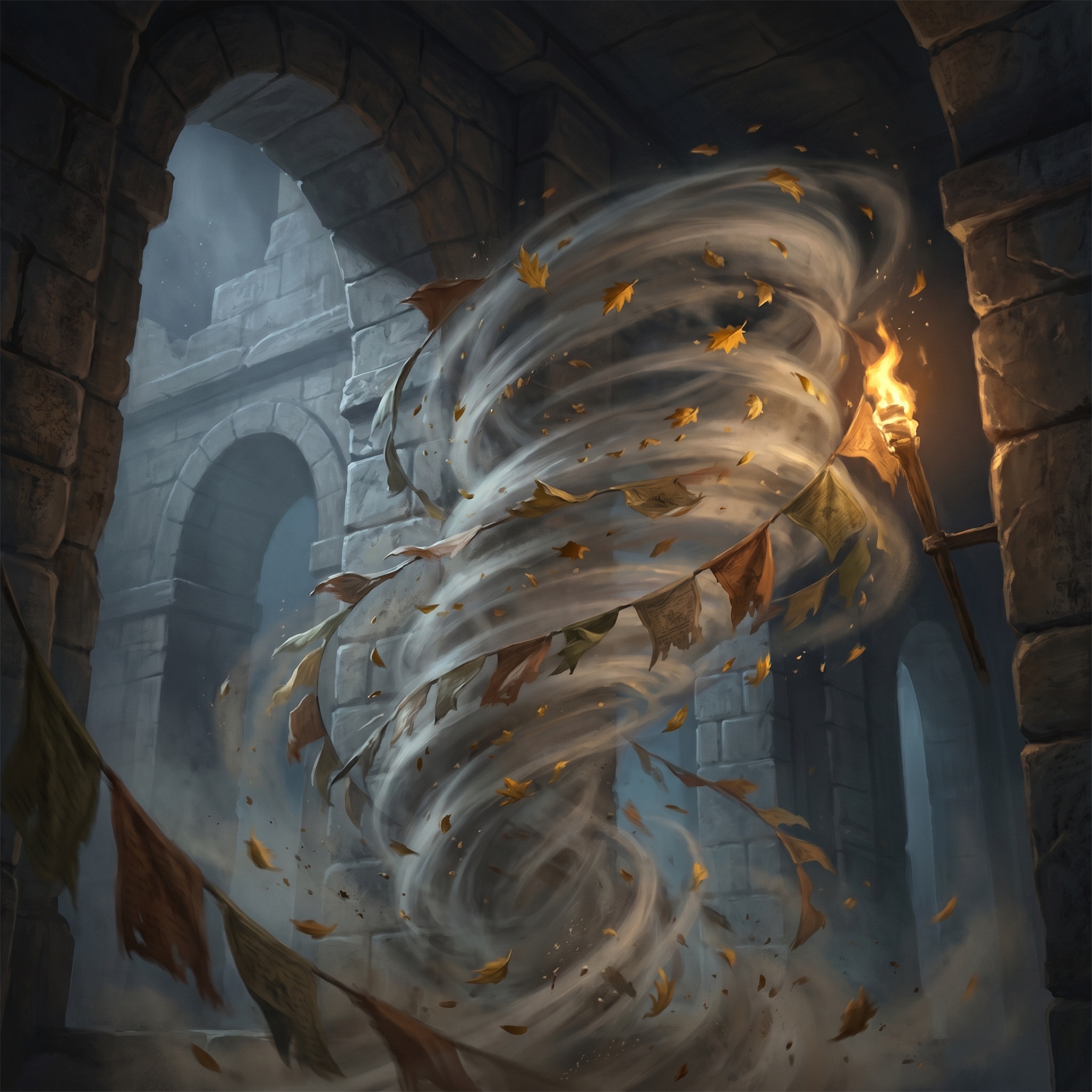
Role: Elite Harrier Where It Appears: Zephyr rifts, mountain passes, storm altars.
What It Is
Elemental gales are pressure with intention. They do not strike so much as remove balance. Dust, leaves, flags, hair, and torn paper draw the outline of a body that otherwise refuses to stay visible.
They are harriers by nature. They scatter formations, steal breath, extinguish small flames, and turn edges into threats.
Ecology and Behavior
Elemental gales appear at zephyr rifts, mountain passes, storm altars, broken weather workings, and towers built too proudly into the wind. They seek pressure differences, open routes, and things that can be moved. Bound gales hate still rooms.
They leave signs in absence: dustless circles, doors that slam inward and outward, ropes frayed by vibration, and prayer flags torn only on one side.
Signs and Knowledge
Survival, Planar Lore, or Natural Philosophy (Average) identifies wind with no weather source. Perception (Hard) tracks its position through carried debris.
Other signs include voices blown sideways, candles flattening instead of flickering, loose objects orbiting a gap, and sudden silence before impact.
Elemental Gale (Elite)
- Skills: Reflexes 5, Athletics 4, Perception 4, Unarmed 3.
- Attacks: Cutting Gust (Unarmed; Damage 7; Crit 4; Range Short); Slam Wind (Unarmed; Damage 6; Crit 5; Knockdown on 2 Boons).
- Abilities: Hard to Pin — Grab, net, and physical restraint checks add 2 Banes unless using magic or vacuum.
- Soul: Not a soul in the mortal sense, only a plane's raw material without the will attached; at death it disperses, and canon does not specify a destination.
Tactics
An elemental gale scatters formation, knocks targets from heights, and extinguishes small flames. It favors cliffs, bridges, rooftops, ropeways, and rooms full of fragile evidence. It avoids sealed spaces unless forced.
The party can counter it with anchors, enclosed rooms, heavy nets prepared with magic, vacuum jars, or dust that reveals its flow.
Harvesting and Trade
| Component | Value | Use | Harvest |
|---|---|---|---|
| Bottled gale | 500-1,200 gold Flargons | Bellows magic, flight charms, wind instruments | Prepared vessel and Craft (Hard) |
| Pressure knot | 700-1,800 gold Flargons | Weather rites, trap triggers | Natural Philosophy or Planar Lore (Hard) |
| Debris map | Varies | Reveals path, rift source, or summoner | Survival (Average) |
Variants
- Cliff Gale: Specializes in throwing travelers from narrow paths.
- Tower Gale: Haunts high windows and stairwells.
- Storm-Choir Gale: Carries voices and commands inside thunder.
Elemental Ore
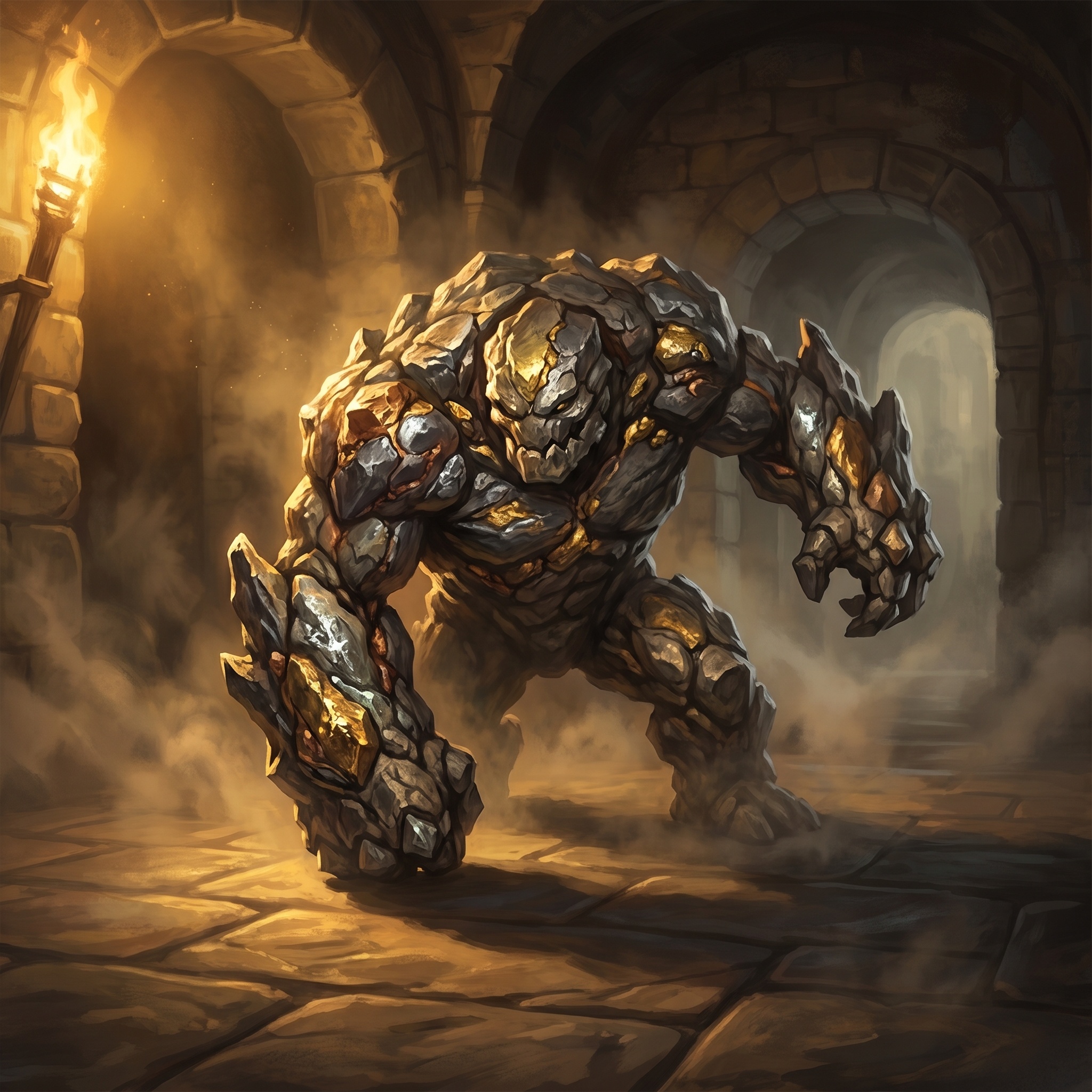
Role: Elite Bruiser Where It Appears: Mineral rifts, mines, deep vaults, collapsed forges.
What It Is
Elemental ore is slow, stubborn, and nearly impossible to convince that a tunnel belongs to anyone else. Its body is stone and metal under pressure, sometimes veined with iron, copper, gold, or stranger minerals from deep planar seams.
It is a bruiser and a barricade. The fight often begins because someone wants to pass, mine, extract, or claim what the ore elemental already considers part of itself.
Ecology and Behavior
Elemental ore appears at mineral rifts, mines, deep vaults, collapsed forges, and dragon territories where earth and metal laws run thick. It moves slowly, but it reshapes the tactical problem by blocking passages, crushing tools, and dragging metal toward itself.
It does not value coin as coin. Worked metal may feel like stolen body. Mining may feel like injury. Offerings of raw ore, pressure release, or restored supports may calm some specimens.
Signs and Knowledge
Mining, Craft, or Planar Lore (Average) identifies ore that has shifted without tools. Perception (Hard) notices metal gear tugging before the elemental emerges.
Other signs include pick heads twisted sideways, veins that rejoin after being cut, boot nails pulled toward one wall, and mine carts stopping on level track.
Elemental Ore (Elite)
- Skills: Heavy Melee 4, Athletics 5, Fortitude 5, Perception 2.
- Attacks: Ore Fist (Heavy Melee; Damage 10; Crit 4; Pierce 2).
- Abilities: Metal Body — Non-siege mundane weapons reduce damage by 2 before Resistance.
- Abilities: Magnet Drag — Metal-armored targets at Engaged range add 1 Bane to disengage.
- Soul: Not a soul in the mortal sense, only a plane's raw material without the will attached; at death it disperses, and canon does not specify a destination.
Tactics
An elemental ore blocks passage, crushes tools, and ignores weak strikes. It anchors near narrow routes and uses Magnet Drag to punish metal-armored enemies who try to dance around it. It targets picks, braces, and weapons as readily as flesh.
The encounter should reward environmental thinking: wooden tools, wedges, loosened supports, mining knowledge, bargaining with raw ore, or luring it away from metal-rich ground.
Harvesting and Trade
| Component | Value | Use | Harvest |
|---|---|---|---|
| Pure ore heart | 1,000-2,500 gold Flargons | Elemental forging, armor, earth rites | Craft (Hard) and heavy tools |
| Magnet-vein shard | 500-1,600 gold Flargons | Locks, compasses, traps | Mining or Natural Philosophy (Average) |
| Living slag | 300-1,200 gold Flargons | Forge catalysts, repair magic | Craft (Average) |
Variants
- Ironroot Ore: Strong magnetic pull and stubborn tunnel control.
- Gold-Veined Ore: Draws greed and prospectors as much as weapons.
- Forge-Bound Ore: Protects a specific anvil, furnace, or masterwork.
Elemental Tide
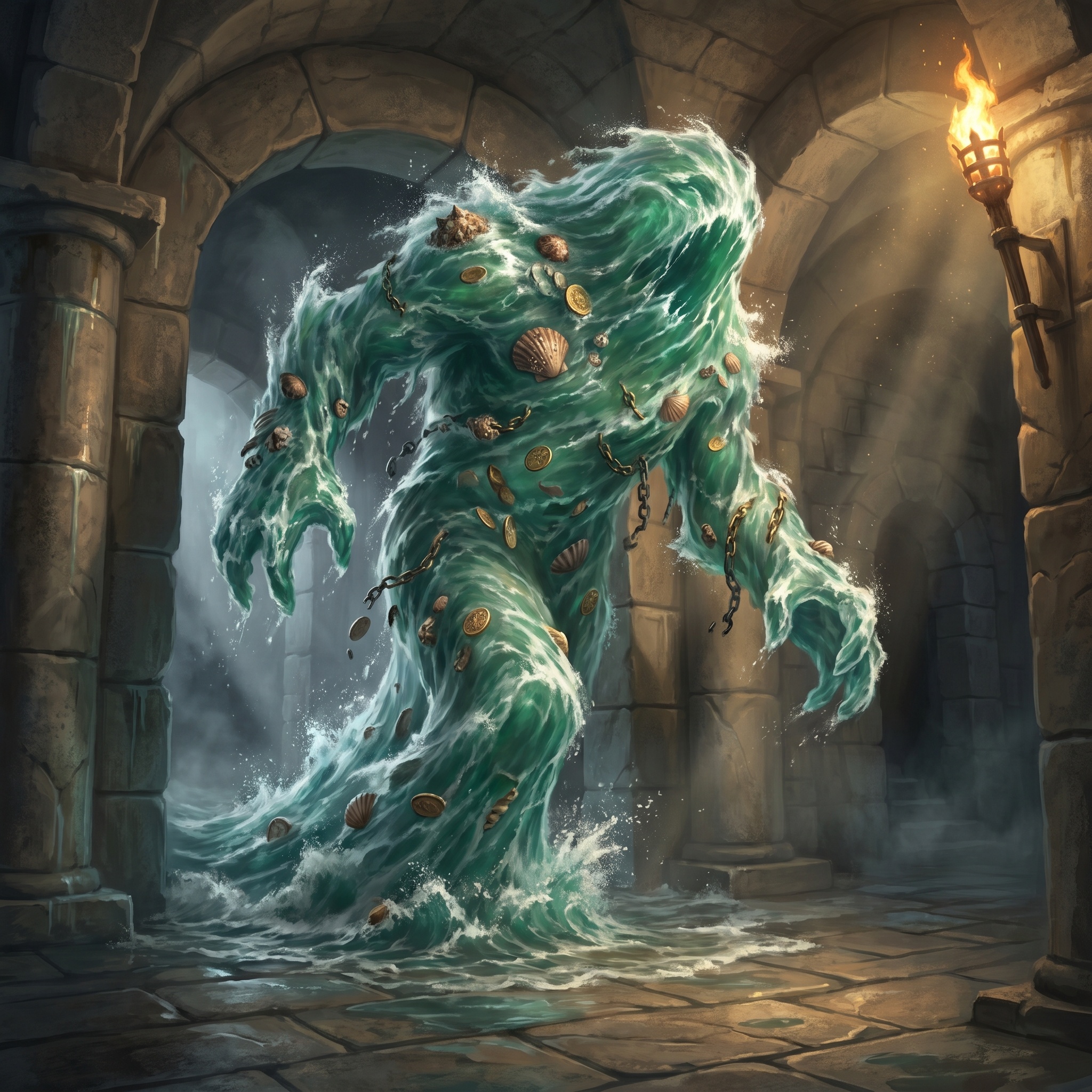
Role: Elite Controller Where It Appears: Tidal rifts, flooded temples, storm-summoning sites.
What It Is
Elemental tides do not think like animals. They equalize pressure, fill hollows, and drown air pockets. Their bodies are walking currents full of shells, drowned coins, silt, and whatever the water has claimed.
They are controllers because they make terrain fluid. A safe floor becomes a channel, a stair becomes a spillway, and a corridor becomes a throat.
Ecology and Behavior
Elemental tides appear at tidal rifts, flooded temples, storm-summoning sites, broken aqueducts, and sacred springs forced into service. They seek low places, hollows, fire, and trapped air. Bound tides may obsess over filling the exact space their summoners denied them.
They leave watermarks, salt lines, drowned candles, and objects sorted by buoyancy rather than value.
Signs and Knowledge
Natural Philosophy, Planar Lore, or Survival (Average) identifies water flowing against grade. Perception (Hard) notices pressure building before it enters a room.
Other signs include wet footprints with no feet, coins gathered in drains, water sounds behind dry walls, and flames guttering before the tide appears.
Elemental Tide (Elite)
- Skills: Unarmed 4, Athletics 4, Fortitude 4, Perception 3.
- Attacks: Crushing Wave (Unarmed; Damage 8; Crit 4; Knockdown on 2 Boons).
- Abilities: Flood Space — As an Action, fill a small zone with knee-to-chest-deep water, adding 1 Bane to movement checks.
- Abilities: Water Body — Piercing weapons add 1 Bane unless magical or hooked.
- Soul: Not a soul in the mortal sense, only a plane's raw material without the will attached; at death it disperses, and canon does not specify a destination.
Tactics
An elemental tide floods, knocks down, smothers flames, and pushes targets toward depths. It fights best where footing can fail: stairs, bridges, pits, flooded sanctuaries, and narrow halls. It retreats through drains or cracks if badly hurt.
Give players tools: opened sluices, sandbags, salt, pumps, cold, hooks, or higher ground. The tide should be manageable once the group treats it as water with intent.
Harvesting and Trade
| Component | Value | Use | Harvest |
|---|---|---|---|
| Pearl-like tide core | 600-1,400 gold Flargons | Water wards, storm rites, vessel charms | Stabilize in saltwater with Natural Philosophy (Hard) |
| Current glass | 200-900 gold Flargons | Scrying bowls, pressure gauges | Craft (Average) |
| Drowned coin swirl | Varies | Identifies origin or victims | Lore or Streetwise (Average) |
Variants
- Brine Tide: Salt-heavy and corrosive to gear.
- River Shrine Tide: Bound to a spring, bridge, or local offering custom.
- Storm Tide: Arrives with thunder pressure and retreats into rain.
Gravity Mote
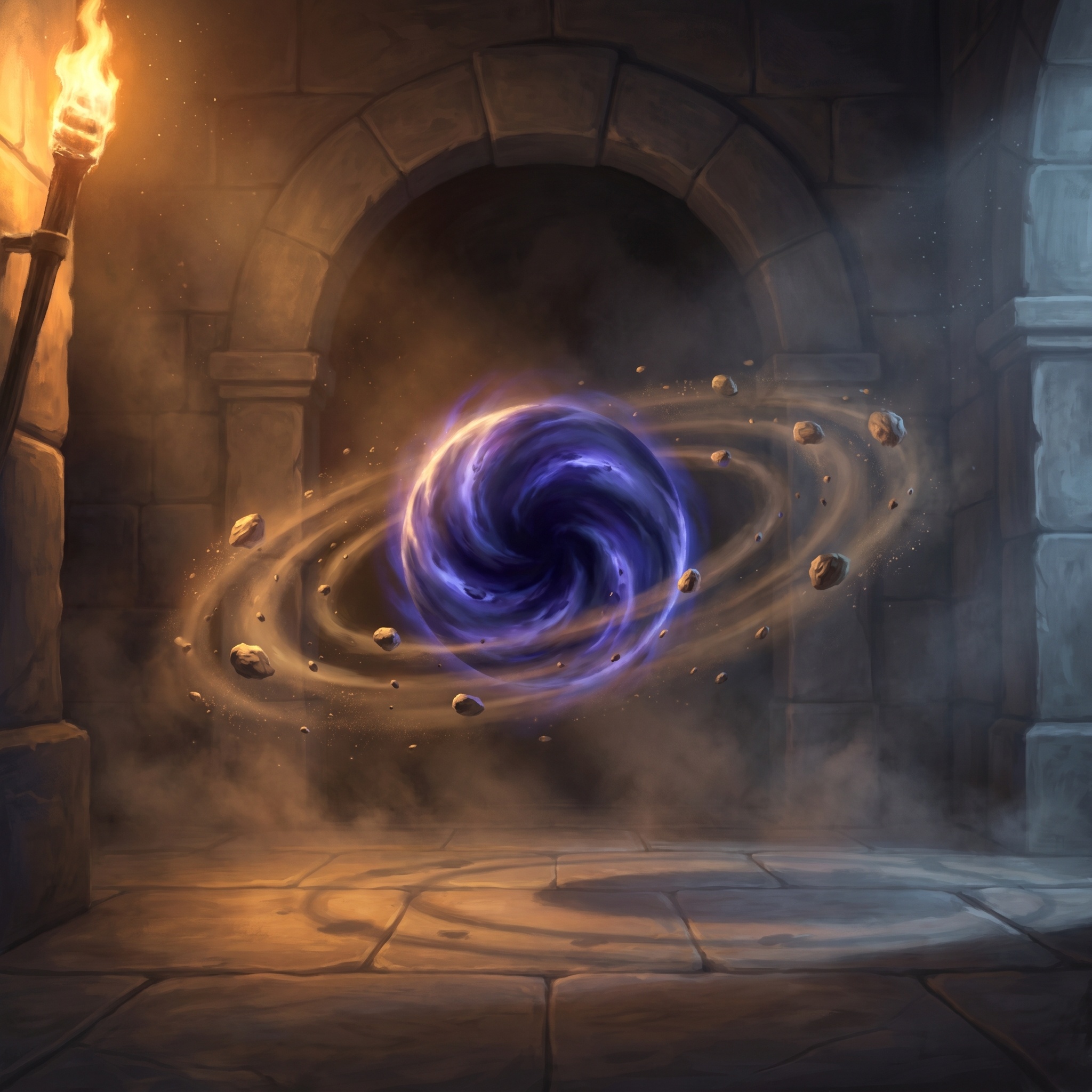
Role: Minion Planar Hazard Where It Appears: Gravity rifts, Anchor Dragon territories, failed experiments.
Gravity motes are small planar anomalies with reflexive behavior. They drift toward mass and make footing treacherous.
Gravity Mote (Minion)
- Group Size: 2-8.
- Skills: Reflexes 3, Perception 2.
- Attacks: Gravity Jolt (Willpower; Damage 4 Strain; Range Short).
- Abilities: Weight Stutter — Creatures at Engaged range add 1 Bane to Athletics and Reflexes.
- Soul: Not a soul in the mortal sense, only a plane's raw material without the will attached; at death it disperses, and canon does not specify a destination.
- Tactics: Drift into heavy armor, cluster near falling objects.
- Harvesting and Trade: Stabilized motes sell for 400-1,000 gold Flargons to gravity instrument makers.
Rift Storm Creature

Role: Elite Planar Harrier Where It Appears: Active rift storms, failed transit sites, planar weather fronts.
What It Is
Rift storm creatures exist briefly, violently, and with no stable ecology. They are weather given teeth for a few hours. A jagged animal silhouette of stormlight, pressure, and torn space appears, attacks, flickers, and may collapse before anyone can prove what it was.
They are not species so much as symptoms. If one appears, the rift storm is the real problem.
Ecology and Behavior
Rift storm creatures appear in active rift storms, failed transit sites, planar weather fronts, and places where a crossing is shredding local physics. They have no dens, young, or long-term goals. They strike at stabilization efforts because those efforts disturb the storm pattern holding them together.
When the storm ends, the creature usually ends with it. Rare survivors become stranger and more dangerous.
Signs and Knowledge
Rifts or Survival (Average) identifies the storm pattern before manifestation. Planar Lore (Hard) predicts where a creature will flicker next.
Other signs include lightning without thunder, footprints that appear before impact, hair rising toward a closed doorway, and wounds shaped like weather maps.
Rift Storm Creature (Elite)
- Skills: Reflexes 5, Athletics 4, Perception 4, Unarmed 4, Rifts 3.
- Attacks: Storm Bite (Unarmed; Damage 8; Crit 4; Stun 2); Rift Arc (Heavy Ranged; Damage 7; Crit 4; Range Short).
- Abilities: Unstable Position — Once per round, after being targeted, move one range band on a successful Average Rifts check.
- Soul: Not a soul in the mortal sense, only a plane's raw material without the will attached; at death it disperses, and canon does not specify a destination.
Tactics
A rift storm creature strikes, flickers, and attacks anyone trying to close the rift. It does not hold territory except the active storm front. It is hard to pin because its position is partly weather and partly error.
Treat the storm as terrain and timer. Closing, riding out, or redirecting the rift matters more than defeating one manifestation.
Harvesting and Trade
| Component | Value | Use | Harvest |
|---|---|---|---|
| Charged glass | 200-800 gold Flargons | Rift instruments, storm charms | Collect immediately with Rifts (Average) |
| Storm map burn | Varies | Predicts rift path | Survival or Planar Lore (Hard) |
| Flicker residue | 500-1,800 gold Flargons | Teleportation research | Secret Lore (Hard), unstable |
Variants
- Transit Bite: Forms around botched teleportation.
- Weather-Front Hunter: Moves with a visible planar storm.
- Closing-Spasm Creature: Appears when the rift is nearly sealed.
Rock Lurker
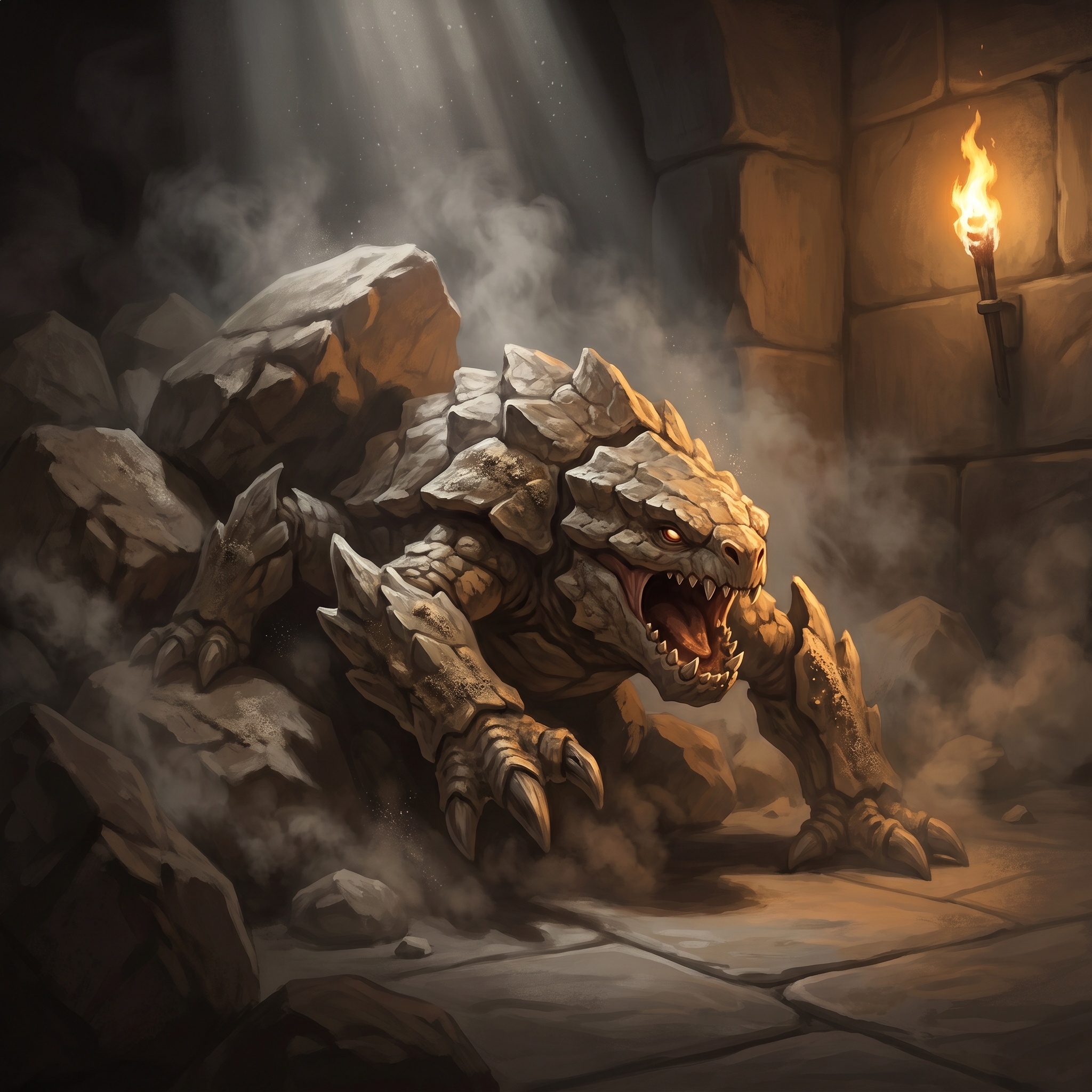
Role: Elite Lurker Where It Appears: Rocky hills, badlands, mountain roads, quarry edges. Source: Dort Monsters - Rock Lurker.
A Rock Lurker is a boulder with hunger and patience. It does not wear camouflage; its body is mineral-hard and stone-colored enough that the distinction between creature and outcrop is functionally meaningless until the mouth opens.
What It Is
Rock Lurkers are elemental predators shaped like hunched boulders with short powerful limbs and flat crushing heads. While still, they show no breath, eyeshine, or muscle tremor. Many victims sit beside one for lunch or sleep with one at the edge of camp before it moves.
They are not clever in a conversational sense, but they are expert ambush predators. They understand stillness, vibration, and the moment when prey has stopped paying attention.
Ecology and Behavior
Rock Lurkers live wherever exposed stone and foot traffic overlap: mountain passes, canyon trails, quarry edges, cavern mouths, and rocky badlands. They may hold one position for days. When prey settles, the lurker strikes with startling speed, takes one target, and retreats into stone or boulder cover.
Dwarven and mining communities treat Rock Lurker awareness as basic survival. The knock-and-listen test is not perfect, but striking or listening to suspect stone before resting has saved enough lives to become tradition.
Signs and Knowledge
Field signs: boulders that were not on old maps, missing miners near rest points, stone dust with no tool marks, crushed bones behind cover, animals refusing to bed near a particular rock.
Survival or Adventuring Lore (Average): identifies terrain where Rock Lurkers prefer to wait.
Craft or Natural Philosophy (Hard): notices mineral texture, balance, or echo differences in a false boulder.
Perception after warning (Average): can identify the creature if the party knows exactly which rock to test.
Rock Lurker (Elite)
- Skills: Stealth 4 in stone, Perception 4, Unarmed 3, Fortitude 4.
- Attacks: Stone Bite (Unarmed; Damage 9; Crit 3; Pierce 2); Body Slam (Unarmed; Damage 7; Crit 4; Knockdown on 2 Boons).
- Abilities: Looks Like Stone — While motionless in rocky terrain, add 2 Banes to checks to spot it. This drops to 1 Bane after the first attack.
- Abilities: Patient Hunter — If it attacks a target that failed to detect it, the attack adds 1 Boon and +2 damage.
- Soul: Not a soul in the mortal sense, only a plane's raw material without the will attached; at death it disperses, and canon does not specify a destination.
Tactics: The Rock Lurker holds still, bites the last creature in line or the one setting camp, drags prey behind cover, then freezes again if the party scatters. If exposed, it uses Body Slam to knock a path clear and reaches stone it can blend against.
Encounter Use: Rock Lurkers are good punishment for rushing through a pass without scouting, but they should not be arbitrary. Give warning through local advice, animal behavior, suspicious terrain, or the eerie absence of loose stones around a perfect "boulder."
Harvesting and Trade
Rock Lurkers are useful to quarry workers and alchemists, but common enough in some mountain regions that their parts are not exotic unless the specimen is old.
| Harvest | Buyer | Check | Typical Value | Use | Complication |
|---|---|---|---|---|---|
| Mineral Hide Slab | Mason, armorer, quarry guild | Average Craft or Survival | 300-900 gold Flargons | Tool facing, shield weights, camouflage panels | Hard to distinguish from worthless stone if cut poorly |
| Tremor Node | Miner, trapmaker, natural philosopher | Hard Medicine or Natural Philosophy | 800-2,000 gold Flargons | Vibration alarms, mine safety charms | Stops functioning if allowed to dry |
| Stone Teeth | Collector, grinder, jeweler | Average Survival | 150-500 gold Flargons | Grinding tools, trophies | Teeth fracture under metal tools |
Variants
Elder Rock Lurker: Elite, RES 6, WND 20, too large to move quietly but strong enough to block a road.
Cavern Lurker: Elite, gains Stealth 5 underground and can cling to cavern ceilings, but loses Ranged Defense in open sunlight.
Sand Elemental
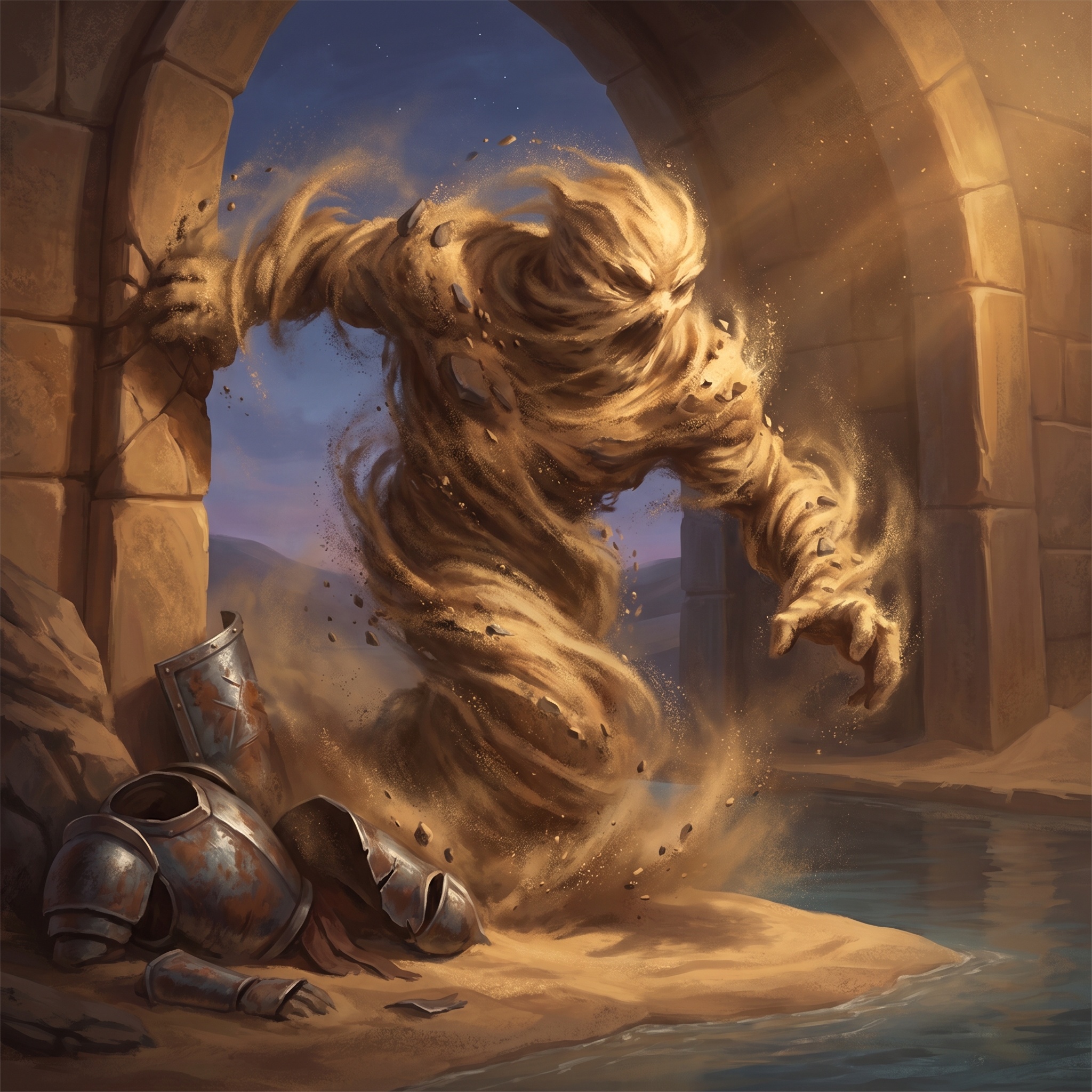
Role: Elite Controller Where It Appears: Desert magical discharge sites, ruined circles, dry rifts, failed rituals. Source: Dort Monsters - Sand Elemental.
A Sand Elemental is desert hunger given a moving shape. It manifests as a dense man-shaped column or a swirling grit body, then collapses into formless sand when motion serves it better.
What It Is
Sand Elementals arise where desert wind, heat, and magical discharge meet. Some form near failed rituals, some near old rifts, and some in storm corridors where the desert has been angry long enough to learn a shape. They are not ordinary elementals summoned to service; most are wild, territorial, and hostile to moisture.
Their most dangerous quality is contact. Sand gets into eyes, armor joints, wounds, lungs, and spell components. A strike is not only impact; it is abrasion and intrusion.
Ecology and Behavior
Sand Elementals haunt open dunes, dry wells, canyon badlands, and ruined circles half-buried by wind. They move under the surface, rise at close range, blind a group, grind an isolated target, and collapse away before the formation can answer.
They are drawn toward exposed water sources and water magic, not because they drink, but because moisture disrupts and enrages them. Travelers who pour water onto sand to test for an elemental may get an answer they did not want.
Signs and Knowledge
Field signs: standing dust columns with no wind, sand moving against the breeze, polished bones, dry wells filled with fresh grit, glassy residue near failed magic sites.
Survival or Adventuring Lore (Average): identifies sandstorm corridors and unsafe dry basins.
Planar Lore or Natural Philosophy (Hard): identifies elemental manifestation and knows water disrupts the body briefly.
Secret Lore (Hard): distinguishes a wild Sand Elemental from a bound or summoned one by the pattern of grit around the core.
Sand Elemental (Elite)
- Skills: Unarmed 4, Athletics 4, Reflexes 4, Fortitude 4, Perception 3.
- Attacks: Grinding Slam (Unarmed; Damage 9; Crit 4; Pierce 2); Sandblast (Heavy Ranged; Damage 7; Crit 4; Range Short; Blast 3).
- Abilities: Body of Grit — Nonmagical arrows, bolts, and thrown weapons add 1 Bane and reduce damage by 3 before Resistance.
- Abilities: Blinding Spiral — As an Action, create a sand cloud at Short range until the end of the next round. Creatures inside add 1 Bane to sight-based checks and ranged attacks.
- Abilities: Water Shock — A large quantity of water or similar binding liquid reduces the elemental's Agility by 2 and Melee/Ranged Defense by 1 until the end of its next turn.
- Soul: Not a soul in the mortal sense, only a plane's raw material without the will attached; at death it disperses, and canon does not specify a destination.
Tactics: The elemental starts with Blinding Spiral, then grinds isolated targets. It moves toward exposed water sources or casters shaping water. If shocked by water, it withdraws through loose sand and attacks again from another angle.
Encounter Use: Use it where the environment can shift: dunes, ruins, dry wells, wind channels, and half-buried ritual sites. Make visibility, water ration choices, and footing matter.
Harvesting and Trade
Most of a Sand Elemental collapses into ordinary grit. Valuable remains are rare and usually tied to the core that held the manifestation together.
| Harvest | Buyer | Check | Typical Value | Use | Complication |
|---|---|---|---|---|---|
| Elemental Core-Grit | Alchemist, planar scholar, glasswright | Hard Planar Lore or Natural Philosophy | 1,200-3,500 gold Flargons | Drying reagents, abrasive wards, desert glass | Loses value if mixed with ordinary sand |
| Storm Glass Flecks | Jeweler, ritualist, navigator | Average Survival | 400-1,200 gold Flargons | Wind charms, desert compasses, jewelry | Hard to collect during active wind |
| Binding Dust | Wardwright, summoner, trapmaker | Hard Secret Lore | 1,500-4,000 gold Flargons | Elemental circles, sand traps | May animate briefly near strong magic |
Variants
Greater Sand Elemental: Nemesis, WND 32, STR 16, gains Peril and a Long-range sandstorm aura.
Bound Sand Elemental: Elite, gains Leadership or Secret Lore 3 for following a summoner's orders, but Water Shock lasts one additional round.
Stone-Gaze Basilisk
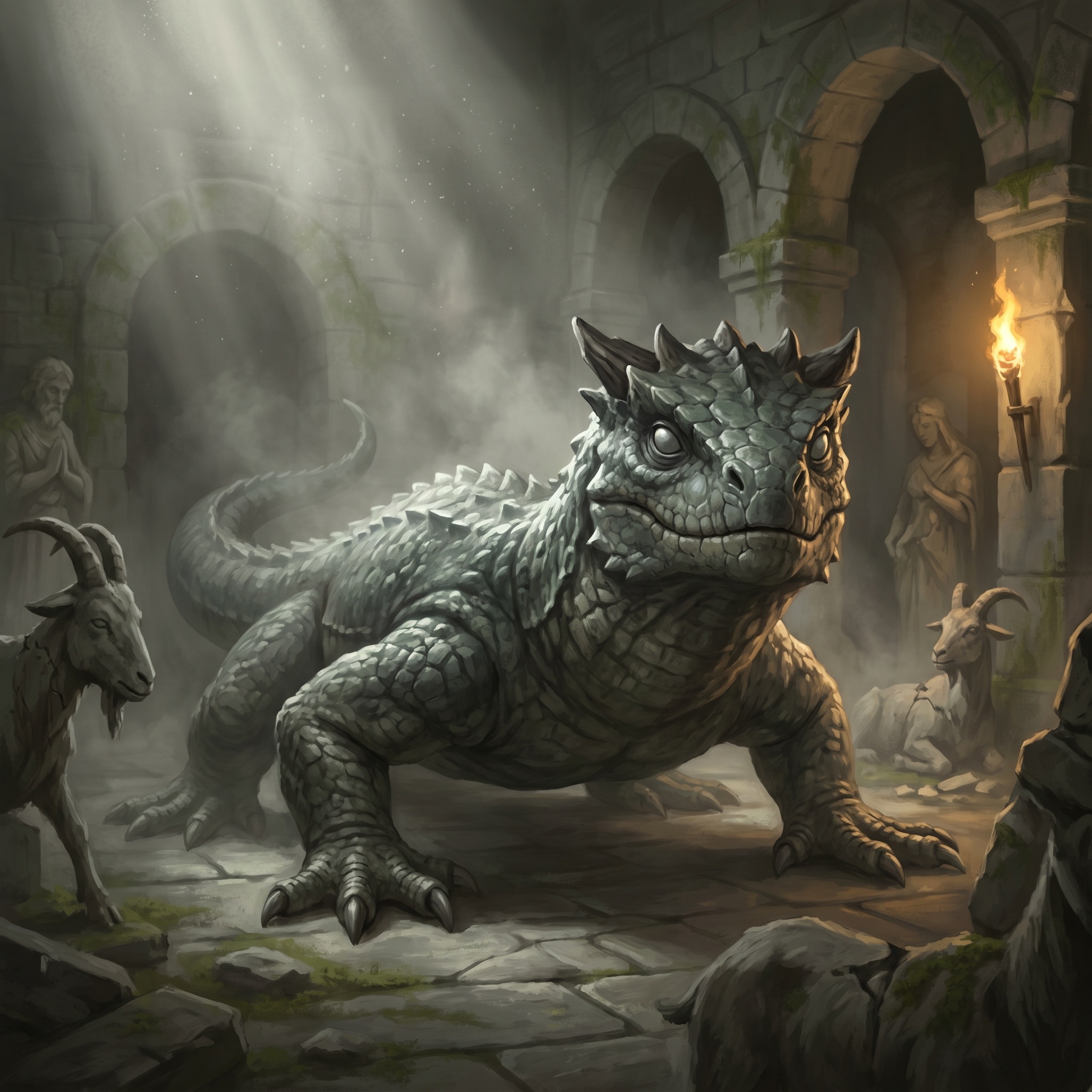
Role: Elite Controller / Ambusher Where It Appears: Warm ruins, dry scrubland, old quarries, abandoned goat paths, collapsed temple courtyards, and cave mouths with sunning stones. Source: New Ix creature, public-domain fantasy basilisk concept rebuilt for Exodus NDS.
The Stone-Gaze Basilisk is not a dragon, not a lizard, and not a curse in animal form, though it has been called all three. It is a territorial reptilian predator whose gaze causes living tissue to mineralize in stages. The effect is not instant death. That misunderstanding kills people. A victim who feels their fingers stiffen and decides they still have one more clean shot has already spent the moment they needed to look away.
What It Is
A basilisk hunts by making pursuit impossible. It chooses broken ground, narrow approaches, and sunlit stone where its body is hard to distinguish from the terrain. When prey comes close, the basilisk rises just enough for eye contact and lets panic do the rest. The first stage of mineralization stiffens joints and slows breathing. The second locks muscles and makes the victim easy to bite. Full petrification is rare in a normal hunt because the basilisk prefers meat, not statues; complete stone bodies usually mean territorial display, failed rescue attempts, or a basilisk that was interrupted while feeding.
Stone-Gaze Basilisks are not mindless. They have animal cunning, strong memory for routes and threats, and a clear sense of ownership over basking grounds. They recognize repeated intrusion. A party that wounds one and retreats may find the same creature waiting above the return path two days later.
Ecology and Behavior
Basilisks prefer places where stone, sun, and small prey overlap. Old ruins are ideal: collapsed walls provide shade and cover, cracked courtyards attract goats and rodents, and broken statuary makes warning signs easier to misread. In the wild, a basilisk range usually includes a basking shelf, two or three ambush lanes, and a dry den with a narrow entrance. It does not collect treasure, but its territory accumulates the possessions of those who died trying to kill it.
The creature is mostly solitary. Mated pairs tolerate each other for one season, after which one usually leaves or is driven off. Young basilisks are dangerous but less controlled; they overuse the gaze, creating partial stone carcasses they cannot eat. Mature specimens are more economical. They use the gaze long enough to slow prey, then close with a heavy bite.
Its gaze is partly biological and partly elemental. Natural philosophers argue over whether the basilisk draws from the Mineral Plane or whether its eyes produce a mineralizing venom carried by light. The practical distinction matters less than the countermeasures: mirrored shields help only if angled before contact, heavy cloth over the eyes works better than bravery, and fighting blind is safer than meeting the gaze for even a breath.
Signs and Knowledge
Field signs: half-stone rodents, goats with mineralized legs, cracked bird statues below ledges, claw marks around old stone bodies, and shed scales that feel like ceramic chips.
Survival or Adventuring Lore (Average): identifies basilisk territory and the risk of eye contact.
Natural Philosophy or Adventuring Lore (Hard): explains staged mineralization and identifies countermeasures: covered eyes, mirrors used carefully, smoke, darkness, and attacking from behind cover.
Secret Lore or Planar Lore (Severe): identifies mineral-plane resonance in the eyes and knows which parts are valuable before they spoil.
Stone-Gaze Basilisk (Elite)
- Skills: Stealth 3 in stone or ruins, Unarmed 3, Fortitude 4, Perception 4, Survival 3.
- Attacks: Crushing Bite (Unarmed; Damage 8; Crit 4; Pierce 1); Horn Shove (Unarmed; Damage 6; Crit 5; on 2 Boons, push the target one range band or knock it Prone).
- Abilities: Stone-Gaze — As an Action, target one living creature at Short range that can see the basilisk's eyes. The target makes a Hard Fortitude or Readiness check. On failure, it gains Mineralized 1 until treated. On failure with 2 Banes, it gains Mineralized 2 instead.
- Abilities: Mineralized Condition — Mineralized 1 adds 1 Bane to Agility-linked checks and prevents taking a second Maneuver by suffering Strain. Mineralized 2 also Immobilizes the target. Mineralized 3 fully petrifies the target until restored by a significant magical, alchemical, or divine intervention chosen by the GM.
- Abilities: Worsening Stone — A creature at Mineralized 2 that is hit by Stone-Gaze again becomes Mineralized 3. A creature may avert its eyes before the basilisk acts; until the start of that creature's next turn, it cannot be affected by Stone-Gaze but adds 2 Banes to attacks and sight-based checks against the basilisk.
- Abilities: Mirror Risk — A prepared mirrored shield or polished plate adds 1 Boon to resist Stone-Gaze. On a Calamity, the reflection catches an ally or mount at Engaged range, who must resist Stone-Gaze at Average difficulty.
- Abilities: Heavy Low Body — The basilisk adds 1 Boon to resist being knocked Prone, shoved, or dragged.
- Soul: No claimable coin exists, a basilisk is a beast rather than an elemental; at death canon does not specify (default).
Tactics: First beat, the basilisk waits in cover until a target enters Short range and makes eye contact. Second beat, it uses Stone-Gaze on the most mobile or best-armed intruder. Third beat, it bites a Mineralized target or shoves a blinded target into broken ground. If reduced below half Wounds, it retreats through a crawlspace or rubble gap sized for its low body.
Encounter Use: This creature works best when the party can notice the danger before initiative: strange statues, animals refusing a path, old warning marks, or a survivor who will not look toward the ruins. The encounter should reward caution. If everyone charges in with eyes open, the basilisk should be frightening. If they prepare smoke, blindfolds, mirrored cover, and polearms, they should feel clever.
Harvesting and Trade
Not every basilisk part has value. Most of the body spoils like ordinary reptile meat and becomes useless within a day. The eyes and throat glands are different: they retain mineral-plane resonance for a short time after death, which makes them valuable to alchemists, sculptor-mages, and collectors of dangerous curiosities.
Harvesting requires appropriate tools and an Average Natural Philosophy, Medicine, or Survival check within one hour of death. After one hour, add 1 Bane. After a day, only the hide remains useful.
| Harvest | Buyer | Check | Typical Value | Use | Complication |
|---|---|---|---|---|---|
| Basilisk Eyes, intact pair | Alchemist, petrification researcher, curse-breaker | Hard Medicine or Natural Philosophy | 800-1,400 gold Flargons | Stone-suspension reagents, anti-petrification tinctures, gaze wards | On failure, the eyes cloud and lose half value; on Calamity, the harvester gains Mineralized 1 |
| Throat Mineral Gland | Alchemist, geomancer, poisoner | Average Medicine or Survival | 350-700 gold Flargons | Mineralizing oils, stone-hardening sealants, trap components | Spoils after one day unless preserved with salt and alcohol |
| Crown Horn | Collector, wandwright, noble trophy buyer | Average Survival | 200-500 gold Flargons | Focus for earth or mineral workings, status trophy | Illegal in some cities if sold as a "dragon horn" fraud |
| Slate Hide Panels | Armorer, shield maker, caravan outfitter | Average Survival | 150-300 gold Flargons | Heat-resistant panels, shield facing, boot plates | Heavy; transport value drops if cut badly |
Variants
Young Stone-Gaze Basilisk: Minion, Group Size 1-3, RES 3, WND 6, Stone-Gaze only inflicts Mineralized 1 and cannot advance a target beyond Mineralized 2.
Old Quarry Basilisk: Nemesis, RES 8, WND 38, STR 16. Stone-Gaze can target two creatures at Short range if both are looking toward it. Its harvest values double, but the eyes impose 1 Bane on harvesting checks because the mineralization pressure remains active longer after death.
Blind Basilisk: Elite, RES 5, WND 20, no Stone-Gaze. Gains Stealth 4 and a venomous bite: on 2 Boons, the target suffers Mineralized 1 from venom rather than gaze. These are rare, scarred survivors and usually more aggressive than sighted basilisks.