The Planes Are Not Special Events
In most fantasy settings, planar travel is a capstone experience, something that happens once, at the end of a campaign, to very powerful characters. In Ix, the planes are ambient. A rift in a market district is a nuisance to be managed, not a cosmological emergency. Planar adjacency varies by region but is present everywhere. The Arcana plane bleeds into the Prime at structural weak points. The Dim grows close where heavy loss has occurred. Elemental planes assert themselves near ley junctions.
Your job as GM is to let the planes be normal. Not safe, not trivial, but normal in the way that weather is normal. Locals have adapted to the planes near them. The rift at the old tannery has been managed by the neighborhood for thirty years. The Dim-bleed near the battlefield memorial is why the neighborhood hangs iron charms on the memorial fence. Treat planar proximity as setting texture before it becomes encounter content.
Rift Management
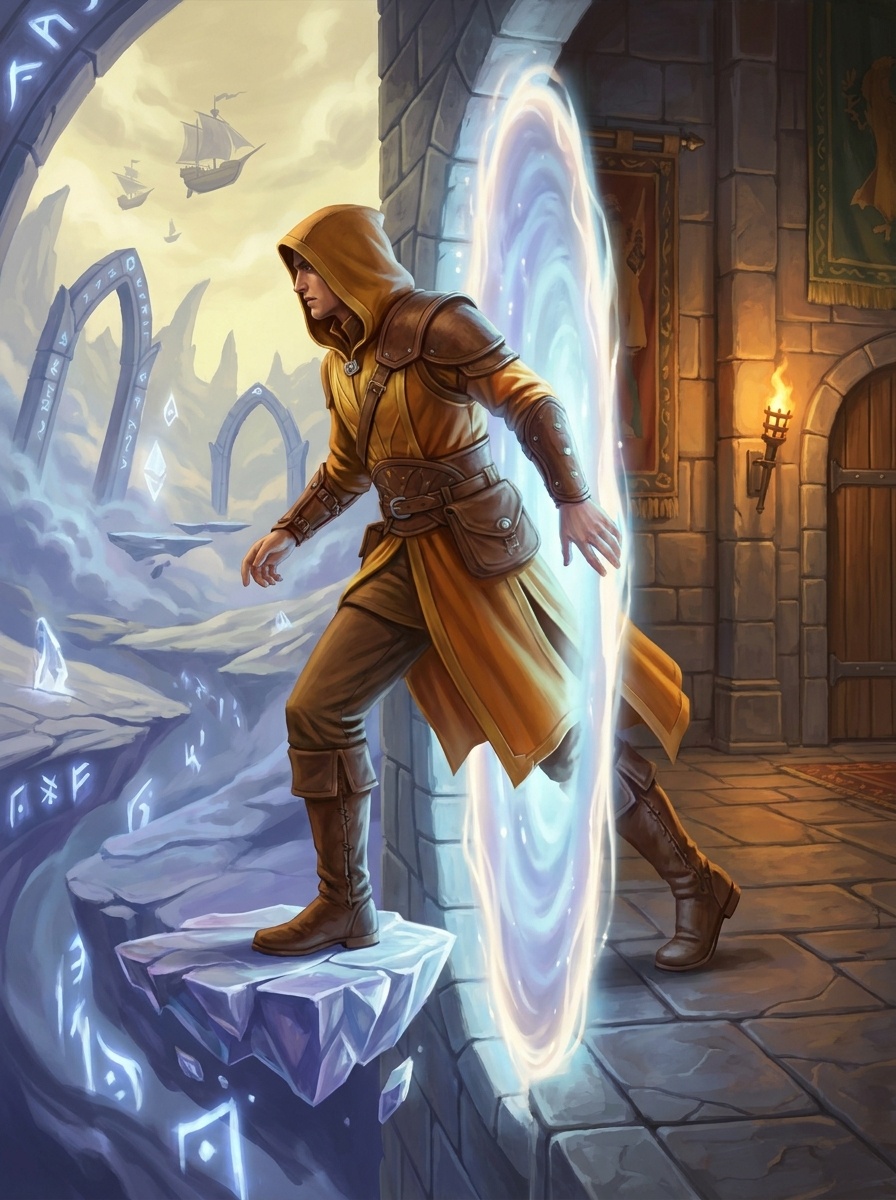
Rifts are tears in the boundary between the Prime and another plane. They open without prediction, can remain stable for hours to decades, and sometimes produce passage, intrusion, or resource spillage depending on what is on the other side.
Opening: Rifts open near existing weak points in the planar boundary, old magical discharge sites, locations of mass death, areas of sustained elemental concentration, and places where the Arcana plane is especially active. The Rifts skill (Player Guide Chapter Six) governs detection, stabilization, and safe passage. No skill governs prediction. No one can predict when a rift will open.
Passage: A rift large enough and stable enough can be traversed. The Rules of Passage vary by plane:
- Arcana plane: The barrier the gods erected requires powerful working to cross intentionally. Wild rifts occasionally provide accidental passage. Inside Arcana, mortal magic functions at dramatically higher power due to ambient energy saturation, but the plane is politically alive and the fey courts are territorial.
- The Dim: The Dim is the shadow Prime, stripped of most magic, dominated by absence and silence. Movement is possible, visibility is poor, and extended time in the Dim is psychologically taxing. It is used as a transit route by practitioners who have learned its geography.
- Elemental planes (Ember, Mineral, Tidal, Zephyr): Each is an environment hostile to non-adapted creatures and dominated by the element in question. The Ember plane is not a burning dungeon with a walkable floor. It is a state of sustained combustion. Adaptation via magic or equipment is not optional.
- Shattered Domain: The divine plane requires specific knowledge and most often specific divine sanction to enter cleanly. Arriving uninvited in a deity's territory does not produce the same response from every deity.
Closing: Rifts can be sealed through sustained effort (Hard Rifts check, Sustained: 3 consecutive Actions), ritually through established sealing procedures known to specialized practitioners, or naturally through planar pressure equalization over time. Partially sealed rifts are more dangerous than open ones: the boundary is stressed and unpredictable.
Rift Transit: Running the Results
The full player-facing procedure is in the Ix Player Guide, Chapter Six. The GM's job in rift transit is interpreting the result in fiction and deciding what "wrong plane" means in the moment.
Hostile planes (Calamity on a failed check). Choose an environment immediately threatening without preparation:
- The Hells: All planar transit into the Hells resolves to Tyrannus regardless of intent. Characters arriving from a botched rift are processed as unauthorized entries: detained, assessed, and subjected to whatever the local devil hierarchy finds useful to do with them.
- The Ember Plane: A state of sustained combustion. Characters begin taking fire damage immediately. Survival without cold or fire protection is measured in rounds.
- The Mineral Plane: Compressed geological pressure in confined areas; crushing damage is immediate. Navigation requires Earth-sense or an adapted guide.
- Hostile divine territory in the Shattered Domain: Uninvited arrival in an active deity's domain triggers immediate recognition. The response depends on the deity (Oshala detains; Nyxollox questions; Echo documents), but none of them find unexpected mortal presence acceptable.
Survivable planes (Calamity on a successful check). Choose an environment the party can exist in with effort:
- The Dim: Cold, eerie, arcane magic suppressed. Exits exist through shadow leaps or the City of Shadows portal network. The party is intact and in a place they can navigate out of.
- The Arcana Plane: Politically complex but not immediately lethal. Magic functions at elevated intensity. The fey courts may take an interest.
- The Zephyr Plane: Constant high-velocity wind. Movement is contested; concentration is difficult. Survivable with preparation.
- A Silver Road transit corridor: Lost on the soul road. Disorienting, but a character with Planar Lore 2+ can orient and find an exit. The Boatman will answer questions but not ferry the living back.
- Unintended Prime exit: The rift connected to a different location than expected, still on the Prime, but the wrong region, the wrong continent, or the wrong side of a mountain range.
Describing the failure tiers.
The bane tiers describe severity. Where characters end up is yours to set within the scale:
- Extreme range (1 Bane): Still in the same dungeon, building, or district. Disoriented and displaced, not in mortal danger.
- Several miles (2 Banes): Wrong side of a mountain pass, across a bay, in a hostile settlement, outside city walls after curfew. A journey measured in hours.
- 100+ miles (3 Banes): Different region, different political territory, different terrain. A journey measured in days. The party may not recognize their location at all.
Stability degradation. A rift loses one stability tier after every successful transit: Stable becomes Unstable, Unstable becomes Volatile, and a Volatile rift closes after use (Player Guide, Chapter Six). A Breakthrough can temporarily improve stability, but repeated travel still stresses the tear. This rewards characters who assess before committing and discourages treating any rift as a casual shortcut.
The Shattered Domain in Play
The Shattered Domain, also called the Plane of Ix, is where the gods actually live. Not where they project influence, not a representation of their power: their literal residence, the place they exist as persons. It is organized around the Ocean of Belief at its center, with each deity's territory arrayed at the ocean's shores, regions of manifested divine will, not literal islands. Contested margins and neutral transit zones fill the spaces between. The Shattered Domain was not designed as a dungeon: it is the most politically active plane in the cosmos, which makes it the most dangerous one for an unprepared mortal to wander through without knowing whose land they are standing on.
Arriving: Characters who reach the Shattered Domain by travel (through a divine-sanctioned rift, a specific planar working, or transit along the Silver Road) arrive in transit zones, areas not claimed by any specific deity and therefore not immediately subject to divine response. Transit zones are how mortals navigate the plane without walking into a god's territory without an invitation.
Divine territory: Entering a specific deity's territory is equivalent to entering a sovereign nation you have not announced yourself to. The consequences depend on the deity. Echo's territory is monitored by keepers who will ask questions before acting; a peaceful arrival with stated purpose will likely produce an audience. Oshala's territory will treat uninvited mortal arrivals as trespassers to be assessed; whether this results in escort out or detention depends on what the party looks like. Nyxollox's territory borders the Silver Road and receives mortal visitors more often than most, his keepers are accustomed to lost souls.
The Ocean of Belief: The ocean is metaphysical geography that manifests as an endless expanse of silver-black water; no boat can navigate it. The divine territories are not literal islands but regions of manifested divine will that appear as landscape to anyone who can perceive them. Godless is visible at the ocean's center from most vantage points: a place that looks unremarkable from a distance and is deeply desolate up close.
Planar Pressures by Type
Arcana bleed produces unusual magical effects in the affected area: items charge more rapidly, spells behave unexpectedly, ambient magical constructs activate without input. Characters with active magical workings feel the bleed as pressure. Arcane practitioners become alert and sometimes distressed.
Dim proximity
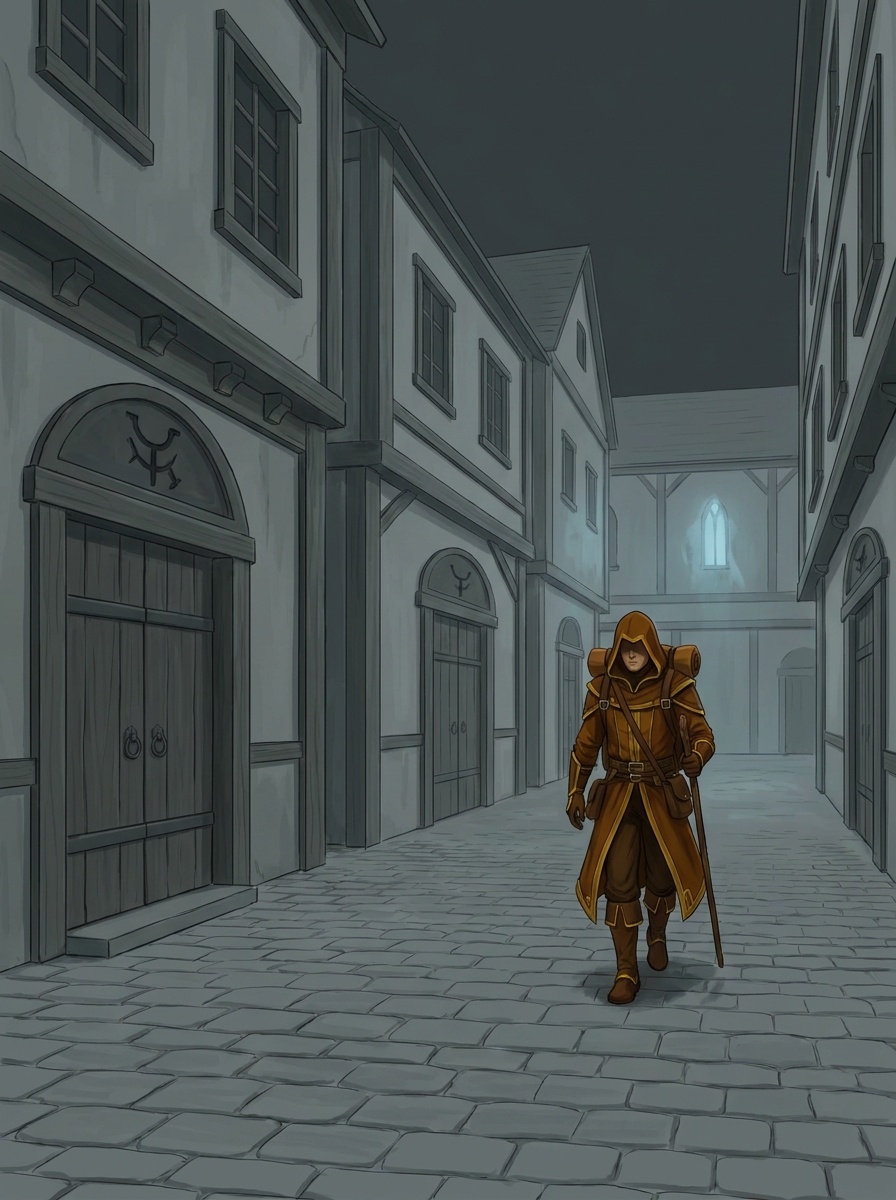 produces cold spots, a sense of thinning, and the fading of small ambient magical effects. Wards lose their edge. Charms go quiet. Extended exposure produces detachment and difficulty maintaining emotional intensity: not sadness, but a flattening. Dogs and similar animals refuse to enter areas of strong Dim proximity.
Elemental proximity produces environmental effects specific to the element: Ember proximity raises temperature and makes fires burn blue-hot and overfueled; Mineral proximity produces structural stress in worked stone; Tidal proximity warps moisture patterns; Zephyr proximity produces unpredictable wind behavior at the ground level.
Shattered Domain proximity (rare, near major rift sites) produces a heightened awareness of divine attention: the distinct, unnerving sense that the political machinery of a plane full of interested, powerful persons is very close and can perceive you. Practitioners with active divine connections feel their patron as more immediately present than usual. Characters with no divine affiliation may notice that the air carries a quality of being assessed, without any discernible assessor. This is not communication. It is the ambient condition of a plane whose primary inhabitants watch everything in their territory.
Traversing the Planes in Practice
Getting there. Most characters will encounter the planes through rifts before they ever attempt intentional planar travel. A rift is not a portal: it does not stay open, does not wait for the party to decide. Intentional planar travel requires either a rift large and stable enough to use (rare), an established portal (fixed, keyed, or contracted), or a working powerful enough to force passage (high-skill, significant cost, noticed by whoever watches that boundary).
The Rifts skill (Ix Player Guide, Chapter Six) handles the practical management of natural rifts. Reading a rift's destination, gauging its stability, and knowing whether it is safe to traverse are all Rifts checks. No skill governs where a rift goes when it opens. The geography of planar instability, where rifts are common, what they typically lead to, is the domain of Planar Lore.
The planes as environments. Each plane has ambient conditions that affect characters over time. These are not encounter hazards placed by the GM. They are the plane's default state, and the question is what those defaults cost.
| Plane | Ambient Condition | Sustained Exposure Cost |
|---|---|---|
| Arcana | Elevated magical saturation | Workings behave unpredictably; practitioners feel pressure building; spontaneous discharge on extended stays |
| The Dim | Absence of ambient magic; silence | Emotional flattening; difficulty maintaining motivation; animals refuse entry and cannot be coerced |
| Ember | Sustained combustion state | Fire damage without cold adaptation; equipment degrades; breathing requires magical aid |
| Mineral | Compressed geological pressure | Crushing damage in confined areas; navigation requires Earth-sense or guides |
| Tidal | Deep-water pressure and current | Drowning without waterbreathing; three-dimensional navigation; current-dependent movement |
| Zephyr | Constant high-velocity wind | Movement contested; concentration difficult; nothing can be set down without anchoring |
| Shattered Domain | Where the gods live; every inch is someone's home territory | Uninvited presence is noticed immediately by local soul-populations; divine response arrives within hours; magic behaves according to the territory's deity |
What it feels like to arrive. Each plane should be distinct.
Arcana plane: The background hum is there but amplified. Color is oversaturated or slightly misplaced. Magic that usually requires intent seems to be reaching back toward the practitioner. Arcane practitioners feel it immediately; everyone else notices that the practitioner is suddenly alert and slightly uncomfortable.
Dim arrival: Sound is still present but flattened and close. Colors stay accurate but drained. The cold is not temperature-cold: it is the cold of a room that has not been lived in for a long time. Active magical workings grow quiet, like instruments losing their tuning over the course of minutes.
Shattered Domain arrival: The landscape is coherent and looks like geography, but is organized around a logic that is not topographic. Distance corresponds to significance rather than space. The Ocean of Belief is visible from almost any vantage point, silver-black and utterly still. The territories arrayed around it look obviously like someone's property.
The Silver Road
The Silver Road is not a plane. It is the transit infrastructure of the cosmos: the path souls take from death toward their destination. Living beings can travel it, but doing so requires specific magical knowledge or a circumstance that put them there unexpectedly (a rift to the Silver Road is rare and usually the result of a mass-death event temporarily thinning the boundary).
On the Silver Road, travelers perceive their own life with unusual clarity. This is the same experience souls undergo, but without the finality: a living traveler perceives their accumulated choices as external landscape, with the weight of their devotion visible in a way that daily life obscures. This is not a moral judgment. It is what the Silver Road is for. This effect is specific to the Silver Road; it is sometimes confused with the ambient pressure of Shattered Domain proximity, but the two are distinct. The Silver Road shows you your own life. The Shattered Domain shows you that you are being watched.
Pact Collectors operate on the Silver Road, patrolling transit routes and looking for souls whose contracts have been activated by a recent death. A party traveling the Silver Road will eventually encounter one. Whether that encounter is hostile depends entirely on whether the party represents something the Collector is contracted to handle.
The Shattered Domain in Political Detail
The Shattered Domain's geography is political more than topographic: boundaries that move, territories that expand and contract, regions that are contested, abandoned, or held with varying degrees of security.
Thresh governs the architectural rules of the Domain, how territory forms, how it is bounded, what prevents one deity from simply absorbing another's land. Thresh is not worshipped and does not require it. Thresh maintains the territorial structure because the alternative is a war that would destroy the plane and the universe with it. Every deity is aware of this. None of them find it comfortable.
Entering specific divine territory: Each deity's territory produces its own response to uninvited entry.
- Echo's territory: Keepers will appear within an hour. They ask questions before acting. A clear statement of purpose in good faith produces an audience or a passage arrangement. Falsifying your purpose is recorded and remembered.
- Nyxollox's territory: Borders the Silver Road; receives living visitors more often than most. His keepers will assess whether the party needs guiding out or escorting somewhere specific. They will ask about any recent deaths nearby.
- Oshala's territory: Unregistered arrival is an administrative violation. Characters will be detained and assessed. What happens next depends on whether the Order has any use for them.
- Jula's territory: Arrivals are met with a frank assessment of what the party intends. The Legion will escort them out if necessary. They will not use force unless the party does first.
Planar Encounters as GM Tools
A planar encounter is most interesting when the plane is not an obstacle but a condition. The question is not "how do we survive the Dim" but "what do we need from inside the Dim, and what does the Dim cost us to get there?"
Build planar encounters around a specific goal (retrieve something, deliver something, speak to something that only exists inside the plane, traverse safely between two points that cannot be connected on the Prime). Build the costs into the travel rather than into random encounters. The Dim costs clarity and time. The Ember plane costs endurance and equipment. The Arcana plane costs safety and attention in a politically contentious space. These are built into the journey, not dropped on the players as punishments.
The best planar encounters in Ix connect back to the campaign's soul-economy threads. The Shattered Domain encounter that starts as a navigation problem becomes a divine politics problem when the party realizes whose territory they need to cross and what that deity will want in return.
The Soul Planes
The Soul Planes sit outside the spatial arrangement of the physical cosmos: not above or below the Prime, but in a different kind of location organized around death and its consequences. Living characters can reach them, but doing so requires either specific magical knowledge, divine sanction, or a circumstance that put them there without asking.
Sheol
Sheol processes every soul that dies. Every one. The scale of this operation is not comprehensible from the inside; the infrastructure of the plane simply is, without anyone having built it. Mortal travelers who reach the Threshold find the plane's most immediately distinctive property: a calm that is not peaceful but sedative. The plane does what it needs to do to keep souls moving. Living visitors are not calmed in the same way: they notice the effect without experiencing it fully, which is its own kind of disorientation.
The Threshold and the River: The Threshold is where arriving souls land, gentle terrain, the calming property of the plane at its strongest. The River of Souls runs through the middle of Sheol, luminescent from the souls within it, its sound close enough to voices that listeners begin hearing words. The Boatman ferries souls across. He will not ferry the living, but will answer questions with complete accuracy and total economy of language. He has met gods coming to argue for specific souls and told them which Hall the soul was in.
The Nine Halls of the Weighing: Valor, Truth, Love, Justice, Knowledge, Temperance, Devotion, Charity, Humility. Souls are routed to the Halls relevant to their lives. Each Hall presents the soul with what it actually was rather than what it claimed to be: the Hall of Truth surfaces genuine intentions, not stated ones. The experience cannot be argued around. The architecture responds to the soul within it; a guardian can read at a glance what kind of reckoning is underway.
The Adjudicator: In the Court of Souls at the end of the Weighing. No one knows what it is. It has been there longer than any account. It reads a soul and dispatches it; the verdict follows with the inevitability of a river's end. The gods may speak at a soul's adjudication. The effect is inconsistent and not guaranteed.
GM use: Soul-recovery missions typically take place in Sheol. A party trying to retrieve a soul has a maximum of 24 hours before the soul passes judgment and moves deeper. After that, the Resurrection spell may be able to reach it, but a failed Resurrection means the soul either refused or something more powerful holds it, and the party generally does not know which.
The Hells
Entry: All planar transit into the Hells resolves to Tyrannus. This is a property of the plane's architecture and cannot be circumvented by improving the targeting of portal magic. The Keeper of the Bridge on the Tyrannus side of the Sheol-Tyrannus crossing will negotiate mortal passage. Every documented visitor has paid more than they understood they agreed to. This is not the Keeper's deception; it discloses the terms. Most mortals are not equipped to read them.
The devil/demon divide: The upper four layers (Tyrannus through Malicor) are devil-ruled, hierarchical, law-based, efficient in the way a machine is efficient. The lower four (Loftile through Anarchos) are demon-ruled, authority exists only as far as the being claiming it can personally enforce it in the moment. Invidia, the fifth layer, is held by the Arbiter and acknowledges neither regime. Crossing through Invidia from upper to lower or reverse is genuinely disorienting in ways that player characters will feel mechanically as well as narratively.
The nine layers and their lords:
| Layer | Theme | Lord | Character |
|---|---|---|---|
| Tyrannus | Oppression and tyranny | Zagan | All mortal transit arrives here. Militarized, law-heavy, oppressive in the specific way of a place that believes it is correct. |
| Avaricia | Greed | Pyxata | Hub of infernal commerce. Soul coins circulate as currency. Pyxata's accumulation has begun to concern the other lords. |
| Mendacium | Deceit | Cozen | Reality is unreliable. Contracts made here are enforced by the plane itself. The most technically dangerous layer for negotiations. |
| Malicor | Brutality | Ustura | Organized savagery. The last devil layer before Invidia. What devil-kind looks like when the legal structure is stripped to its minimum. |
| Invidia | Envy | The Arbiter | Neither devil nor demon. Held absolutely. The Arbiter judges nothing and holds everything in suspension. Neutral zone. |
| Loftile | Pride | Kian | First demon layer. Grand projects that have been decaying since they were built. Everything here once was magnificent. |
| Erosmire | Lust | Buuna Moc | See the content boundary guidelines in the Universe Bible. Clinical treatment required. |
| Gula | Gluttony | Edaxius | Consumption without satisfaction. Resources flow in, nothing emerges. The plane itself is in a permanent state of being consumed. |
| Anarchos | Dissolution | Ta'amah | The bottom. Where nothing organizes. Souls with no principle accumulate here as sediment accumulates in still water. |
The Tempters: Seven infernal beings not subordinate to any layer lord, operating primarily in the mortal world. Each embodies one of the fundamental human hungers and works with surgical specificity, identifying the exact vulnerability in a specific person and applying the right pressure at the right moment. The Accord's contract clinics and Talbar's deal-keepers exist specifically to counter the Tempters' influence.
GM use: The Hells as adventure location require the party to arrive at Tyrannus and negotiate from there. Contracts made in Mendacium are enforced by the plane: a useful GM tool for any binding agreement the party makes during an infernal arc. The Keeper of the Bridge is an NPC worth building before any campaign that involves Hells-adjacent content; the Keeper's negotiating terms should be written out in advance.
Paradiso
Entry: No formal crossing point exists. Reaching Paradiso requires sustained divine connection: a celestial mark, a genuine calling, or an explicit lord's invitation. Uninvited arrival is possible; it tends to go poorly in two directions simultaneously. The plane's virtue operates on unprepared visitors whether they're ready for it or not, and the Aelar's hostility to mortal presence creates an ambient difficulty that complicates even legitimate visits.
Structure: The Sanctus layers (1–4) at the entry level: Ordo Sanctus (order/harmony), Copia Sanctus (generosity), Lux Sanctus (truth), and Cura Sanctus (compassion). The Citadel (layer 5), governed by the Celestial Dragon and the most actively militarized layer: the primary defensive perimeter against Hells incursions. The Astrum layers (6–9): the elevated reaches for souls whose virtue was not practiced but embodied.
The Aelar: Celestial beings who govern and inhabit Paradiso. Not a unified society: they have their own politics, disagreements, and rank structures (Empyrean and Seraphim at lord rank; Archon administrative; Celestial as general population; Ardent as the warrior caste). They experience living mortal presence as genuinely contaminating, not metaphorically. Leadership tolerates it; the Aelar rank-and-file does not.
Serren bloodlines: The Serren species traces to old Aelar-mortal unions, later forbidden by the gods and mostly honored by the Aelar. A Serren character in Paradiso is not just another mortal visitor; their visible inheritance is legible to the plane's inhabitants and may draw curiosity, resentment, obligation, or political interest.
The Graces: Seven agents operating in the mortal world, counterpart to the Tempters. They work against the Tempters' influence directly and are not gentle. Finding a Grace in the field is not a rescue: it is an encounter with a being that has its own agenda and timeline, and coincidence of interest with the party is convenient for the Grace, not the other way around.
GM use: Paradiso is the correct destination for campaigns involving resurrection of genuinely virtuous NPCs, celestial pacts, or the cosmic conflict against the Hells. The Citadel's Ardent are the primary force available for cooperative operations against infernal targets. The Aelar lords will deal with mortals who demonstrate legitimate purpose; the rank-and-file will need to be managed separately.
The Other Soul Planes
These six planes are destinations the Adjudicator dispatches specific categories of soul. Living travelers can reach them but rarely need to for practical purposes: they are more likely to appear as the reason a soul cannot be recovered through normal means (the soul is in Bellum, not Sheol) than as adventure locations in their own right.
Limbo: Pure chaos without structure or organizing principle. Disorienting for anyone entering with sequential thought. The Choir of the Open Mind cult deliberately courts exposure to it. Limbo can be detected from the Prime near sites of accumulated madness: a faint quality of wrongness that experienced Planar Lore practitioners can identify.
Logos: Total order. Rigidly structured, internally consistent, completely inflexible. Useful to know exists for players dealing with law-based entities or constructs of perfect principle.
Bellum: Unceasing contest. Every arrangement here is temporary; every position is held until challenged. Living travelers who enter must fight for everything, rest, direction, safe passage. Paradoxically navigable for combat-focused parties because the plane's rules are consistent even if harsh.
Paxia: Unceasing peace. Active, working, maintained through constant reconciliation; not stillness, not absence, but the sustained removal of conflict through engagement with it. The difficulty is that a plane of pure peace, without exception or relief, eventually reveals what peace costs to inhabit permanently. Souls here prioritized peace above everything else in life, including growth. Living travelers find it increasingly difficult to feel urgency the longer they stay.
Kinesis: Nothing stops. Not the plane, not the souls, not the visitor. Extended stays produce compulsive movement that outlasts the visit.
Petrina: Total stillness of a different kind: not peace but cessation. Nothing accumulates. Time passes but leaves no mark.
The Somnium
The Somnium is where dreams take physical form. Every sleeping mind touches it: not consciously, but inevitably. A Shaman operating in the dream plane is working within this space; the Weft connection runs through the Somnium's substrate where collective spiritual patterns persist independent of individual dreamers.
Individual dreamscapes: Private, sealed off, generated by one sleeping mind and gone when they wake. They exist in the Somnium but are not accessible to travelers, each one is a temporary space that comes and goes with the dreamer.
The substrate: The permanent layer beneath individual dreams, shaped by collective patterns: the fears, desires, and memories that enough minds have dreamed often enough to acquire persistent form. This is where Somnium travelers actually operate. The fixed locations (the Hall of Dreams, Mirror Lake, the Forgotten City) exist in the substrate.
Dream collision: Two dreamers with a strong emotional connection, physical proximity, or shared trauma may find their dreamscapes overlapping. A practiced Shaman can navigate this deliberately to enter another person's dream. This requires the Shaman to know the target exists and be in proximity; it is not unlimited surveillance.
The Dark Hollow: The Somnium's nightmare region: a permanent territory in the substrate where collective fear has accumulated into something self-sustaining. It draws in dreams that reach a sufficient pitch of terror and feeds them back amplified. The specific nightmares that return night after night with directed quality are the Dark Hollow working through the dreamer. Practitioners can reach it, but it is not a safe destination.
The Somnarch: The plane's governing presence, emerged from the Somnium itself over ages of accumulated dreaming. No fixed form, it appears to each visitor in the shape their subconscious provides. Aware of everything in the Somnium. Acts selectively. Not omnipotent outside its domain. Communication is oblique, through what happens in the dream, not direct statement. Does not eliminate the Dark Hollow; it is part of what the Somnium is.
GM use: Dream sequences, investigating a specific person's memories or fears (with permission or at significant ethical cost), the Choir of the Open Mind's activities, and Shamanism-adjacent content all operate through the Somnium. A character's nightmares that feel directed rather than personal may be Dark Hollow activity: a useful GM pressure tool.
The Weft
The Weft sustains what the living world is while it is alive: the spiritual substrate of nature, instinct, and place. Where the Soul Planes receive the dead, the Weft feeds the living. Every animal's behavior, every sacred natural place, every collective virtue draws from it continuously.
Inhabitants: Spirit pairs for every animal species (one masculine, one feminine principle, not gender, but the complementary forces defining the species). Virtue spirits for every genuine virtue. Elemental spirits (not made of elements, but expressing the spiritual identity of natural forces, a river spirit is the river's character, not a water elemental). Spirits of place for significant natural locations. Wandering myths generated by sufficient collective belief.
Navigation: The Weft responds to the traveler. Genuine understanding of the natural world makes the plane cooperative. Treating it as a resource to be extracted makes it indifferent at best. This is not a moral judgment by the plane: it simply does not recognize minds with no relationship to what it is made of.
Extinct species: When a species ceases to exist in the physical world, its spirit pair becomes untethered, still present, still holding the species' pattern, but no longer connected to anything. The Weft contains untethered pairs for species mortal memory has entirely lost. These pairs know what their species was and hold that knowledge intact. They are guardians of something that no longer requires guarding.
GM use: The Weft is the correct destination for finding a specific animal species' essential nature, recovering lost natural knowledge, or addressing a situation where something in the physical world's spirit layer has been damaged or is behaving wrong. Primal practitioners working through elemental connections are drawing from the Weft's elemental spirits whether they know it or not.
The Void
The Void is the non-space outside the cosmos, not a plane; time, distance, matter, and sequence do not apply there. The Ancients were exiled there after killing Ix. Approximately a dozen have escaped.
What it does: The Void sustains everything within it. Not as mercy, as a preservation property. A mortal brought to the Void does not starve, does not age, does not deteriorate. They remain, indefinitely, in a non-place with the horrors, with no exit available through their own means. This is the Void as prison.
The horrors: Native entities predating or existing outside the cosmos. Not hostile in any clear sense: their relationship to mortal visitors does not map to predatory, curious, or indifferent in any consistent way. Some mortals brought to the Void have been killed. Some have been left entirely alone. The pattern, if there is one, has not been established.
Entry and exit: No mortal enters the Void by their own means. The relevant knowledge does not exist in any accessible form. Exit requires assistance from something already in the Void: the Ancients or the horrors. The only documented retrievals served the interests of whatever brought the mortal out.
The Beacon Problem in practical terms: Ancient magic at sufficient scale produces a signature visible across planes. This is the only constraint on the escaped Ancients. A GM running content with Ancient-adjacent threats should decide in advance how visible this particular Ancient's activity is, and who in the mortal world is tracking it.
GM use: The Void is not an adventure location in any normal sense. It appears as the destination of characters who fall into Ancient-adjacent plots, the origin of effects that operate outside the normal magical taxonomy, and the source of the one category of power (psychic/void phenomena, a separate sourcebook) that bypasses the cosmos's normal defensive architecture.
The Remaining Planes — Brief Reference
The planes above (Shattered Domain, Silver Road, soul planes, Somnium, Weft, Void) are the ones that come up in ordinary Ix campaigns. The cosmos contains more. These do not typically require full entries because characters rarely travel to them deliberately, but GMs working on planar-adjacent plots should know they exist.
The Veil. Wraps around the physical planes like a membrane between the physical cosmos and everything beyond it. Travelers within can observe the physical world but cannot touch or affect it; one-way observation only. The dead pass through the Veil at the moment of death, entering the Silver Road on the other side. Its corridors are home to threshold predators, membrane feeders, and entities that exist between states: not quite here, not quite gone. Relevant when a plot involves the boundary between the living world and what lies past it, or when something should not have been able to cross that boundary and did.
The Drain. Entropy given form. Absolute darkness, no life, no accumulation. The essential counterbalance to The Source; where The Source is the wellspring of living energy, The Drain is where that energy returns as it dissipates. Nothing here thrives. Nothing is meant to. Relevant when a plot involves things that should not have been destroyed, sources of anti-life magic, or the specific kind of nothing that has agency.
The Source. The cosmic wellspring of life: boundless, radiant, and as dangerous as The Drain to the unprepared. Too much of The Source is as lethal as too little; it does not nurture so much as overflow. Primal practitioners drawing from The Source in their most powerful workings are touching this plane, usually without knowing it. Relevant when a plot involves impossible healing, the creation of life, or power that exceeds what any tradition should be capable of.
The Crucible. The emotional spectrum of all beings given physical terrain. Joy, grief, rage, longing are not metaphors here: they are landscape. The plane fluctuates constantly and amplifies whatever emotional state a visitor arrives with. A party entering The Crucible angry will find their anger externalized and escalated. It is not a comfortable destination, but it is a revealing one. Relevant for plots involving collective emotion, psychic or empathic practitioners, or consequences that operate at an emotional rather than physical scale.
The Continuum. Past, present, and future exist simultaneously here, without hierarchy. A traveler does not move through time so much as through the complete record of all moments at once. Governed by entities called the Timekeepers, who emerged with the plane itself. Entry is possible; careless travel here has consequences that ripple in every direction. Relevant only for campaigns that specifically involve temporal manipulation; do not introduce it lightly.
The Nexus. The plane of gravity: the structural force that holds the physical cosmos in arrangement. Variable gravity, impossible geometries, and the specific hazards of a plane where falling is a matter of perspective. The elemental communities who work metal and stone in extreme conditions sometimes brush against the Nexus's influence without formal planar access. Relevant for gravitational anomalies, the Ix universe's Anchor Dragon territory, and rift events that produce inconsistent physical forces.
The Dim — Full GM Reference
The Dim is the shadow Prime: a dark mirror pressed against the physical world, echoing its geography in petrified, lightless form. Mountain ranges correspond. River courses correspond. Cities have shadow versions: ruins, or structures of dark stone, or occasionally something still inhabited that has become something the original would not recognize. The sun never rises. The correspondence is not exact at the level of individual streets, but a navigator who knows both planes can orient in one by the other.
The plane does not feel hostile so much as deeply wrong. The shape of familiar landscapes with all vitality removed and something else put in its place.
Magic in The Dim
Arcane magic: Suppressed. Spells cost more to sustain, effects are diminished, complex workings require significantly more effort. This is intrinsic to the plane. Add 1 Bane to all arcane casting checks and 1 additional Strain to all sustained arcane effects for each extended scene spent in The Dim.
Shadow and dark magic, necromantic practice: Amplified. These draw on The Dim's nature rather than fighting it. Remove 1 Bane from shadow/necromantic casting checks; the caster finds the plane cooperative in ways that can become seductive.
Divine magic: Functions normally but taxes the practitioner psychologically. Sustained divine working in The Dim adds 1 Strain per scene beyond the normal cost: not mechanical suppression, but the weight of operating in a plane whose nature resists hope.
Light: Flames burn lower than they should. Magical light sources are dimmer. Shadows from available light move independently of their sources. This is not an encounter hazard: it is constant environmental texture.
Entry and Exit
Rifts: Most common accidental entry. The boundary thins at sites of significant death, long-sustained darkness, or heavy shadow magic practice. A Dim-rift appears as air that is darker than it should be, temperature dropping without cause. Dim-rifts are more common than most people realize because they often go unrecognized: a cold shadow in a cellar, a patch of air behind a battlefield memorial that animals avoid.
Portals: Standard deliberate entry. Requires Planar Lore and relevant magical practice. Shadow mages and necromancers construct these more easily than arcane generalists. A portal to The Dim is permanent unless deliberately closed; they are often how Dim settlements maintain trade contact with the Prime.
Shadow leaps: A learnable technique: step into a shadow in the Prime, step out in The Dim, or use The Dim's geography as a transit layer to emerge from a shadow at a distant Prime location. Not simply hiding in darkness: a trained skill. Untrained attempts are Severe difficulty and carry significant failure consequences.
Exit: Mages use their portals. Shadow leap practitioners step back through any substantial shadow. Accidental arrivals must find a mage who can create an exit portal, a shadow leap practitioner willing to take them out, or a large enough rift from the inside. The City of Shadows maintains permanent portal installations for fee-paying travelers.
Environmental Effects in Play
Cold: The plane has never been warm. The cold is not dangerous on its own but it is constant. Characters without cold weather gear add 1 Bane to Fortitude checks after an extended period.
Light degradation: Torch and lantern radii are halved. Magical light sources shed light one range band shorter than normal. Shadows cast by available light do not reliably track their sources.
Extended exposure: After more than a day in The Dim, arcane practitioners experience their suppression as increasingly normal: a creeping acceptance that makes them less aware of what is being cost. After more than a week: all characters find bright Prime-side light increasingly uncomfortable. Some develop a persistent preference for dim environments that outlasts the physical adjustment.
Inhabitants
Native creatures: Adapted to lightlessness and arcane suppression. Shadow-forms with no fixed substance that move through solid surfaces. Carnivorous flora that lure prey with bioluminescent flowers, the only warm-toned light visible in The Dim, and sweet chemical scents that trigger comfort responses. Hunting creatures that use vibration, temperature differential, and chemical trace rather than vision. The carnivorous flora is distributed throughout the less-settled regions and is identified by the absence of dead matter around its base (it consumes completely).
Mortal population: Concentrated in the City of Shadows and a handful of smaller settlements. Arrived over generations, some fleeing the Prime, some seeking magical amplification, some with no other option. Adapted to the environment in the way communities adapt to demanding conditions: practical, unsentimental about the plane's dangers, deeply suspicious of outsiders.
The City of Shadows — GM Location
The city occupies a valley corresponding to a significant geographic feature in the Prime, built over generations into the most substantial permanent settlement in The Dim. Narrow streets, cold magical lanterns, dark architecture built for durability. Population is primarily shadow magic practitioners, necromancers, exiles, and the descendants of exiles.
Trade: Shadow silk (woven from compressed shadow-matter), dark crystals, alchemical components from carnivorous flora, and secrets. Information about the Prime brought here is valuable. Information about The Dim taken to the Prime is more valuable.
Lord Nocturnus: Rules the city. Was a Prime-side shadow magic practitioner who entered The Dim voluntarily, decades or centuries before the current age of the settlement. What he found extended his understanding of shadow past any point his contemporaries could follow. He did not return. His physical appearance shifts within a consistent range, always dark, always suggesting depth without providing it, never quite the same as seeing him directly. His authority rests on two foundations: he understands The Dim more thoroughly than anyone else, and he controls the Well of Void.
He trades in secrets more than goods. Deals made in his presence hold, consequences for betrayal are consistent and well-documented, without being dramatic. He does not threaten. He notes.
The Well of Void: An ancient pit at the city's center, older than the settlement built around it, that emanates a field of magic-nullification. Magical effects brought within its proximity are suppressed regardless of source or strength. The radius is known and publicly mapped. The city organizes public functions, negotiations, and markets in the Well's zone precisely because magical escalation is impossible there. Nocturnus controls access to its deeper properties, what placing objects within it does, how deep it goes, what its origins are. These questions have been asked. The answers have not been provided.
Specific Locations
The Carnivorous Forest: Begins at the edge of the city's cleared perimeter. Lures prey with bioluminescent flowers and sweet chemical scents. Consumes everything it catches completely: no dead matter accumulates. The treeline advances if not actively managed. Produces several of the alchemical components The Dim uniquely offers, so people enter it deliberately. Guides who know the current boundaries are reliably employed.
The Tower of Shadows: Visible from the city's higher buildings but not reachable in a short journey. Predates the settlement by an unknown period. Absorbs rather than reflects available light. Interior floors do not correspond to exterior dimensions; stairways do not consistently connect to the same levels on successive ascents. Active workspaces have been found, materials recently used, notes in no recognizable language, equipment of unclear purpose, without evidence of ongoing occupation. The city's residents treat it as a place that produces difficult outcomes for thorough investigators. This has not stopped investigation.
The Cavern of Echoing Night: Below surface terrain. Walls lined with black crystals and dark mirrors that amplify light in the wrong directions. Moving illumination, deep shadow, the landscape shifting as the observer moves. The crystals amplify shadow magic significantly; practitioners can achieve here what would require more effort elsewhere in The Dim. Creatures hunt in the Cavern using the optical disorientation it creates. The city maintains informal, frequently-updated knowledge of which chambers are currently claimed and which routes avoid the worst of them.
The Silent Plains: Beyond the Forest, corresponding to open grassland on the Prime. Sound does not carry normally: not muffled, simply absent. A shout reaches three feet and stops. Footsteps are silent. Wind moves soundlessly. The Plains are home to creatures that evolved without acoustic information: large enough to see, sound like nothing at all. Travelers cross the Plains when they need the direct route and use physical contact for group communication. Experienced guides cross them regularly.
GM Use
The Dim is the correct setting for: shadow magic practitioners who need a home plane, necromancers with significant operations, exiles from the Prime who specifically needed to not be found, artifacts that suppress magic or are native to lightless environments, and any content that needs a familiar world's geography made wrong rather than made foreign.
Lord Nocturnus is the most useful NPC anchor for any campaign touching The Dim. He knows things about the plane that no one else does. He will trade information for information. The party's secrets are, by definition, currency to him: which means every interaction with him involves him learning something they have not chosen to disclose.
The Well of Void as a negotiation location is a GM tool: any scene that would otherwise be dominated by magical power differentials between participants becomes more equal in the Well's radius. Nocturnus uses this deliberately and the party can use it too, if they're willing to conduct their negotiations on his ground.