Water changes the terms of a fight before anything in this chapter opens its mouth. A Crocodile or a Great Shark does not need to be exotic to be dangerous, it needs the party fighting on unfamiliar footing while it fights on home ground. A handful of entries reach further: a Tide God of the Cut Coast is not actually a god, but the coastline that believes otherwise has organized around it anyway, and an Impossible Leviathan earns its name honestly.
Most of this chapter is mundane biology scaled up or moved somewhere inconvenient. Treat the water itself as part of the encounter, not just the backdrop for one.
At the table: ask where the fight is happening before you ask what is in it. A river ambush, a coastal cliff, and open ocean are three different encounters even with the same stat block.
Carpsonic Grizzleback
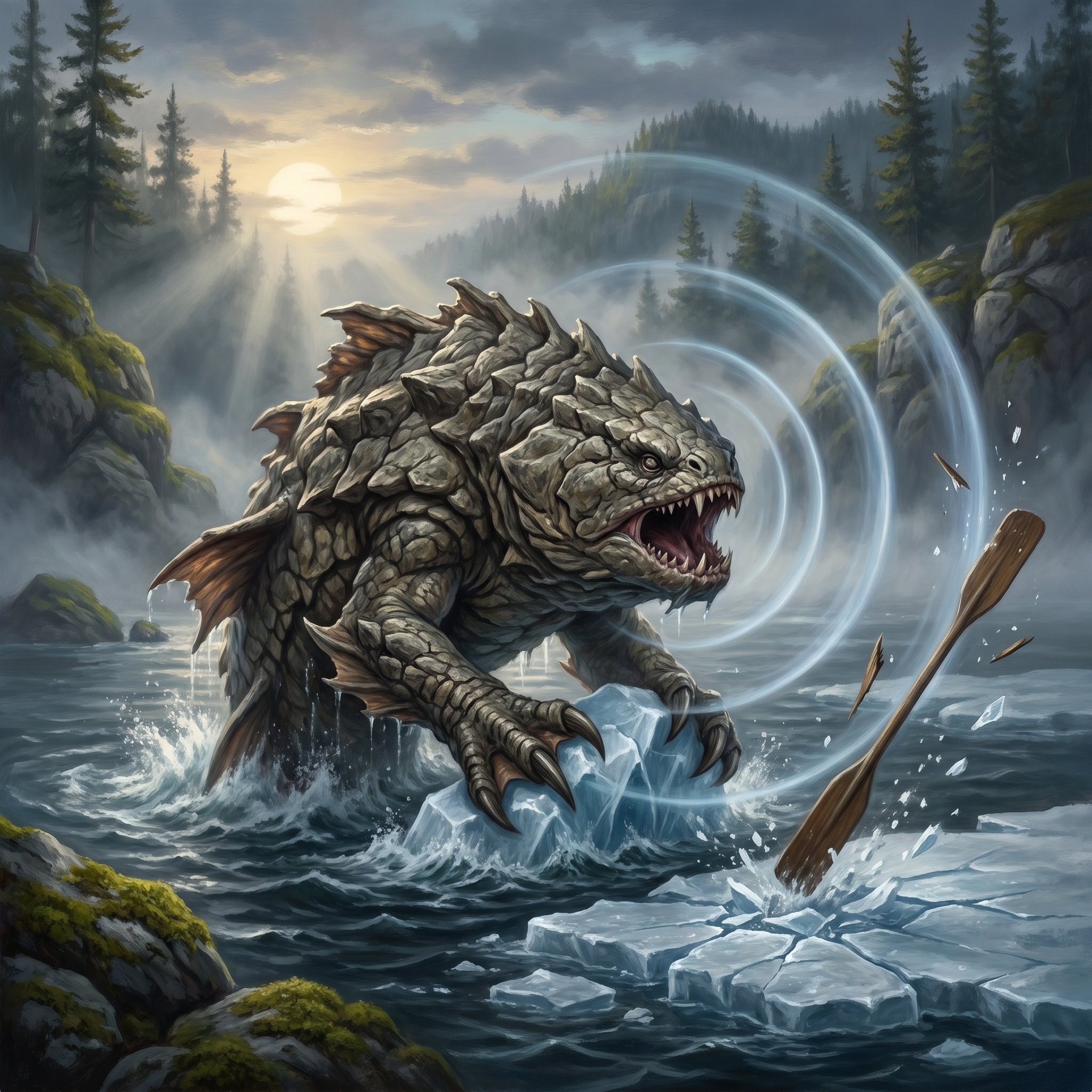
Role: Elite Controller / Aquatic Bruiser Where It Appears: Deep freshwater lakes, cold rivers, dwarf-adjacent fisheries, flooded mines. Source: Dort Animals - Carpsonic Grizzleback.
The Carpsonic Grizzleback presented here is the armored sonic freshwater fish from Quillian's creature guide. Some Dort animal notes use the same name for a mountain bear breed; treat that as a source conflict to resolve before final layout.
What It Is
This Grizzleback is a broad, armored fish native to cold deep lakes and river basins. Its plated back turns spears, oars, and panicked arrows. Its pulse organs release a concussive sonic wave through water and hulls, stunning prey and cracking thin ice.
To boat crews it is less a fish than a submerged hazard with teeth. The first sign is often the boat losing position as the water shudders beneath it.
Ecology and Behavior
Carpsonic Grizzlebacks prefer deep, cold freshwater with stone bottoms, submerged caves, or flooded mine systems. They ambush from below, pulse to disorient boats or prey, bite anything in the water, then dive out of reach.
Dwarven lake settlements may treat them as both danger and resource. Their pulse organs are valuable if removed properly, and the flesh is edible once those organs are taken out. Fisher families pass down specific hooks and boat-spacing rules for Grizzleback water.
Signs and Knowledge
Field signs: cracked thin ice in circular patterns, oars split lengthwise, stunned fish floating without wounds, armored ridges surfacing at dusk, low pressure hum in small boats.
Survival or Operate (Average): identifies Grizzleback water and safe boat spacing.
Survival or Medicine (Hard): knows how to remove pulse organs before preparing the flesh.
Natural Philosophy (Hard): predicts how the sonic pulse will travel through ice, flooded tunnels, or boat hulls.
Carpsonic Grizzleback (Elite)
- Skills: Athletics 4 while swimming, Fortitude 4, Perception 3, Survival 3, Unarmed 3.
- Attacks: Crushing Bite (Unarmed; Damage 8; Crit 4; Pierce 1); Sonic Pulse (Willpower; Damage 7 Strain; Crit 4; Range Short; Blast 3).
- Abilities: Armored Back — Attacks from above or from small boats reduce damage by 3 before Resistance unless the attacker has a hooked weapon, spear, or similar fishing tool.
- Abilities: Sonic Pulse — Once every other round, emit a pressure wave. Creatures and small craft at Short range make an Average Fortitude, Operate, or Athletics check. On failure, creatures suffer 7 Strain; small craft suffer equivalent system strain or lose position.
- Abilities: Deep Dive — As a Maneuver in deep water, move from Engaged to Medium range downward. Pursuit requires swimming, a boat, or a relevant tool.
- Soul: No claimable coin exists; at death canon does not specify (default).
Tactics: The Grizzleback pulses boats first, bites anything in the water, then dives until prey panics or enters the water voluntarily. Against ice travelers, it cracks footing before surfacing.
Encounter Use: Excellent for ferry crossings, ice fishing scenes, flooded ruin entrances, and "the lake is not empty" warnings. Let the party fight the water, boat, and time limit as much as the fish.
Harvesting and Trade
Grizzlebacks are one of the more plausible monster harvests because fishing communities already know how to process them.
| Harvest | Buyer | Check | Typical Value | Use | Complication |
|---|---|---|---|---|---|
| Sonic Pulse Organ | Instrument maker, alchemist, miner | Hard Medicine or Survival | 800-2,500 gold Flargons | Resonant tools, warning bells, stunning lures | Ruins the meat if punctured |
| Armored Back Plates | Shield maker, boatwright | Average Survival or Craft | 400-1,200 gold Flargons | Boat facing, bucklers, ice sled runners | Heavy and awkward to transport |
| Prepared Flesh | Local fishmonger, dwarven settlement | Average Medicine or Survival | 100-400 gold Flargons | Food delicacy | Unsafe if pulse organs remain |
Variants
Elder Grizzleback: Nemesis, WND 30, STR 16, Sonic Pulse affects Medium range and can crack thin ice.
Flooded-Mine Grizzleback: Elite, gains Stealth 4 in dark water and Deep Dive can move through submerged tunnels to another chamber.
Crocodile
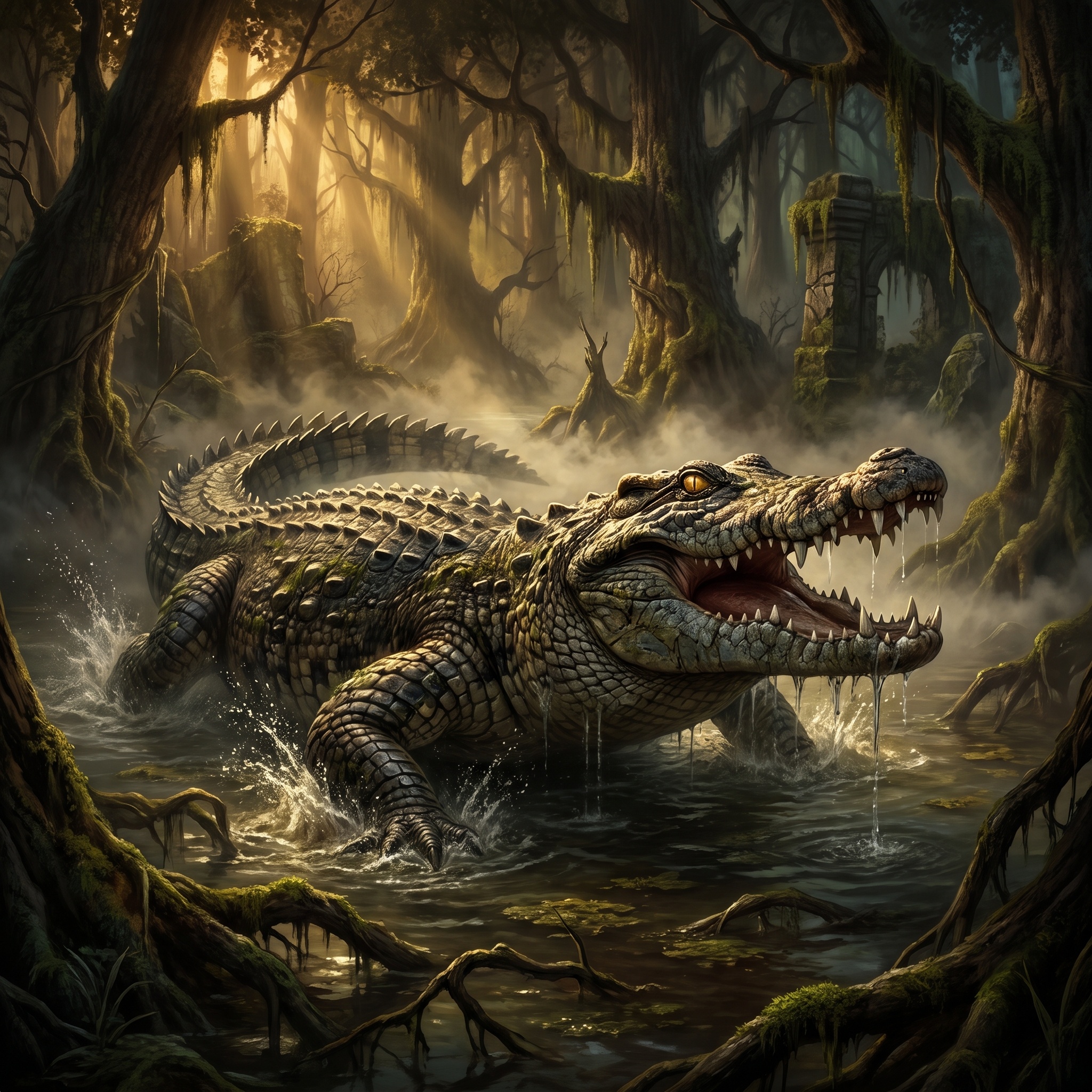
Role: Elite Ambush Predator Where It Appears: River crossings, coastal mangroves, flood plains, any warm waterway.
A Crocodile's attack has two phases: the waiting, and the thing nobody survives to describe as a phase.
Signs and Knowledge: Survival (Average): reads still water for crocodile presence — flat wake, submerged eyes, fish avoiding a bank. (Hard): estimates size from eye separation.
Crocodile (Elite)
- Skills: Unarmed 5, Stealth 4 in water, Athletics 4, Fortitude 5, Perception 3.
- Attacks: Snap (Unarmed; Damage 11; Crit 3; Pierce 2; Grabbed on hit); Death Roll (Unarmed; Damage 9; Crit 3; against Grabbed target — Hard Athletics or target suffers 6 additional Wounds and is Immobilized).
- Abilities: Ambush Strike — First attack from concealment (water, reeds) adds 1 Boon and +3 damage.
- Abilities: Armored Hide — Ranged attacks from above water reduce damage by 2 before Resistance.
- Soul: No claimable coin exists; at death canon does not specify (default).
- Tactics: Submerges, waits for prey at the waterline, bites and rolls. Does not pursue far onto dry land.
- Encounter Use: River crossings. Fords. Fishing while distracted. Characters who crouch at the water's edge.
- Harvesting and Trade: Hide panels sell for 400–1,000 gold Flargons to tanners and armorers. Teeth are minor trophies.
Variants
River Lord: Nemesis, WND 31. Death Roll deals 10 additional Wounds. Has been here for thirty years.
Deep Angler
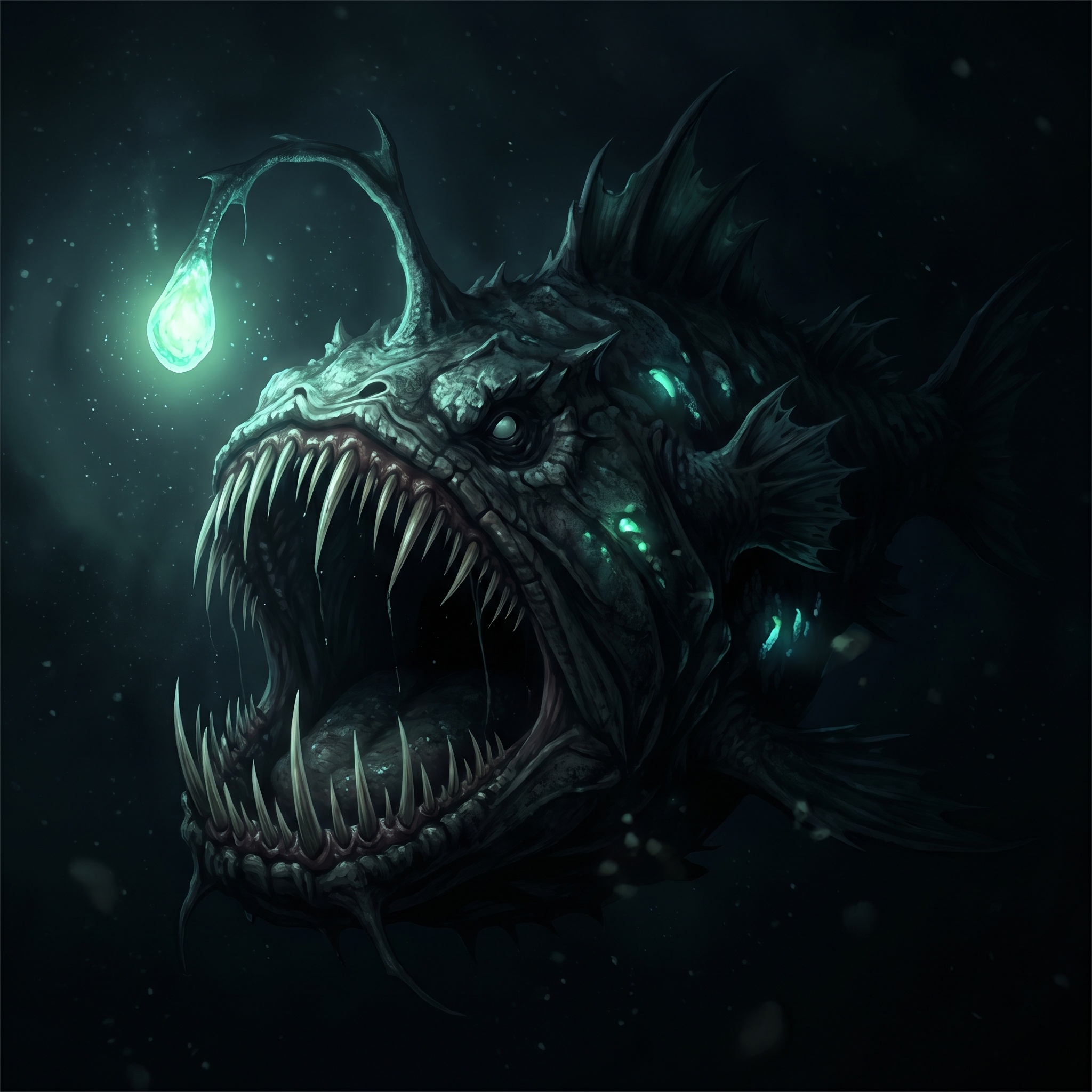
Role: Elite Abyssal Predator Where It Appears: Deep ocean, flooded underground chambers, the bottom of old harbor approaches.
The light is the trap. Everything else is what the light is attached to.
What It Is
Deep Anglers are large abyssal fish adapted to complete darkness. Their primary hunting tool is a bioluminescent lure extended from the head on a flexible rod, which draws curious creatures close enough for the feeding lunge. The body is significantly larger than the lure suggests — mostly teeth, stomach, and the bones of whatever failed to read the situation correctly.
They are not intelligent. They are extremely patient.
Ecology and Behavior
Deep Anglers occupy dark water at depth and near walls — flooded tunnels, harbor bottoms, deep ocean trenches. They are sessile hunters: they anchor to a substrate and wait for prey to approach the lure. In open ocean encounters, they are occasionally drawn to ship lights at night, which is when surface sailors encounter them.
Signs and Knowledge: Natural Philosophy (Hard) identifies the lure-fish principle and knows to attack the body, not the light. Operate (Hard) recognises a Deep Angler approach from the water below a lit ship at night.
Deep Angler (Elite)
- Skills: Unarmed 5, Stealth 4 in dark water, Fortitude 4, Perception 3.
- Attacks: Lunge Bite (Unarmed; Damage 11; Crit 3; Pierce 3, Vicious 3); Gulp Attempt (Unarmed; against Grabbed target — Swallow Whole on 2 Boons; swallowed target suffers 4 Wounds per round, Immobilized).
- Abilities: Lure — The bioluminescent lure draws curious creatures. Creatures approaching to investigate the light without awareness of the danger move to Engaged range before realizing the source. Knowledge check (Natural Philosophy or Adventuring Lore, Hard) prevents this.
- Abilities: Deep Vision — No penalty in complete darkness. Bright light adds 1 Bane to its checks.
- Abilities: Pressure Body — Attacks against it from above water depth add 1 Bane from awkward angle.
- Soul: No claimable coin exists; at death canon does not specify (default).
Tactics: Holds still, waits for target to approach lure, lunges, attempts Gulp. Does not pursue beyond its immediate territory.
Encounter Use: Flooded dungeon chambers, night sailing scenes, and anywhere characters must swim down to investigate a light that seemed promising.
Harvesting and Trade
| Harvest | Buyer | Check | Typical Value | Use | Complication |
|---|---|---|---|---|---|
| Bioluminescent Organ | Alchemist, navigator, scholar | Hard Medicine | 800–2,000 gold Flargons | Light-generation research, deep-sea study | Fades within hours if not preserved cold |
| Teeth | Collector, curiosity shop | Average Survival | 200–600 gold Flargons | Trophies, novelty tools | Common among deep-sea fishing communities |
Variants
Abyss Angler: Nemesis, WND 44. Large enough to swallow a person. Lives deeper. Its lure pulses with something that feels like meaning.
Gangly Mireling
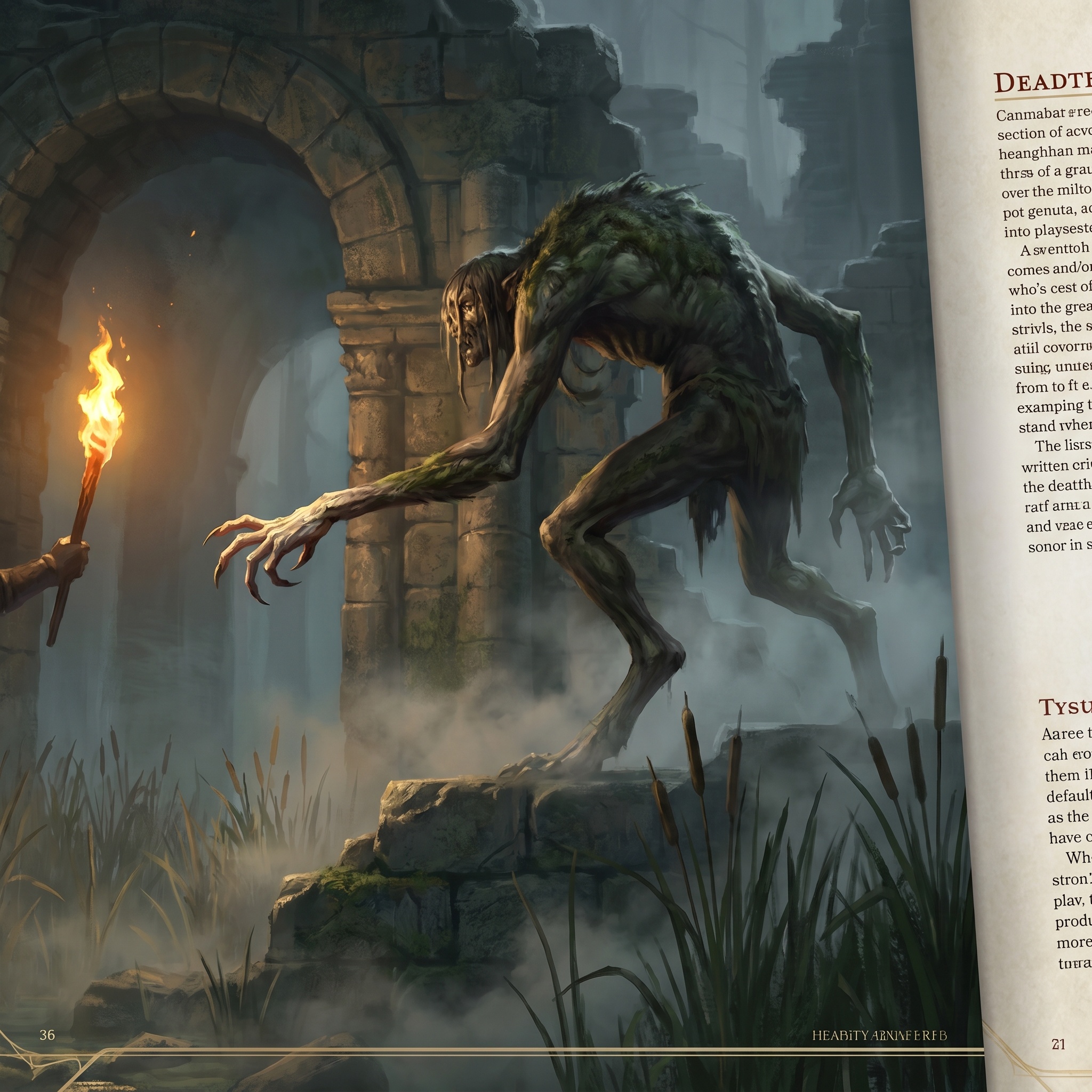
Role: Minion Lurker Where It Appears: Bogs, reed marshes, drowned forests, fogbound river margins. Source: Dort Monsters - Gangly Mireling.
Gangly Mireling (Minion)
- Group Size: 2-5.
- Skills: Stealth 3 in marsh, Athletics 3, Reflexes 3, Perception 3, Unarmed 3.
- Attacks: Hooking Arm (Unarmed; Damage 6; Crit 4; Range Engaged; Grabbed on 2 Boons); Marsh Bite (Unarmed; Damage 5; Crit 4).
- Abilities: Reed-Walker — Ignores difficult terrain from mud, reeds, shallow water, and root tangles.
- Abilities: Long Reach — May make Unarmed attacks against targets at Short range if both target and mireling are in marsh terrain.
- Abilities: Drag Low — When a Mireling group hits a Grabbed target, it may move the target one range band deeper into marsh instead of dealing +1 damage from extra Successes.
- Soul: No claimable coin exists; at death canon does not specify (default).
- Tactics: Attack from fog, grab the rear target, and drag them into deep water or roots.
- Encounter Use: Mirelings become dangerous when visibility and footing are poor. In open ground, they should flee.
- Variants: Mireling Tall-One: Elite, WND 17, Long Reach works outside marsh at Engaged plus one step.
Giant Crab
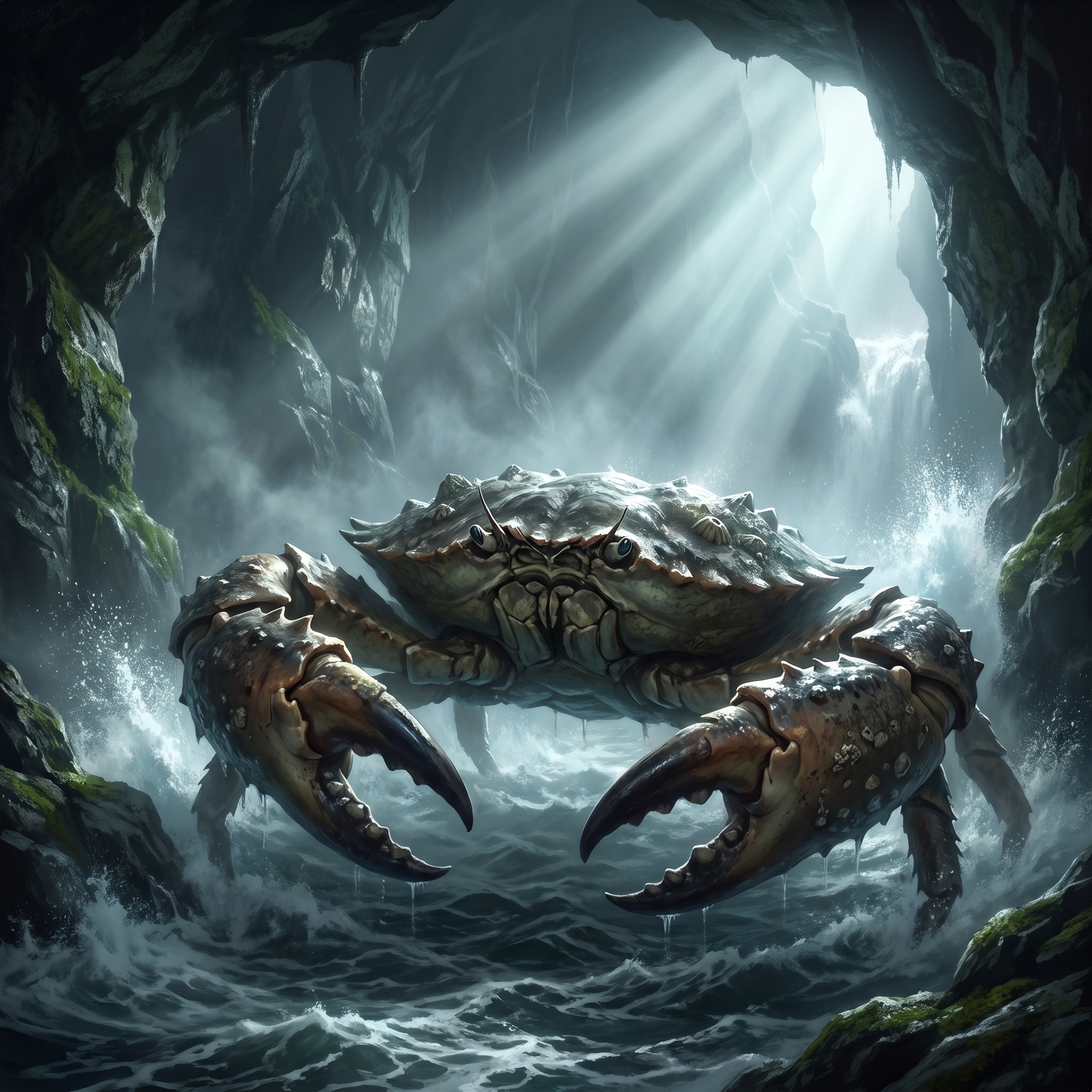
Role: Elite Territorial Guardian Where It Appears: Tidal caves, rocky coastal shallows, coastal ruins at or below the waterline.
A Giant Crab does not need to catch things. Things come to the tidal cave and the crab takes them. This system has been working for considerably longer than this crab has been alive.
What It Is
Giant Crabs are large coastal crustaceans that combine a heavily armored body with claws strong enough to shear through boat planking. They are not intelligent predators in the way a shark is — they are opportunists who occupy a fixed space and react to intrusion with immediate physical escalation.
Ecology and Behavior
Giant Crabs anchor to specific tidal caves and rocky shallows. They are mostly sessile during low tide and active during high tide and in the hours around tide changes. They eat fish, corpses, and anything that washes in or walks in.
Signs and Knowledge: Survival (Average) identifies the shell fragments and bone scatter of a Giant Crab's feeding ground.
Giant Crab (Elite)
- Skills: Unarmed 4, Athletics 4 in water, Fortitude 5, Perception 3.
- Attacks: Crusher Claw (Unarmed; Damage 10; Crit 3; Pierce 3; Grabbed on 2 Boons); Claw Sweep (Unarmed; Damage 8; Crit 4; Knockdown on 2 Boons).
- Abilities: Shell Armor — Reduce damage from attacks to the body by 2 before Resistance. Targeted attacks to joints or softer underside lose this reduction.
- Abilities: Clamp — A Grabbed target suffers 5 Wounds at start of each turn unless it escapes (Hard Athletics).
- Abilities: Tidal Advantage — In water, add 1 Boon to all Athletics and attack checks.
- Soul: No claimable coin exists; at death canon does not specify (default).
Tactics: Anchors at a chokepoint, sweeps anything entering range, clamps on and applies pressure. Does not leave its cave voluntarily.
Encounter Use: Tidal caves and coastal ruin approaches. Use the tide as a timing mechanic — at low tide the crab is slower, at high tide the cave is flooding.
Harvesting and Trade
| Harvest | Buyer | Check | Typical Value | Use | Complication |
|---|---|---|---|---|---|
| Shell Plates | Armorer, boatwright, collector | Average Craft | 300–800 gold Flargons | Light armor facing, shield bosses | Heavy and bulky to transport |
| Claw Assembly | Trophy buyer, carpenter, collector | Average Survival | 200–600 gold Flargons | Display, crushing tools, mechanical cams | Extremely heavy |
| Meat | Local fisher, cook | No check | 50–200 gold Flargons | Food | Common; value is local only |
Variants
Hermit Crab of Unusual Size: Elite, WND 20. Wearing a ship bell as a shell. This is both a protective measure and a navigational hazard.
Giant Leech
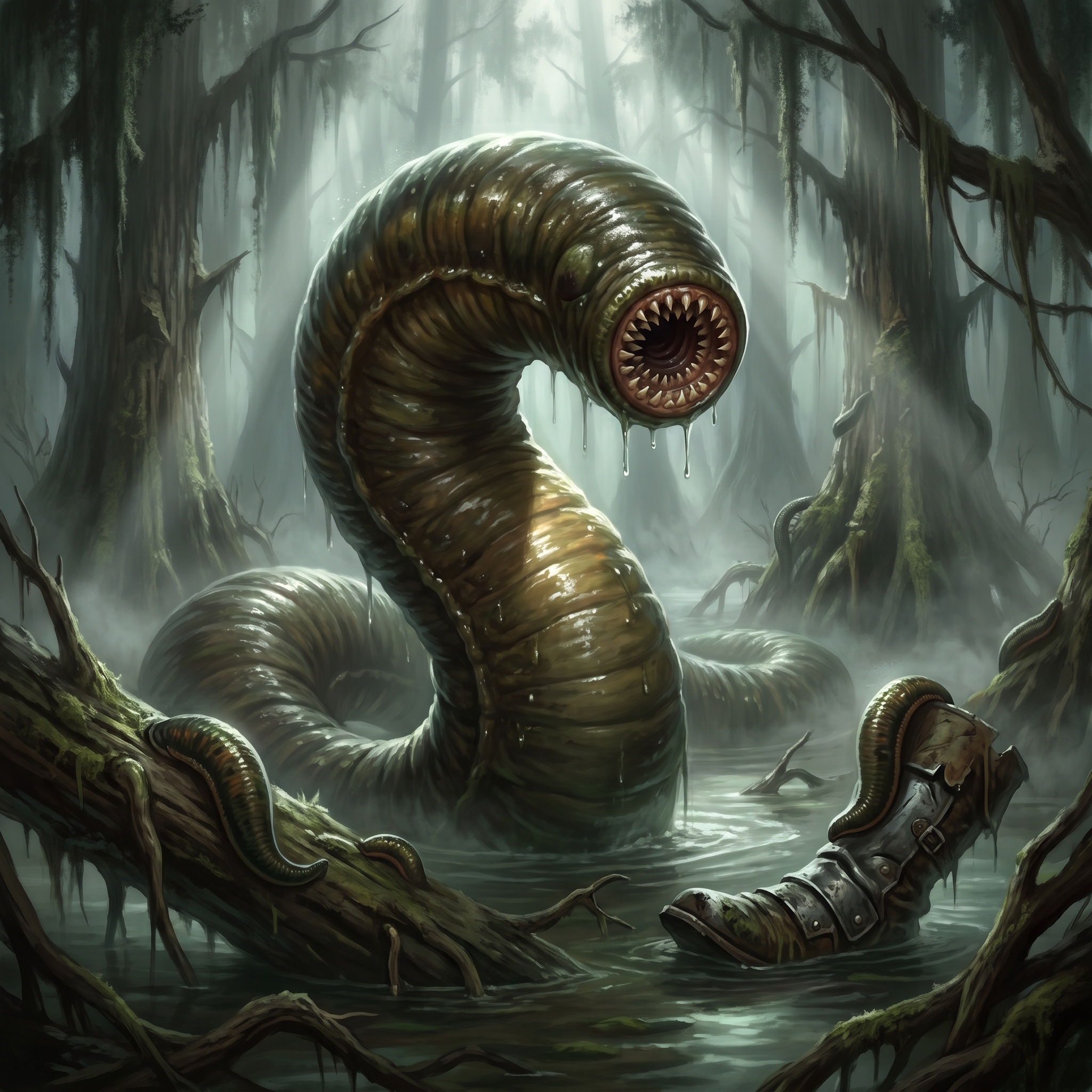
Role: Minion Aquatic Hazard Where It Appears: Swamps, slow rivers, warm bogs, any body of water with soft bottom.
A Giant Leech does not announce itself. The first sign is usually weight on the ankle followed by blood loss that is already in progress.
Signs and Knowledge: Survival (Average): identifies leech habitat before wading in.
Giant Leech (Minion)
- Group Size: 2–8 (one per character wading).
- Skills: Stealth 4 in water, Unarmed 2, Fortitude 3.
- Attacks: Blood Drain (Unarmed; Damage 3; Crit 5; Attached — deals 2 Wounds per round automatically until removed with Average Medicine or Survival).
- Abilities: Unnoticed Attach — First contact requires Hard Perception to detect before Blood Drain begins.
- Soul: No claimable coin exists; at death canon does not specify (default).
- Tactics: Attaches and feeds. Does nothing else.
- Encounter Use: Swamp and bog crossings. Use to make wading a cost rather than a free action.
- Harvesting and Trade: Medicinal leeches sell for 20–50 gold Flargons each to healers. Giant variety has limited use.
Variants
Swamp Leech: Elite, WND 14, drains 4 Wounds per round. At this size the attachment is immediately obvious.
Giant River Otter
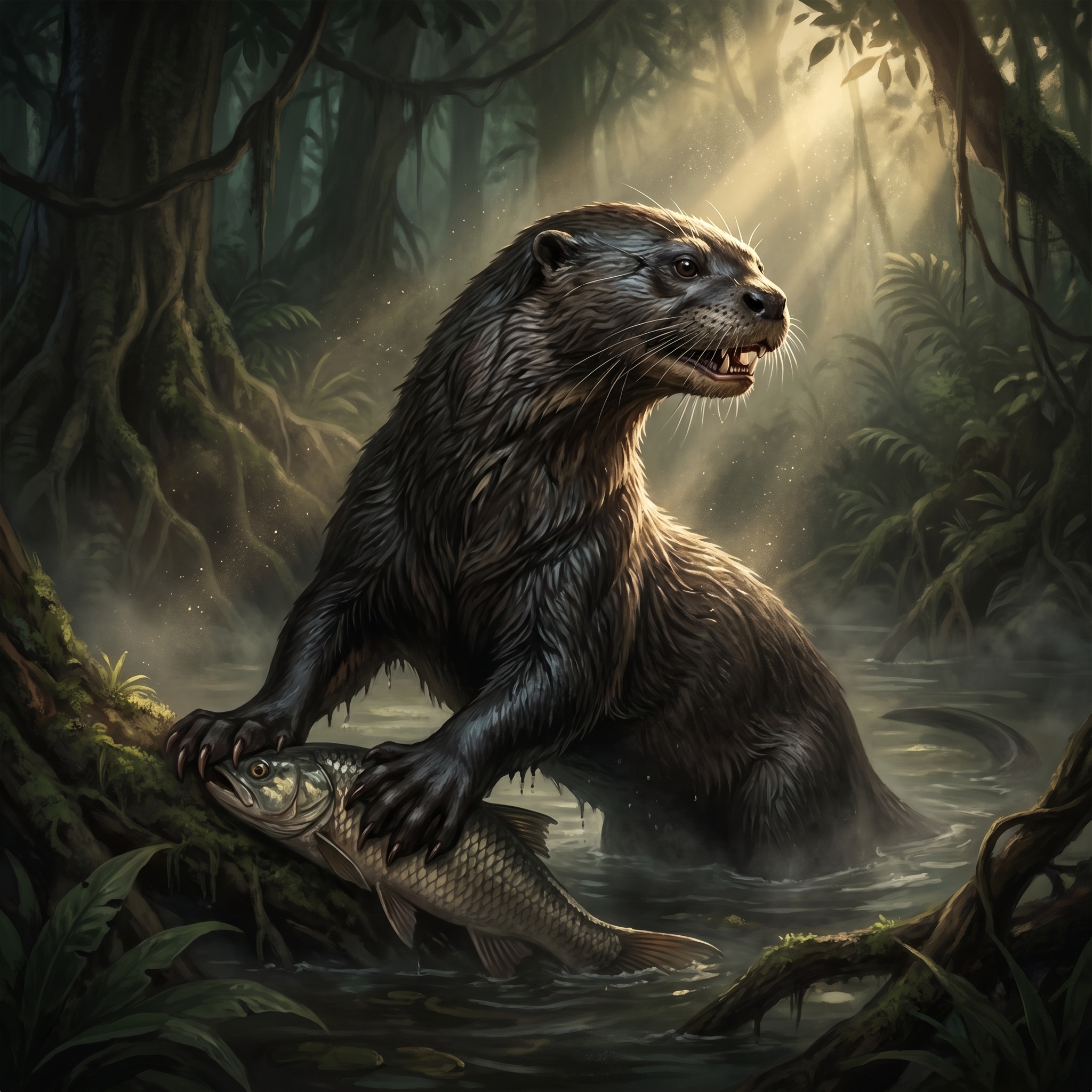
Role: Elite Aquatic Predator Where It Appears: Cold rivers, northern lakes, highland streams.
A Giant River Otter is playful in the way that a predator with four-inch canines that works in family groups and has no fear of anything its size is playful.
Signs and Knowledge: Survival (Average): identifies territorial slides, middens, and the specific otter cackling.
Giant River Otter (Elite)
- Skills: Unarmed 4, Athletics 5 in water, Perception 4, Survival 3.
- Attacks: Bite (Unarmed; Damage 8; Crit 3; Pierce 2); Tail Slap (Unarmed; Damage 6; Crit 4; Stun 2 underwater).
- Abilities: Aquatic Speed — Moves two range bands per Maneuver in water.
- Abilities: Family Group — When fighting in family groups of 3+, add 1 Boon to attacks. Family groups use this stat block; treat as a standard pack.
- Soul: No claimable coin exists; at death canon does not specify (default).
- Tactics: Harasses from water, bites, retreats, returns. Does not fight on dry land.
- Encounter Use: River scenes and cold fishing regions. Also potentially a camp pest that has eaten the preserved fish.
- Harvesting and Trade: Pelt sells for 400–1,000 gold Flargons to northern furriers. Legally protected in some river-guild territories.
Variants
Alpha Otter: Elite, WND 20, leads a family group of 4–6. Loss causes the family to scatter.
Great Serpent
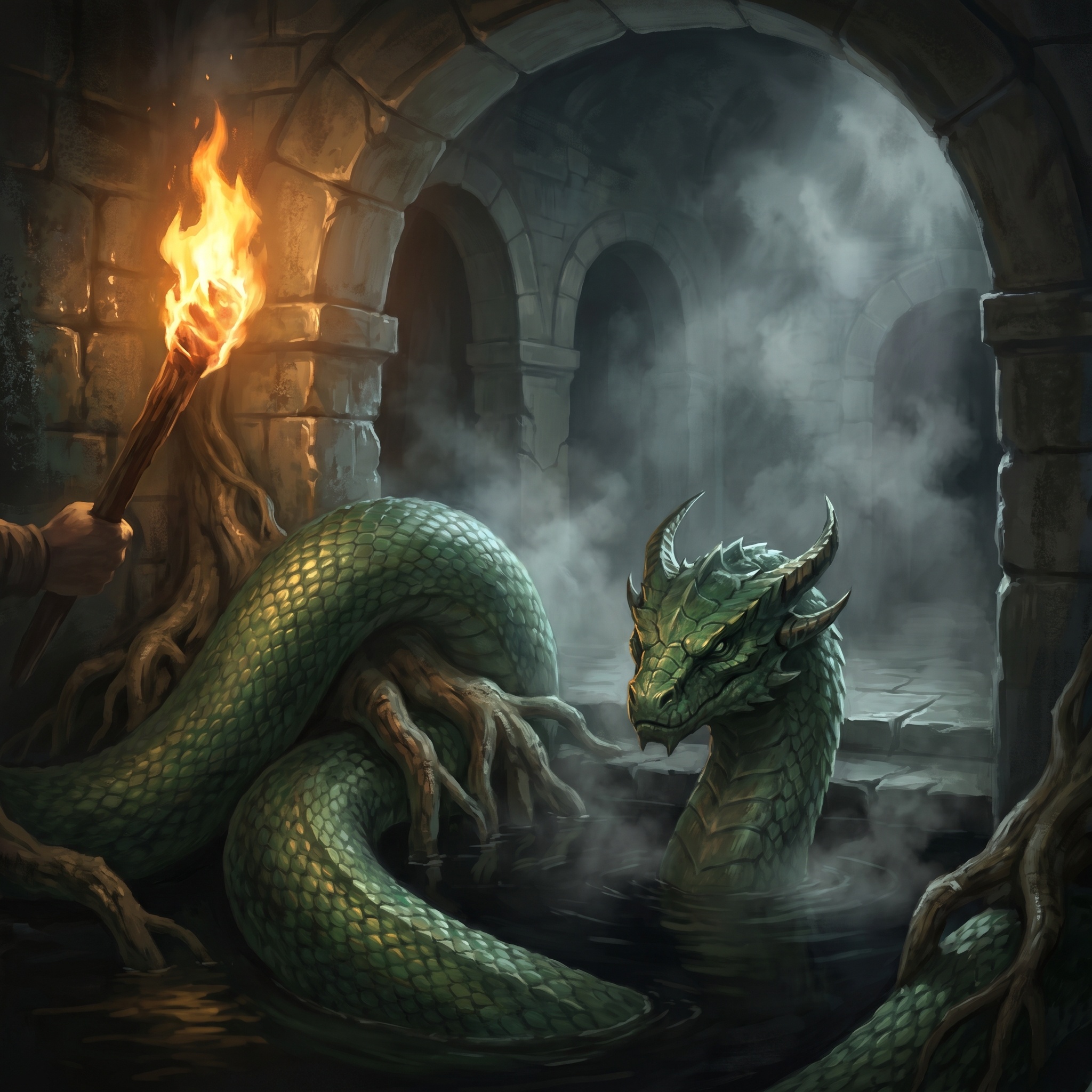
Role: Elite Lurker / Controller Where It Appears: Jungles, warm rivers, flooded ruins, sinkholes.
Great serpents are patient constrictors. They do not chase across open ground when they can wait under a ford and turn a crossing into a drowning.
What It Is
A Great Serpent is an enormous constrictor adapted to warm rivers, jungle roots, sinkholes, and flooded ruins. It is not venomous by default; it kills by bite, coil, pressure, and water.
The danger is not a chase. The danger is choosing the wrong ford, stepping onto the wrong root mat, or reaching into black water for someone already in its coils.
Ecology and Behavior
Great Serpents wait where prey must slow down: river crossings, drinking banks, ruin stairs under water, and warm sinkholes. They conserve energy and may go weeks between meals. Once they take prey, they retreat to cover rather than fighting a whole group.
Their presence changes local animal behavior. Birds avoid certain banks. Smaller predators use alternate paths. Fishing lines vanish without surface commotion.
Signs and Knowledge
Field signs: broad slide trails, crushed reeds, missing birds near a bank, smooth mud at a crossing, shed skin caught in roots, drag marks into water.
Survival (Average): spots slide trails and recent basking sites.
Survival (Hard): identifies ambush water by missing birds and bank marks.
Athletics or Survival (Hard): can plan a safe crossing with ropes, poles, and spacing.
Great Serpent (Elite)
- Skills: Unarmed 4, Athletics 4, Stealth 3 in water or foliage, Perception 3, Survival 3.
- Attacks: Constricting Bite (Unarmed; Damage 8; Crit 4); Crushing Coil (Unarmed; Damage 9; Crit 4; Grabbed on 2 Boons).
- Abilities: Coil Lock — A Grabbed target suffers 4 Wounds at the start of its turn unless it escapes with Hard Athletics or Reflexes.
- Abilities: Water Ambush — First attack from water adds 1 Boon and +2 damage.
- Soul: No claimable coin exists; at death canon does not specify (default).
Tactics: The serpent bites from concealment, coils the first target it can isolate, and retreats into water with prey. It avoids extended fighting on dry open ground.
Encounter Use: Make rescue and footing the point. A Great Serpent encounter works best when someone or something valuable is in the water, on a rope, or halfway across.
Harvesting and Trade
Great Serpents are useful but not exotic unless unusually patterned or old.
| Harvest | Buyer | Check | Typical Value | Use | Complication |
|---|---|---|---|---|---|
| Patterned Hide | Noble, tanner, priest | Average Survival | 250-1,000 gold Flargons | Boots, belts, ceremonial wraps | Knife marks reduce value |
| Serpent Fat | Cook, healer, waterproofing maker | Average Survival | 50-200 gold Flargons | Salves, waterproofing, lamps | Spoils in heat |
| Teeth | Jeweler, charm seller | Average Survival | 50-250 gold Flargons | Necklaces, hooks, river charms | Common unless huge |
Variants
River King Serpent: Nemesis, WND 31, STR 18, Coil Lock deals 6 Wounds and can affect two Grabbed targets.
Ruin Serpent: Elite, gains Stealth 4 in flooded stonework and ignores difficult terrain from submerged stairs or rubble.
Great Shark
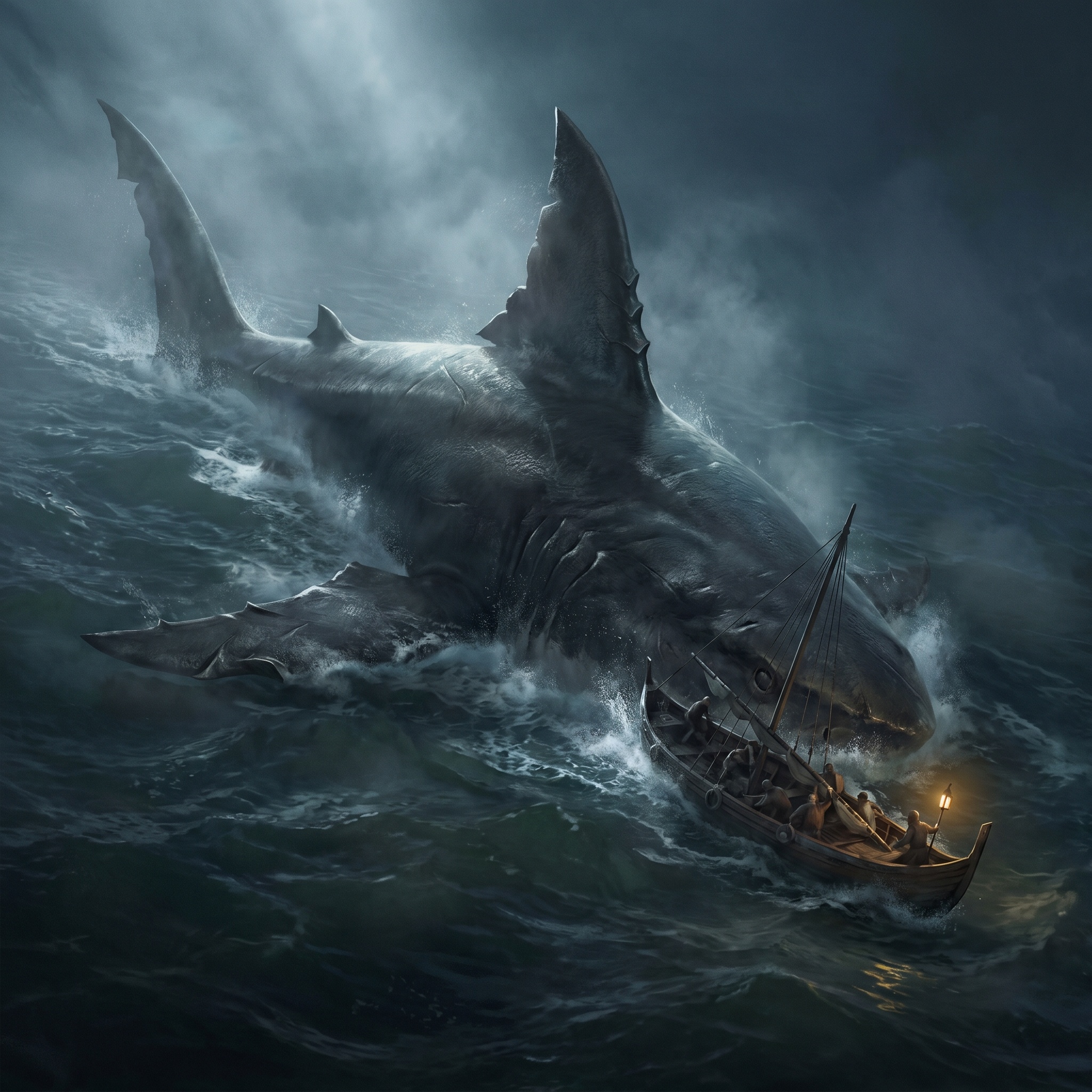
Role: Elite Apex Predator Where It Appears: Open ocean, deep coastal waters, contested sea lanes, anywhere blood enters the water.
A Great Shark is not malicious. It is the apex of a food chain that does not include humans by default, but is fully prepared to update that position.
What It Is
Great Sharks are large ocean predators — longer than most fishing vessels — that operate by smell, pressure sense, and shape recognition. They do not choose prey the way a thinking creature does; they respond to the biological signatures of something worth investigating. Blood in water triggers an investigation reflex that is very difficult to interrupt once started.
Ecology and Behavior
Great Sharks patrol territories that correspond to seasonal food abundance — whale migration routes, dense fish schools, sea lane shipping waste. They are not ambush predators in the way an ambush predator hides; they are open-water hunters that rely on speed and mass.
Encounters are usually preceded by a fin at distance, then a circling pass. The attack follows the circling. This is not hesitation — it is reading the target.
Signs and Knowledge: Operate (Average) reads shark behavior from fin pattern and body movement. Survival (Hard) identifies species and predicts whether the investigation will escalate.
Great Shark (Elite)
- Skills: Unarmed 4, Athletics 5 in water, Fortitude 4, Perception 5.
- Attacks: Tearing Bite (Unarmed; Damage 12; Crit 3; Pierce 3, Vicious 4); Ramming Pass (Unarmed; Damage 9; Crit 4; Knockdown on 2 Boons — against boat hulls or grouped swimmers).
- Abilities: Blood Sense — Detects blood in water at Long range. While blood is present in its zone, add 1 Boon to all attack checks.
- Abilities: Feeding Drive — Once a character is wounded in its water, the shark cannot be Frightened or Demoralized for the rest of the scene.
- Abilities: Boat Hazard — Against small craft, Ramming Pass is treated as a siege attack against the vessel's structure.
- Abilities: Dread — Fear 2.
- Soul: No claimable coin exists; at death canon does not specify (default).
Tactics: Circles first pass at Long range, narrows to Medium, attacks from below on third pass. Targets wounded characters or anyone in open water.
Encounter Use: Open water scenes, shipwrecks, anything that puts the party in the ocean. The key is the blood — the shark is manageable until blood enters the water, and then it is not.
Harvesting and Trade
| Harvest | Buyer | Check | Typical Value | Use | Complication |
|---|---|---|---|---|---|
| Teeth (full set) | Weaponsmith, collector, coastal traders | Average Survival | 300–800 gold Flargons | Saws, knives, trophies | Common in coastal shark-fishing communities |
| Liver Oil | Alchemist, navigator | Average Medicine | 200–600 gold Flargons | Lamp fuel, preservation compound | Spoils quickly in heat |
| Jaw Assembly | Trophy buyer, museum | Hard Survival | 1,000–3,000 gold Flargons | Prestige display, intimidation | Transport requires specialist equipment |
Variants
Shoal Shark: Minion, Group Size 2–4, WND 6. Smaller species, but Blood Sense applies to the group — all attack as one unit when triggered.
Impossible Leviathan
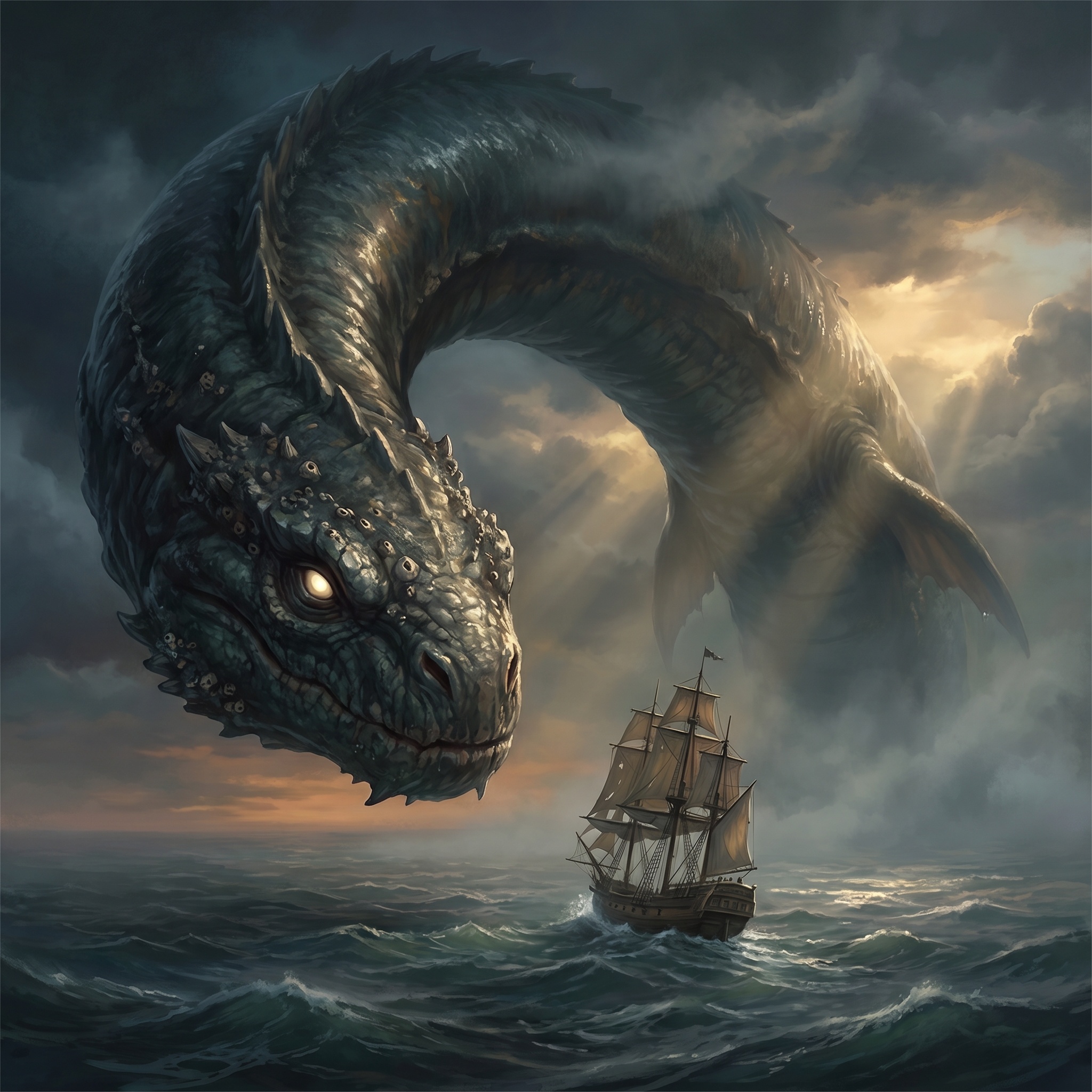
Role: Nemesis Maritime Catastrophe Where It Appears: Deep oceans, vanished shipping lanes, storm calendars, maps with warnings instead of coastlines.
"The harbor watch recorded it as a weather event for four years before the scale became clear. The thing they had logged as an unusual current was its wake." — Maritime Anomaly Registry, Tidal Authority of the Cut Coast
The Leviathan is too large for an ordinary encounter map. A fight against it is a fight against a moving environment, a ship's morale, and the decision to stay near the surface. It is called impossible because sailors have seen it pass through water shallower than its own skull.
What It Is
The Impossible Leviathan is a sea creature so large that ordinary monster language stops being useful. It is a body, a weather sign, a moving reef, and a maritime panic. Sailors call it impossible because it appears where depth charts say it should not fit, passes beneath ships without displacing enough water, and bends the horizon around its back.
It is not a god, though some crews pray at the sight of it. It is not a Void creature. It is a living maritime catastrophe whose scale makes natural law look negotiable.
Ecology and Behavior
The Leviathan haunts deep oceans, vanished shipping lanes, storm calendars, and maps marked with warnings instead of coastlines. It feeds rarely, moves through impossible routes, and may surface according to pressure, song, migration, or ancient injury rather than hunger alone.
Whole port economies can form around predicting where it will not be. Insurance rates, naval patrols, pilgrim ships, and smugglers all care about Leviathan seasons. A campaign should treat its arrival as an event that changes everyone on the water.
Signs and Knowledge
Sailing, Survival, or Natural Philosophy (Hard) identifies Leviathan approach from pressure changes, fish behavior, and wrong currents. Lore (Average) recognizes shipping calendars and the ports that lie about recent sightings.
Other signs include silent seas, whales fleeing into shallow harbors, water rising against wind, old harpoons found in beaches far inland, and maps where crews have scratched out profitable routes.
Impossible Leviathan (Nemesis)
- Skills: Athletics 5, Fortitude 5, Intimidation 5, Perception 5, Survival 5, Unarmed 5.
- Attacks: Horizon Maw (Unarmed; Damage 18; Crit 3; Pierce 5); Undertow (Athletics; Damage 14; Crit 4; Range Long; Ensnare 3, Knockdown).
- Abilities: Battlefield Body - Treat the Leviathan as terrain as well as a creature; climbing, anchoring, and ship handling matter every round.
- Abilities: Too Vast to Pin - It ignores Ensnare, Prone, and forced movement unless the source is ship-scale or divine.
- Abilities: Dread - Fear 4.
- Soul: No claimable coin exists; at death canon does not specify (default).
Tactics
The Leviathan surfaces beneath ships, isolates lifeboats, breaks formations by making the sea itself move, and vanishes below when badly wounded. It does not need to chase every swimmer. It changes the battlefield until staying alive becomes the encounter.
Run it at ship scale. Track rigging, anchors, cargo, crew morale, lifeboats, submerged hazards, and whether the party can make the creature leave, redirect it, or survive long enough for it to lose interest.
Harvesting and Trade
Harvesting requires ship-scale equipment and surviving the remains sinking. Many crews refuse to cut the body at all, fearing that the dead mass will drag their ship under or attract something worse.
| Component | Value | Use | Harvest |
|---|---|---|---|
| Baleen plate | 5,000-15,000 gold Flargons | Ship charms, enormous instruments, collector halls | Sailing and Craft (Hard) |
| Eye lens | 8,000-30,000 gold Flargons | Far-seeing optics, storm prediction | Medicine or Natural Philosophy (Severe) |
| Leviathan oil | 2,000-7,000 gold Flargons per barrel | Long-burning lamps, waterproofing, alchemy | Survival (Hard), dangerous rendering |
| Embedded old harpoon | Varies | Identifies previous nations, hunters, or failed wars | Lore or Warfare (Average) |
Variants
- Route-Eater: Appears along one profitable shipping lane every generation.
- Storm Calendar Leviathan: Surfaces only with a named storm pattern.
- Sleeping Reef: Mistaken for an island until it dives.
River Drake
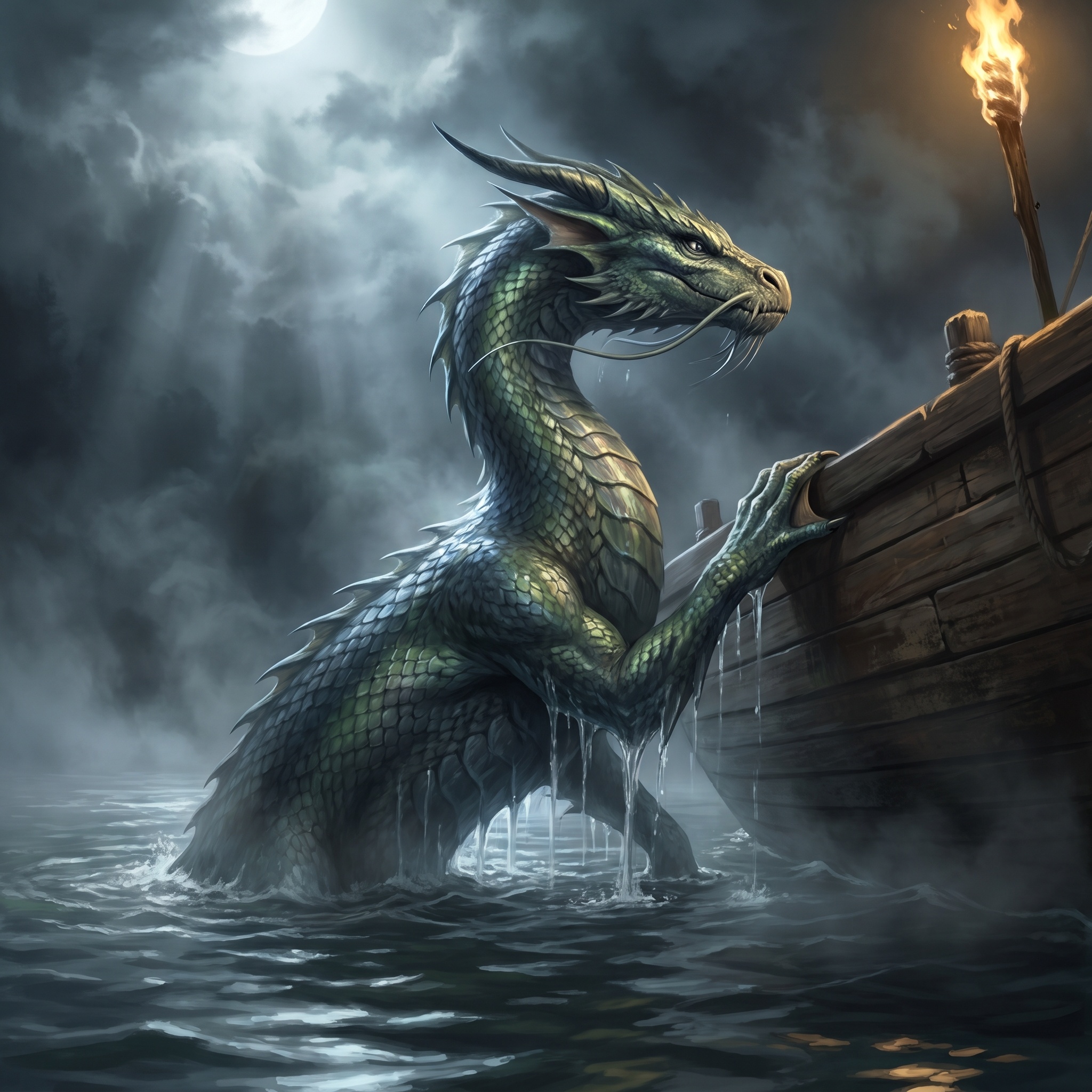
Role: Elite Aquatic Lurker Where It Appears: Rivers, deltas, drowned ruins.
What It Is
River drakes steal fish, goats, and careless passengers. Some barge families treat them like weather and pay them with offal. They are sleek draconic lurkers with webbed claws, whiskered snouts, and the patience to follow a boat for miles.
They make waterways feel owned. A river with a drake is not just terrain; it is an ambush lane.
Ecology and Behavior
River drakes inhabit rivers, deltas, drowned ruins, ferry crossings, and undercut banks. They prefer slow bends, submerged roots, bridge shadows, and places where animals must drink. Intelligent river communities sometimes develop tribute customs that are practical rather than religious.
They are opportunists. A river drake may take fish from nets for weeks before deciding a passenger looks easier than a sturgeon.
Signs and Knowledge
Survival or Operate (Average) identifies drake pressure on a river route. Perception (Hard) spots the wake moving against current.
Other signs include chewed oars, missing net sections, offerings tied below docks, claw marks on mud banks, and barges carrying offal buckets for "the bend."
River Drake (Elite)
- Skills: Athletics 5 in water, Stealth 3 in water, Perception 4, Unarmed 4.
- Attacks: River Bite (Unarmed; Damage 8; Crit 4; Grabbed on 2 Boons); Tail Slap (Unarmed; Damage 7; Crit 4).
- Abilities: Capsize Push — On 2 Boons against a small boat, force an Average Operate check or lose position/cargo.
- Soul: No claimable coin exists; at death canon does not specify (default).
Tactics
A river drake strikes from below, pulls prey into water, and retreats under banks. Against boats, it attacks position and cargo as much as people. If injured, it disappears into murk and returns when the boat is committed to a crossing.
Use current, cargo, passengers, and panic as encounter stakes.
Harvesting and Trade
| Component | Value | Use | Harvest |
|---|---|---|---|
| Waterproof hide | 500-1,200 gold Flargons | Cloaks, boat seals, armor | Survival (Average) |
| Oil glands | 400-1,000 gold Flargons | Waterproofing, lamp oil, alchemy | Medicine or Survival (Average) |
| Whisker feelers | 300-900 gold Flargons | Current-sense charms, fishing tools | Survival (Hard) |
Variants
- Ferry Drake: Controls one crossing and knows boat schedules.
- Delta Drake: Ambushes in reed mazes and brackish water.
- Drowned-Ruin Drake: Uses submerged buildings as lair tunnels.
River Hippo
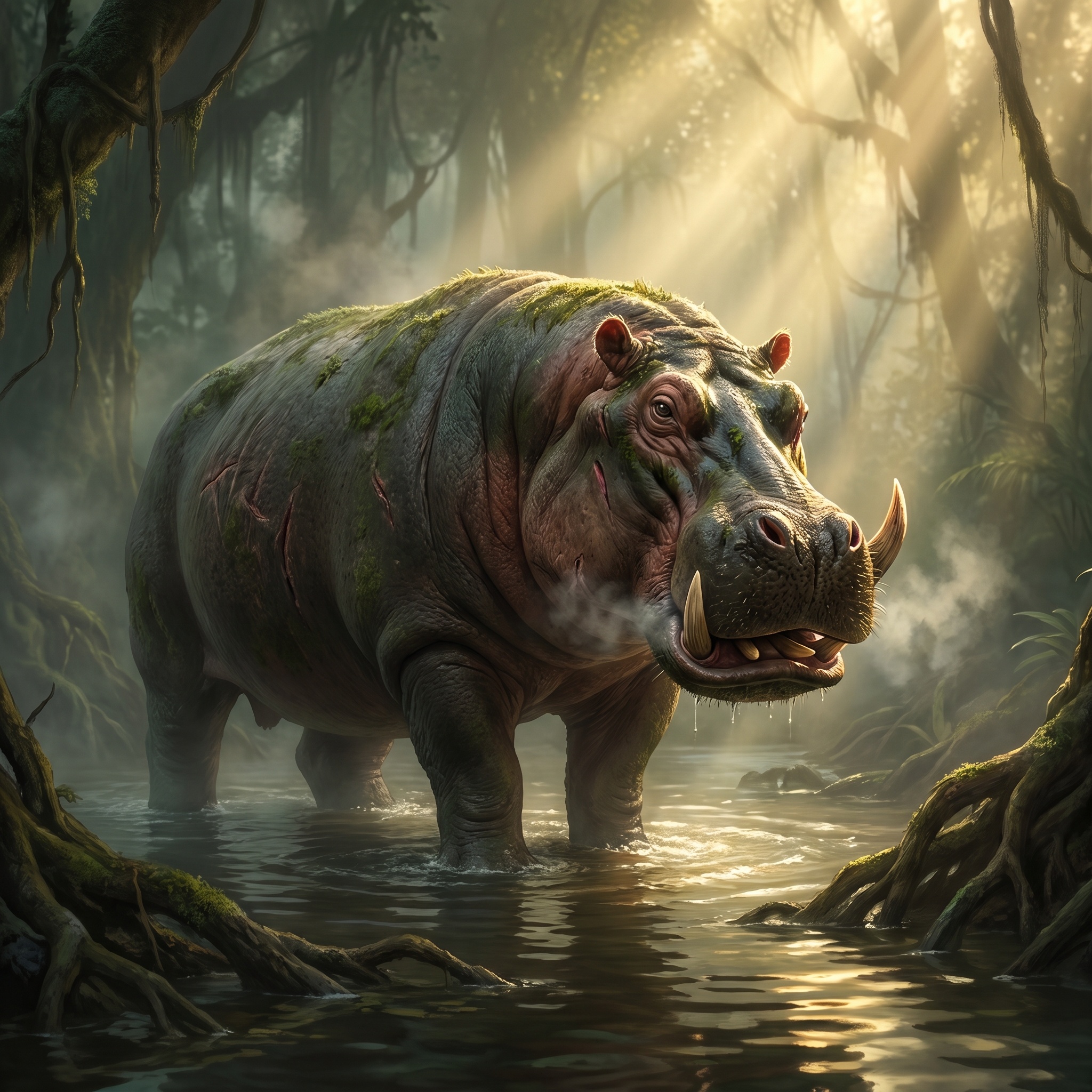
Role: Elite Territorial Bruiser Where It Appears: Warm rivers, coastal deltas, trading river routes.
A River Hippo is the most dangerous animal on most river routes and nobody who has not been to the relevant rivers believes this.
Signs and Knowledge: Survival (Average): identifies hippo territory in rivers — yawn displays, dung-scatter marking, routes animals avoid. This information is much more useful thirty minutes earlier.
River Hippo (Elite)
- Skills: Unarmed 4, Athletics 5 in water, Fortitude 5, Intimidation 3.
- Attacks: Tusk Gore (Unarmed; Damage 12; Crit 3; Pierce 3, Vicious 4); Trample (Unarmed; Damage 10; Crit 4; Blast 3).
- Abilities: Territory Charge — If a creature enters its immediate water territory, the hippo charges at full speed. First charge attack adds 1 Boon and +2 damage.
- Abilities: Thick Hide — Reduce Pierce from weapons below heavy siege quality by 1.
- Soul: No claimable coin exists; at death canon does not specify (default).
- Tactics: Charges from water, gores, and does not stop. It does not plan. It objects.
- Encounter Use: River travel. Canoe scenes. The moment a boat gets too close to the bank.
- Harvesting and Trade: Thick hide panels sell for 600–1,500 gold Flargons. Legal to sell only in regions without hippo-protection customs.
Variants
Old Bull Hippo: Nemesis, WND 45. Has sunk boats. The scars on it are from previous boats.
Sea Snake
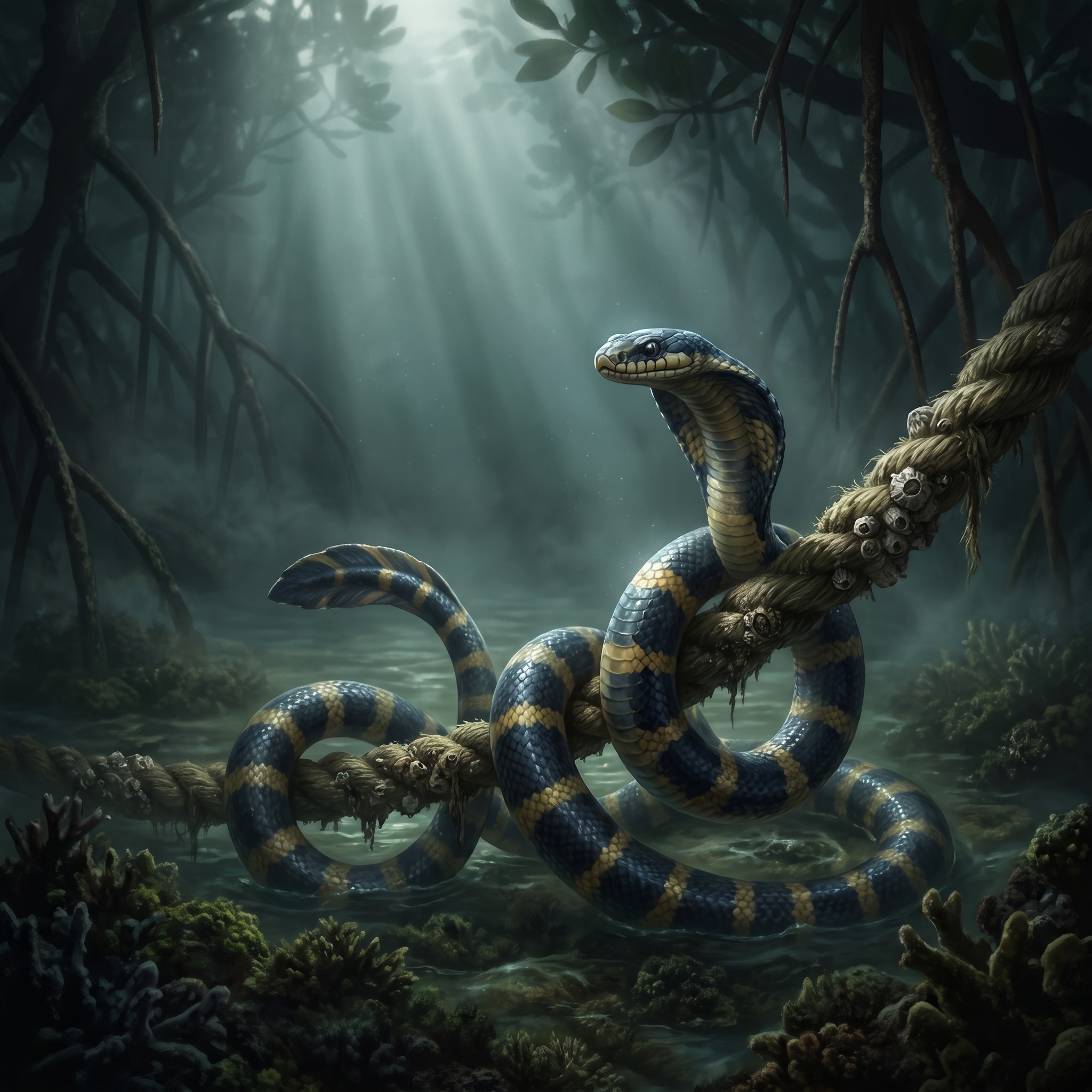
Role: Minion Aquatic Hazard Where It Appears: Tropical coastal shallows, coral reef approaches, warm harbours, tidal pools.
Sea Snakes are among the most venomous animals in the world, are almost completely non-aggressive, and bite only when touched or cornered. The problem is that they live exactly where people put their hands.
Signs and Knowledge: Survival (Average) identifies sea snake habitat and distinguishes them from sea eels or water plants.
Sea Snake (Minion)
- Group Size: 1–4 (individual snakes encountered in sequence in habitat).
- Skills: Stealth 4 in water, Athletics 4, Perception 2.
- Attacks: Defensive Bite (Unarmed; Damage 2; Crit 5; Poison 4 — the deadliest venom per attack in this catalog).
- Abilities: Non-Aggressive — Does not attack unless contacted directly. Characters wading in sea snake habitat without care encounter one per disturbance.
- Abilities: Extreme Venom — Poison 4: Hard Fortitude check immediately; on failure, character is Incapacitated within one hour without Hard Medicine antivenom treatment. On 2 Banes on the Fortitude check, incapacitation begins within ten minutes.
- Soul: No claimable coin exists; at death canon does not specify (default).
- Tactics: Defensive. Bites and swims away.
- Encounter Use: Tropical coastal scenes. Swimming through coral. Reaching into crevices. The damage is not the snake — it is the poison.
- Harvesting and Trade: Venom gland sells for 800–2,000 gold Flargons (Severe Medicine — handling is itself dangerous). Scales are minor curiosities.
Variants
Reef Eel: Same stat block without venom, but longer (up to ten feet) and more aggressive when territorial. Uses Bite to grab and constrict.
Tide God of the Cut Coast
Role: Nemesis Coastal Deity-Beast Where It Appears: Cut coasts, storm shrines, drowned villages, tide caves.
"Three generations of fishermen have made offerings. Three generations of offerings have been accepted. The nature of the relationship is not what the fishermen believe it is." — Tidal Authority cultural survey, Cut Coast region
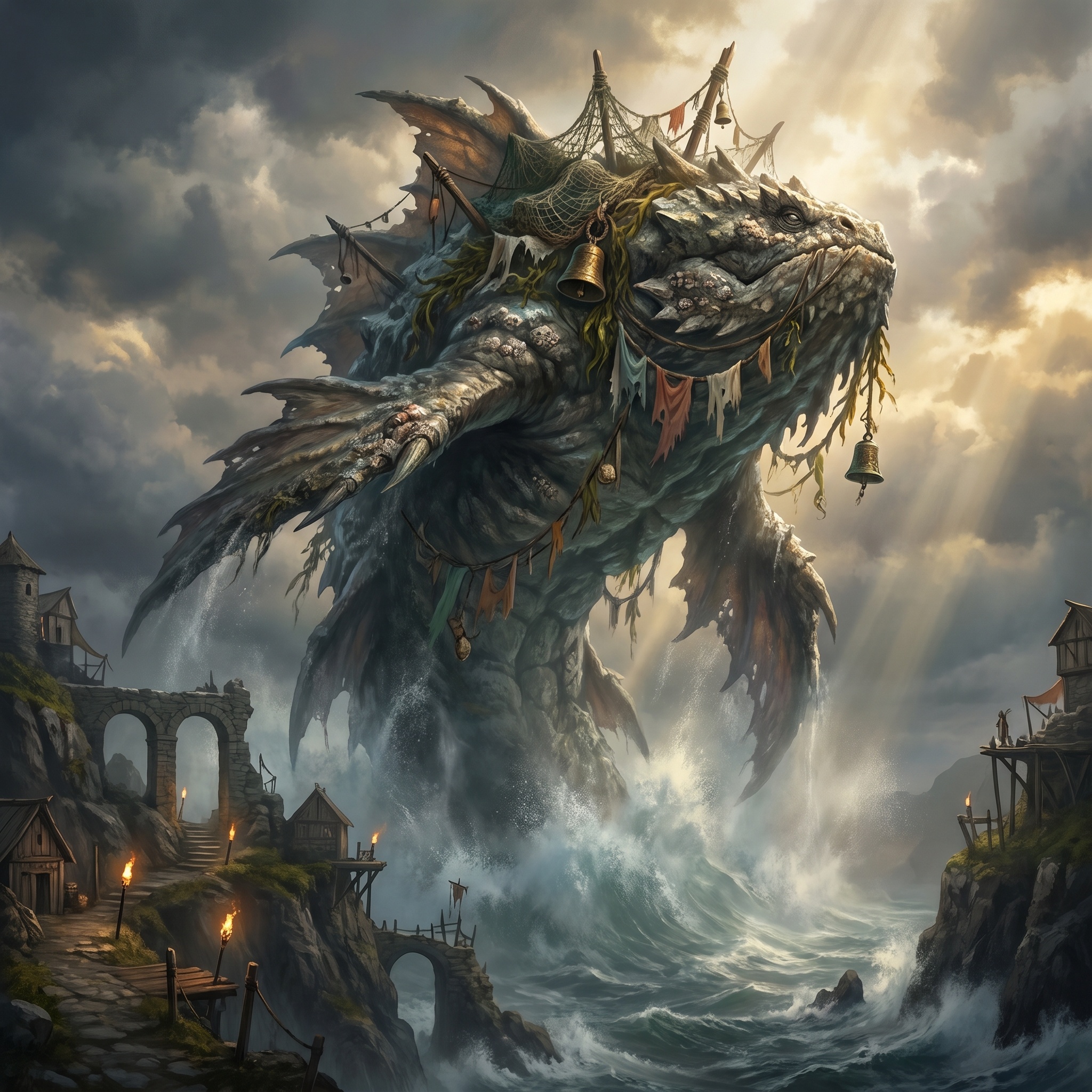
The Tide God is a title given by terrified villages to an ancient sea beast that learned worship changes behavior. It is not a god, but it has eaten enough offerings and priests to understand ritual leverage. It grants fair weather when fed, wrecks ships when ignored, and hates being called an animal.
What It Is
The Tide God is an old coastal predator with enough intelligence to exploit religion. It did not descend from heaven, claim a throne in the sea, or inherit divine office. It learned that bells bring food, priests make people obey, and terror becomes custom when it lasts long enough.
Its body is a mass of slate hide, barnacle armor, scar tissue, and shrine debris. Nets, bells, carved planks, votive chains, and broken figureheads hang from its crest. Some are offerings. Some are trophies from boats that tried to sail past without paying.
Ecology and Behavior
The Tide God controls a cut-coast territory: cliff villages, tide caves, storm shrines, kelp fields, and submerged channels where deep water comes close to shore. It hunts large fish, seals, whales, wreck survivors, and anything foolish enough to bleed in the surf. It is not dependent on worship for survival, but worship makes hunting easier.
The surrounding villages may not agree on whether the creature is monster, protector, punishment, or patron. A bad year at sea can make the shrine more popular. A good year can make the elders claim the sacrifices worked. Killing the Tide God may free the coast, but it may also expose old crimes committed in its name.
Signs and Knowledge
Survival, Natural Philosophy, or Sailing (Hard) identifies the territory by tide timing, broken reef patterns, and the absence of rival sea predators. Theology, Lore, or Negotiation (Average) identifies which local customs are fear management rather than sincere faith.
Other signs include cliff bells wrapped in wet rope, fish left whole at low-tide stones, storm shrines built above obvious bite marks, families who refuse to speak during fog, and wreckage placed where waves should not have carried it.
Tide God of the Cut Coast (Nemesis)
- Skills: Athletics 5, Leadership 4, Fortitude 5, Intimidation 5, Survival 5, Unarmed 5.
- Attacks: Rending Bite (Unarmed; Damage 15; Crit 3; Pierce 4); Crushing Wave (Heavy Ranged; Damage 12; Crit 4; Range Medium; Knockdown).
- Abilities: Tide Claim - In coastal or flooded terrain, the Tide God may move one range band as an incidental once per round.
- Abilities: Bell Hunger - When villagers ring its shrine bells, the creature knows the direction and emotional state of the ringer.
- Abilities: Dread - Fear 3.
- Soul: No claimable coin exists; at death canon does not specify (default).
Tactics
The Tide God fights like a coastal disaster with a grudge. It opens by forcing enemies off stable ground, then isolates one target in surf or floodwater. It understands hostages, bells, boats, and family names. If the party protects villagers, the creature tests that protection by threatening dependents or destroying evacuation routes.
It retreats into deep water when the fight stops serving its cult. A party that "wins" on the beach may still have to deal with storms, loyal shrine keepers, and a wounded sea beast that knows which village rang the first bell.
Harvesting and Trade
Most buyers fear shrine retaliation. Coastal communities may consider the body sacred, cursed, or legal property of the shrine. Distant ports are more willing to buy parts if the seller can prove no living village still claims the beast.
| Component | Value | Use | Harvest |
|---|---|---|---|
| Pearl-crusted teeth | 1,500-3,000 gold Flargons each | Status jewelry, water wards, trophy proof | Survival or Medicine (Hard) |
| Bell-worn crown debris | Priceless locally, 4,000-12,000 gold Flargons elsewhere | Cultural restitution, shrine law evidence | Negotiation or Lore (Hard) to authenticate |
| Tide gland | 7,000-20,000 gold Flargons | Storm rites, alchemical tide clocks | Severe Medicine, spoils fast outside saltwater |
| Shrine ledger and offerings | Varies | Identifies collaborators and victims | Investigation, Negotiation, or Lore (Average) |
Variants
- Village Patron: Protects one settlement and devours outsiders.
- Storm-Bell Tyrant: Responds to bells with weather and wreckage.
- Drowned Shrine God: Lairs beneath a sunken temple and uses currents as corridors.
Tide Serpent
Role: Elite Aquatic Controller Where It Appears: Coasts, reefs, Tide Dragon territories.
What It Is
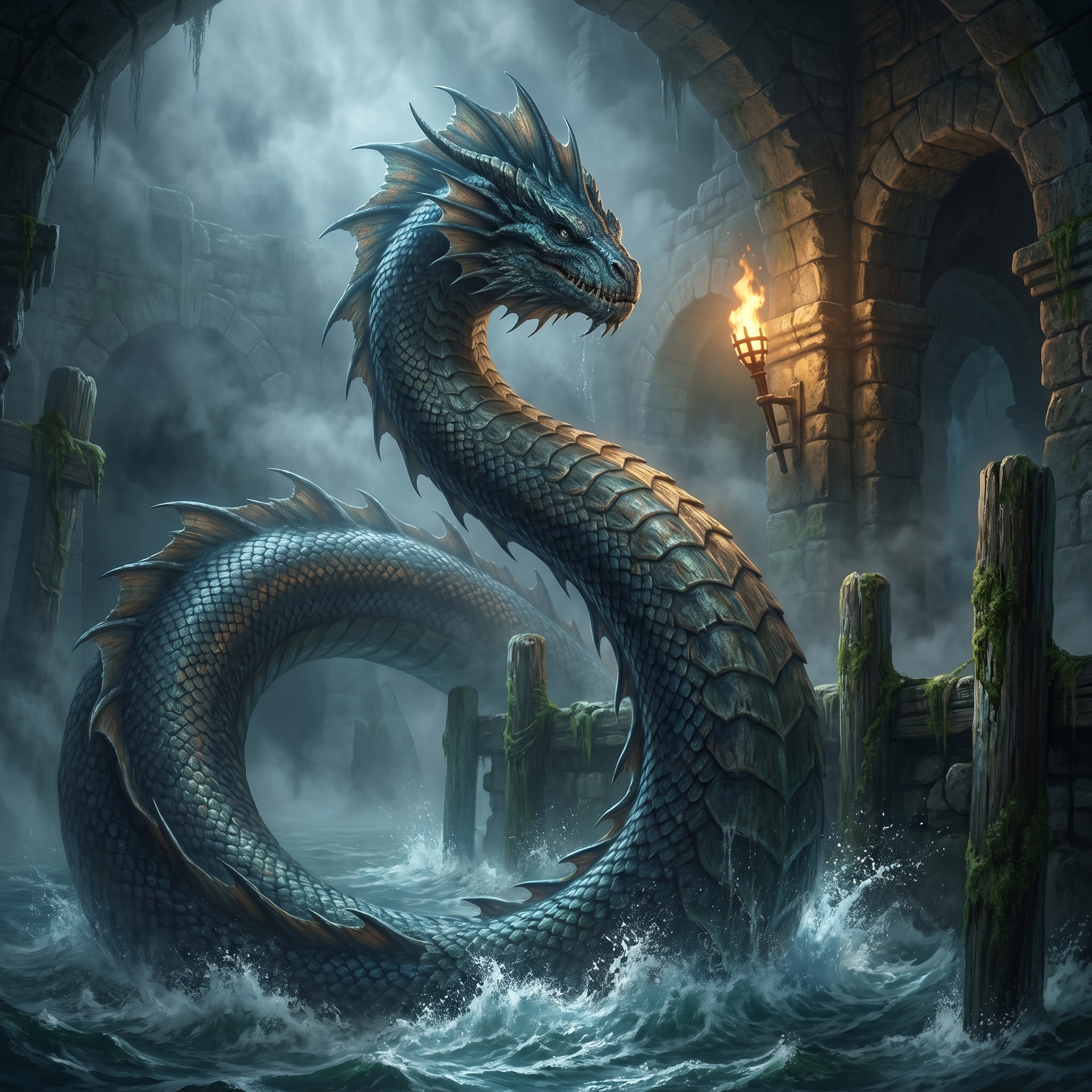
Tide serpents are lesser coastal predators often tolerated by Tide Dragons as useful territorial noise. They are long, finned, and patient, with enough draconic presence to make sailors invent rituals after surviving one.
They are controllers because water is already their ally. They do not need to kill everyone; they need one person pulled under and everyone else panicking.
Ecology and Behavior
Tide serpents live along coasts, reefs, harbor pilings, Tide Dragon territories, and wreck fields. They coil around boats, drag prey through kelp, and use surf to hide movement. Tide Dragons may ignore them, drive them like hounds, or treat them as pests depending on territory.
They follow fishing fleets and learn which docks throw scraps. A serpent that has been fed may still take a swimmer when hungry.
Signs and Knowledge
Sailing/Operate, Survival, or Draconic Lore (Average) identifies serpent waters. Perception (Hard) spots the coil before it tightens around pilings or hull.
Other signs include missing harbor dogs, scrape marks below tide lines, fish schools breaking in rings, and old sailors refusing to anchor over certain reefs.
Tide Serpent (Elite)
- Skills: Athletics 5 in water, Unarmed 4, Stealth 3, Perception 4.
- Attacks: Serpent Bite (Unarmed; Damage 8; Crit 4); Coil Drag (Unarmed; Damage 8; Crit 4; Grabbed).
- Abilities: Undertow Coil - Grabbed targets in water add 1 Bane to escape.
- Soul: No claimable coin exists; at death canon does not specify (default).
Tactics
A tide serpent drags prey below, circles boats, and retreats into reefs. It uses Undertow Coil to make rescue dangerous. Against vessels, it attacks rudders, oars, anchor ropes, and exposed crew.
Use it with water depth, current, rigging, and rescue stakes.
Harvesting and Trade
| Component | Value | Use | Harvest |
|---|---|---|---|
| Salt glands | 700-1,600 gold Flargons | Water breathing aids, brine wards | Medicine or Survival (Hard) |
| Serpent hide | 600-1,500 gold Flargons | Waterproof armor, rope wraps | Survival (Average) |
| Finned crest | 400-1,100 gold Flargons | Tide charms, ship trophies | Survival (Average) |
Variants
- Harbor Coil: Learns docks, pilings, and local feeding customs.
- Reef Serpent: Uses coral and wreckage as a maze.
- Dragon-Driven Serpent: Acts as living border noise for a Tide Dragon.