A swarm is not a monster with a personality, it is a hazard that happens to be alive. Rat Swarm, Centipede Swarm, Wasp Nest, and the rest of this chapter share the same design job: attrition, area denial, and the specific tactical problem of a threat that single-target tools handle badly. None of them are masterminds. None of them need to be.
This chapter is where a GM reaches for scale rather than menace: a cave that should feel unpleasant before the real threat is found, a granary overrun since the last harvest, a crypt that has not been disturbed in exactly as long as it takes for something to nest.
At the table: remind players that area attacks matter here and single-target damage does not scale the way they expect. A swarm entry rewards fire, blast effects, and terrain control over a well-placed single strike.
Black Widow
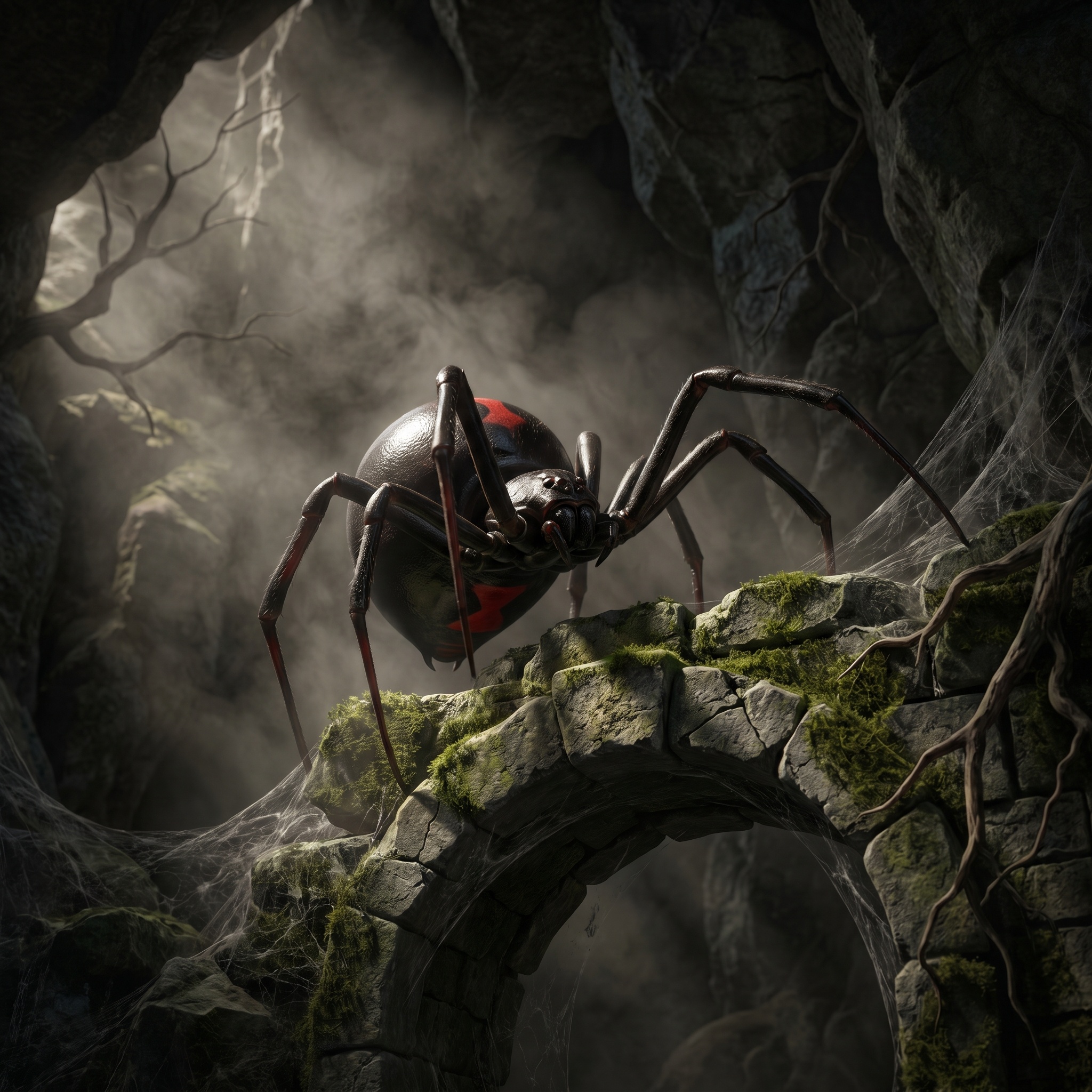
Role: Minion Vermin Where It Appears: Woodpiles, old outhouses, storage rooms, anywhere dry and cluttered.
Black Widows are not aggressive. They are somewhere the party is reaching without looking.
Signs and Knowledge: Survival or Medicine (Average): identifies Black Widow habitat before disturbing it.
Black Widow (Minion)
- Group Size: 2–6 (individual spiders encountered in sequence).
- Skills: Stealth 4, Unarmed 2.
- Attacks: Venom Bite (Unarmed; Damage 2; Crit 5; Poison 3 — the venom is more dangerous than the bite).
- Abilities: Passive Defense — Does not attack unless contacted directly. Characters searching storage areas without care encounter one per attempt.
- Abilities: Potent Venom — Poison 3 from Black Widow bite requires Hard Medicine or Hard Fortitude (the character's choice) to avoid progressing to Severe symptoms.
- Soul: No claimable coin exists; at death canon does not specify (default).
- Tactics: None. Defensive bite only.
- Encounter Use: Hazard for characters searching enclosed spaces carelessly. Pair with things that make the party rush their searching.
- Harvesting and Trade: Venom sac sells for 300–800 gold Flargons (Hard Medicine). Very potent for the size.
Variants
Nest Site: A single area containing 8–15 Black Widows in their web clusters. Unavoidable contact triggers all of them.
Blood Moth Swarm
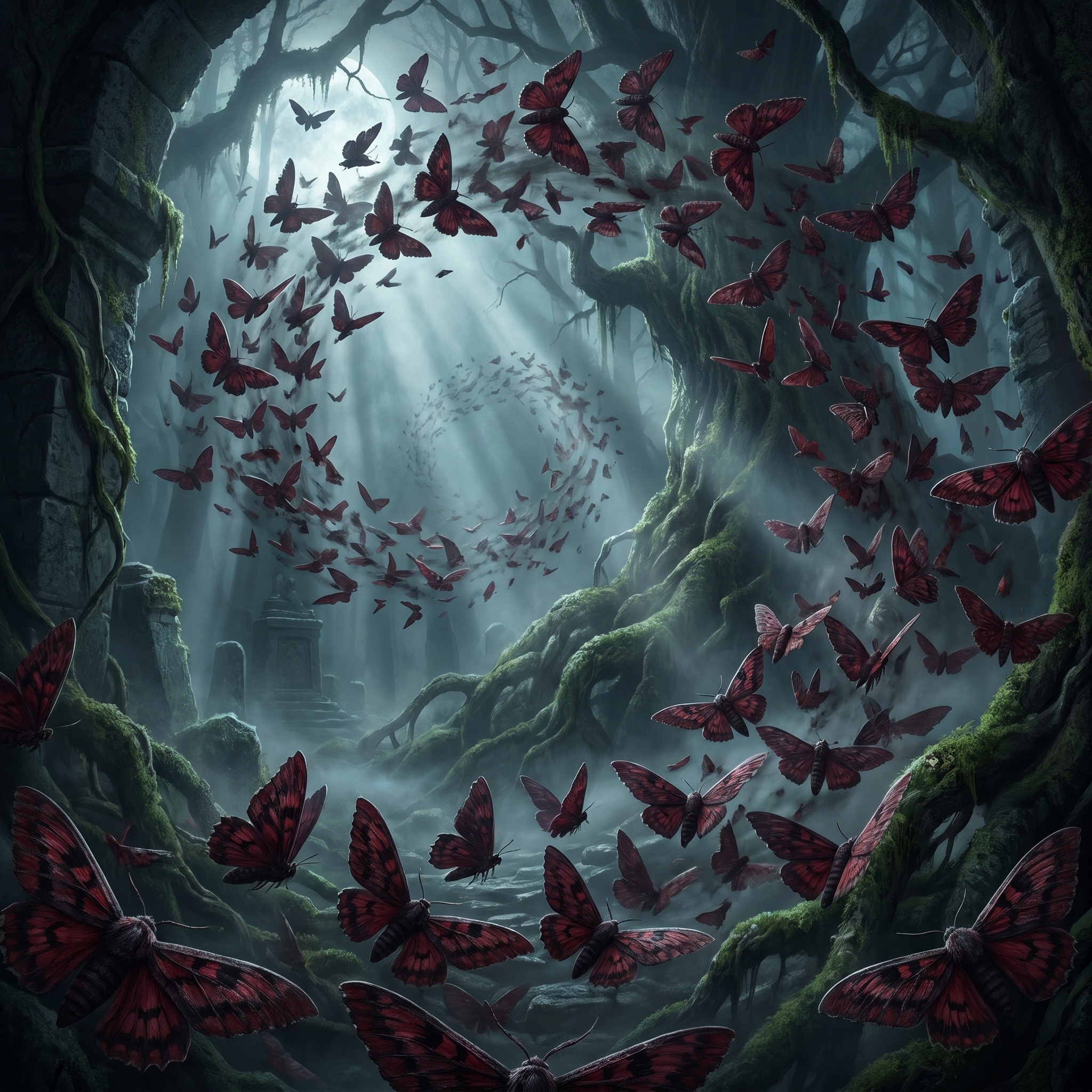
Role: Minion Drain Swarm Where It Appears: Humid jungles, flooded ruins, warm underground rivers.
Blood Moths are named accurately. They feed on blood, they fly silently, and they find sleeping creatures by breath and heat.
Signs and Knowledge: Perception (Hard): hears them before contact — they are nearly silent.
Blood Moth Swarm (Minion)
- Group Size: One swarm.
- Skills: Stealth 5, Reflexes 4, Perception 3.
- Attacks: Feeding Cloud (Unarmed; Damage 3; Crit 5; affects all Engaged creatures).
- Abilities: Sleep Seeker — Sleeping or unconscious targets add 2 Banes to detect the swarm before contact; take 4 Wounds before waking.
- Abilities: Swarm Body — Standard.
- Soul: No claimable coin exists; at death canon does not specify (default).
- Tactics: Descends on sleeping camp, feeds until disturbed, disperses into darkness.
- Encounter Use: Night camp scenes in humid regions. The cost of sleeping without watch or shelter.
- Harvesting and Trade: Wing dust has minor alchemical value (50–150 gold Flargons per swarm, Hard Natural Philosophy to collect without destroying).
Variants
Jungle Blood Moth Colony: Three swarms operating simultaneously on different targets. Exhausts a camp in one night.
Bone Crab
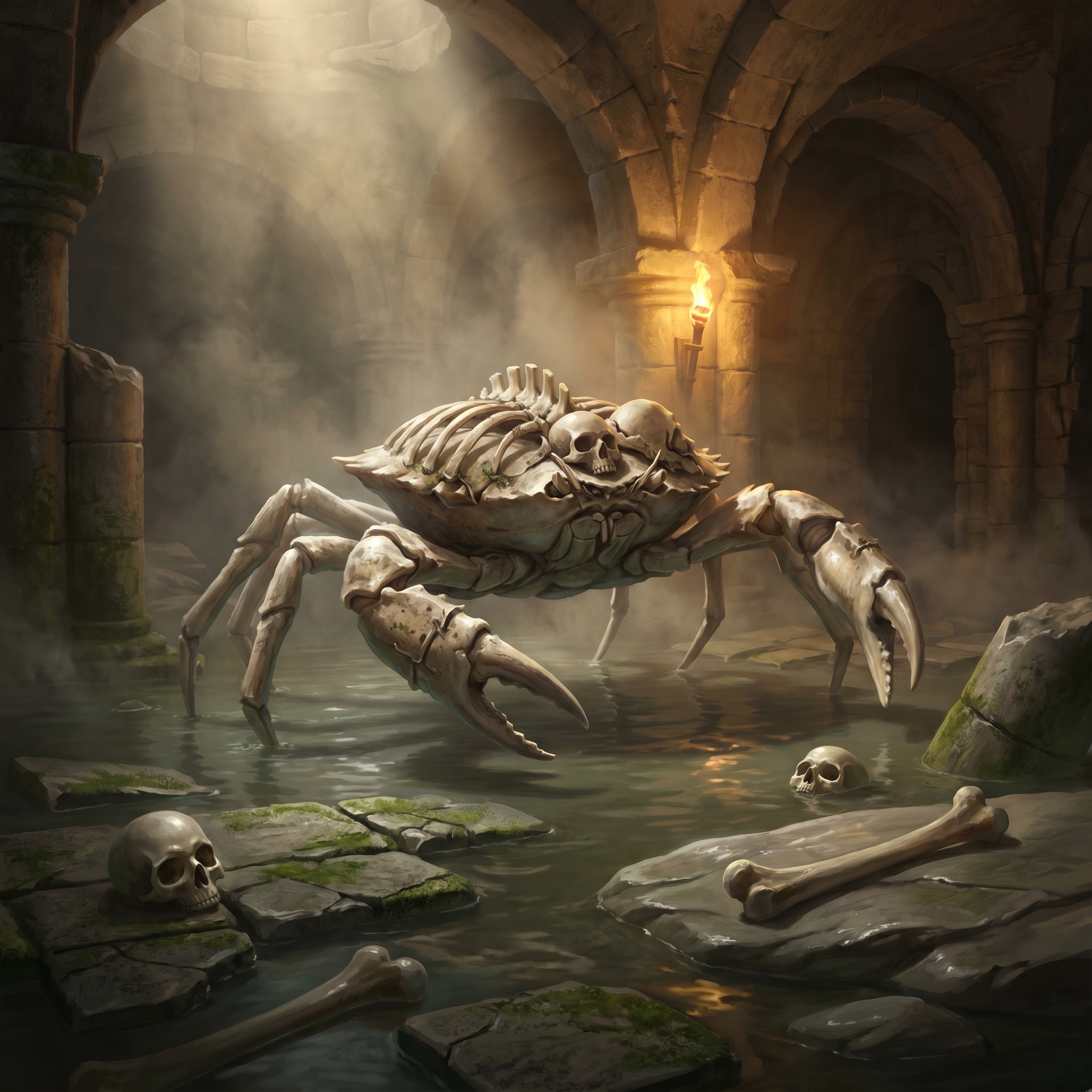
Role: Minion Swarm / Scavenger Where It Appears: Catacombs, beaches near battlefields, flooded tombs.
Bone crabs armor themselves with remains. They are a sanitation problem until a swarm strips the wrong grave and angers the wrong community.
Bone Crab (Minion)
- Group Size: 6-20.
- Skills: Unarmed 2, Stealth 3 among bones, Perception 2.
- Attacks: Pinching Swarm (Unarmed; Damage 4; Crit 5; Bleeding 1 on 2 Boons).
- Abilities: Borrowed Armor - In bone-rich terrain, Resistance increases to 3.
- Soul: No claimable coin exists; at death canon does not specify (default).
- Tactics: Swarm prone or sleeping targets, retreat if scattered by fire.
- Harvesting and Trade: No meaningful harvest; cleaned shell-bones may have minor curio value.
Cave Cricket
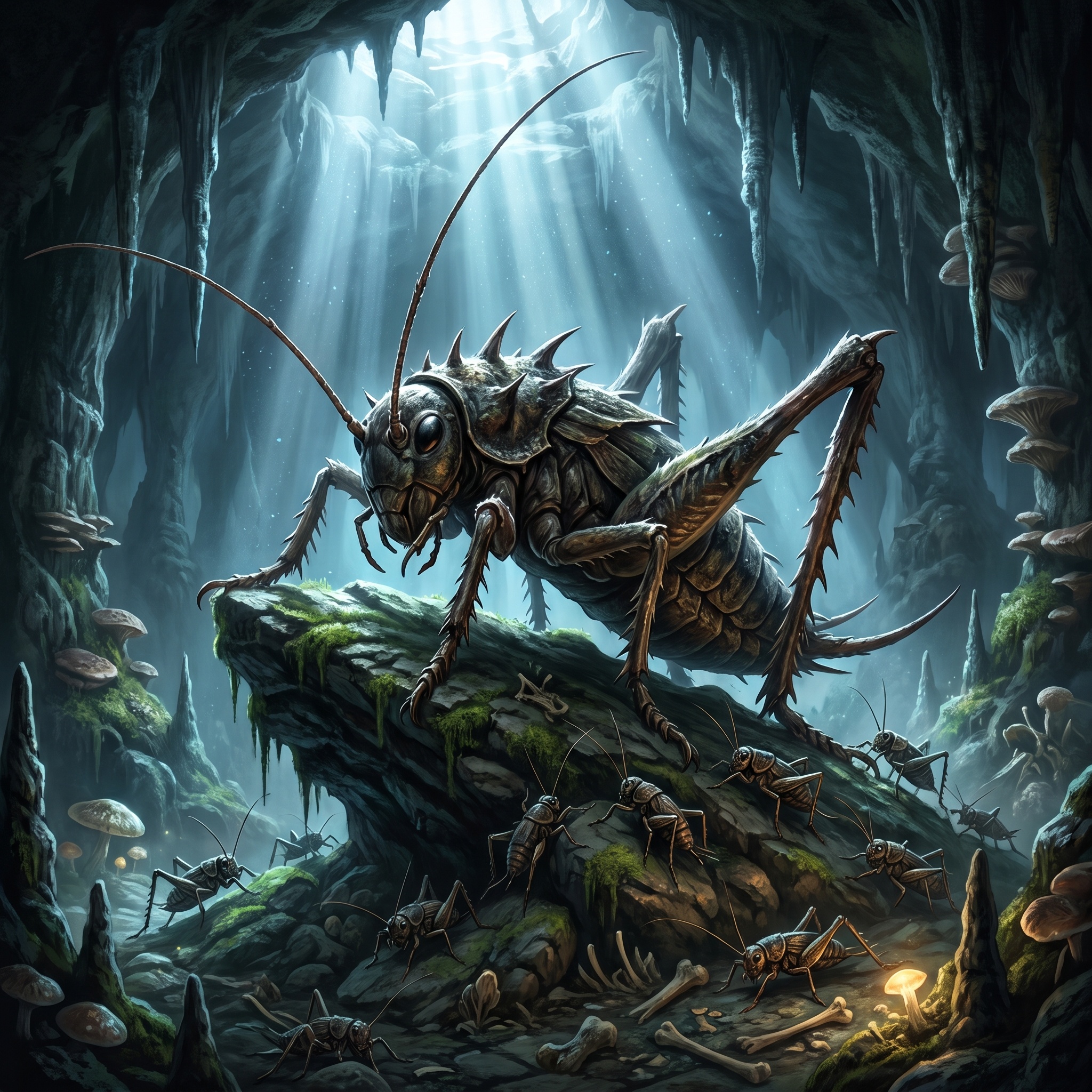
Role: Minion Hazard Swarm Where It Appears: Caves, underground ruins, damp cellars.
Cave Crickets are not dangerous. They are loud, numerous, and tend to be present in caves that contain other things that are dangerous.
Signs and Knowledge: Perception (Average): the silence when cave crickets stop is more significant than the noise when they are active.
Cave Cricket (Minion)
- Group Size: One ambient colony.
- Skills: Perception 3, Reflexes 3.
- Attacks: None.
- Abilities: Silence Warning — Cave Crickets go silent when a large predator, undead, or hostile creature enters their chamber. Adventuring Lore (Average) or Perception (Average) reads this as a warning.
- Abilities: Harmless Hazard — Cannot deal Wounds. Jumping contact is disorienting: add 1 Bane to Perception checks while the swarm is active and in contact.
- Soul: No claimable coin exists; at death canon does not specify (default).
- Tactics: None. Flee from disturbance.
- Encounter Use: Use as a living alarm. Their silence is the GM tool, not their biting.
- Harvesting and Trade: No value.
Variants
Bioluminescent Cave Cricket: Glows faintly. Their silence is followed by the glow going out, which is very readable.
Centipede Swarm
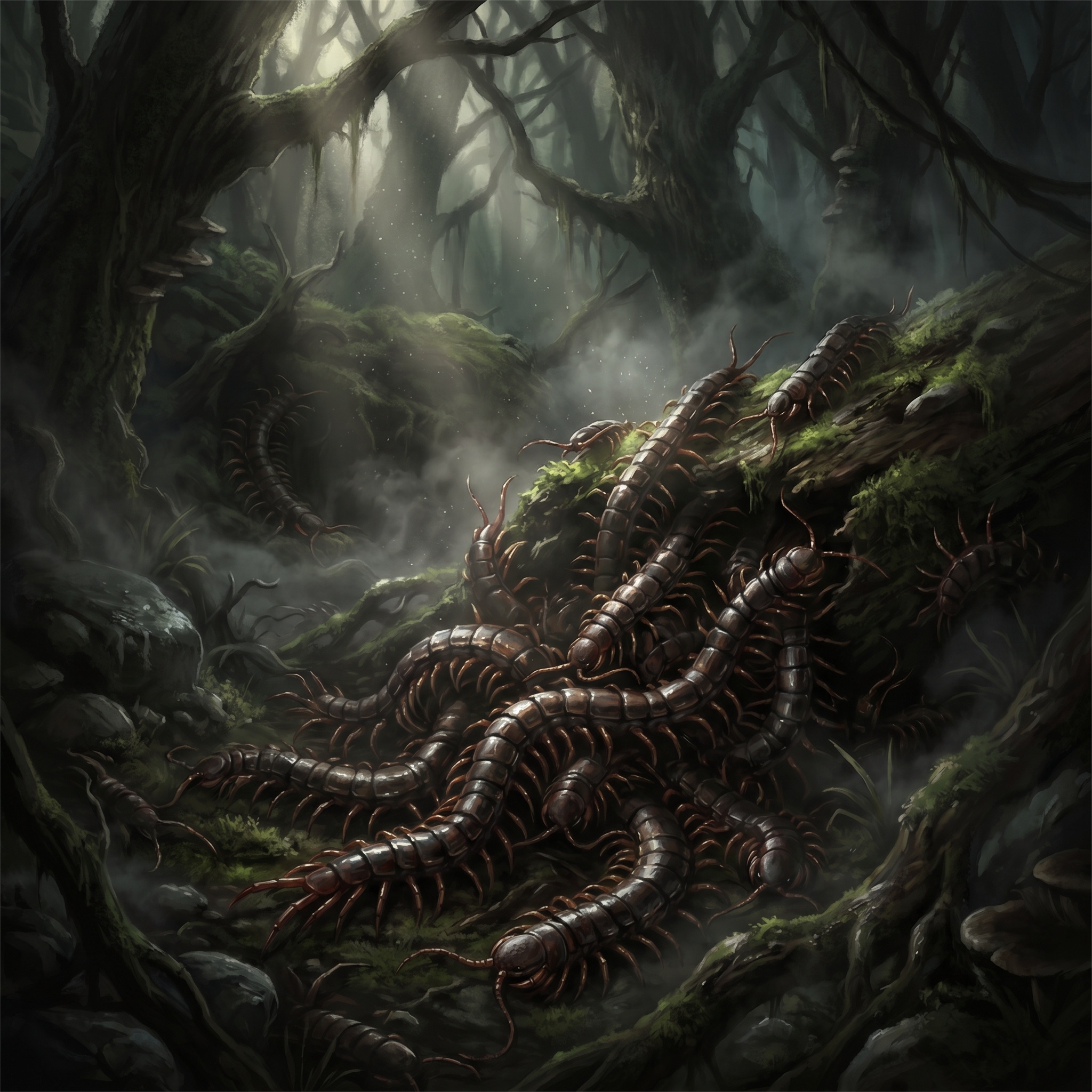
Role: Minion Vermin Swarm Where It Appears: Crypts, jungle floors, rotting wood floors, old stone buildings.
The standard centipede is an inch. These are four inches each and there are forty of them under that board you just stepped on.
Signs and Knowledge: Perception (Average): hears movement before contact.
Centipede Swarm (Minion)
- Group Size: One swarm.
- Skills: Stealth 3, Unarmed 2, Fortitude 3.
- Attacks: Biting Carpet (Unarmed; Damage 4; Crit 5; Poison 1 on 2 Boons).
- Abilities: Swarm Body — As standard.
- Soul: No claimable coin exists; at death canon does not specify (default).
- Tactics: Flows under feet, bites, retreats from fire and stomping.
- Encounter Use: Floor hazards in rotting structures and jungle ruins. Combined with the Giant Centipede as a layered encounter.
- Harvesting and Trade: No value.
Variants
Venomous Centipede Swarm: Poison 2, moves faster.
Cockroach Swarm
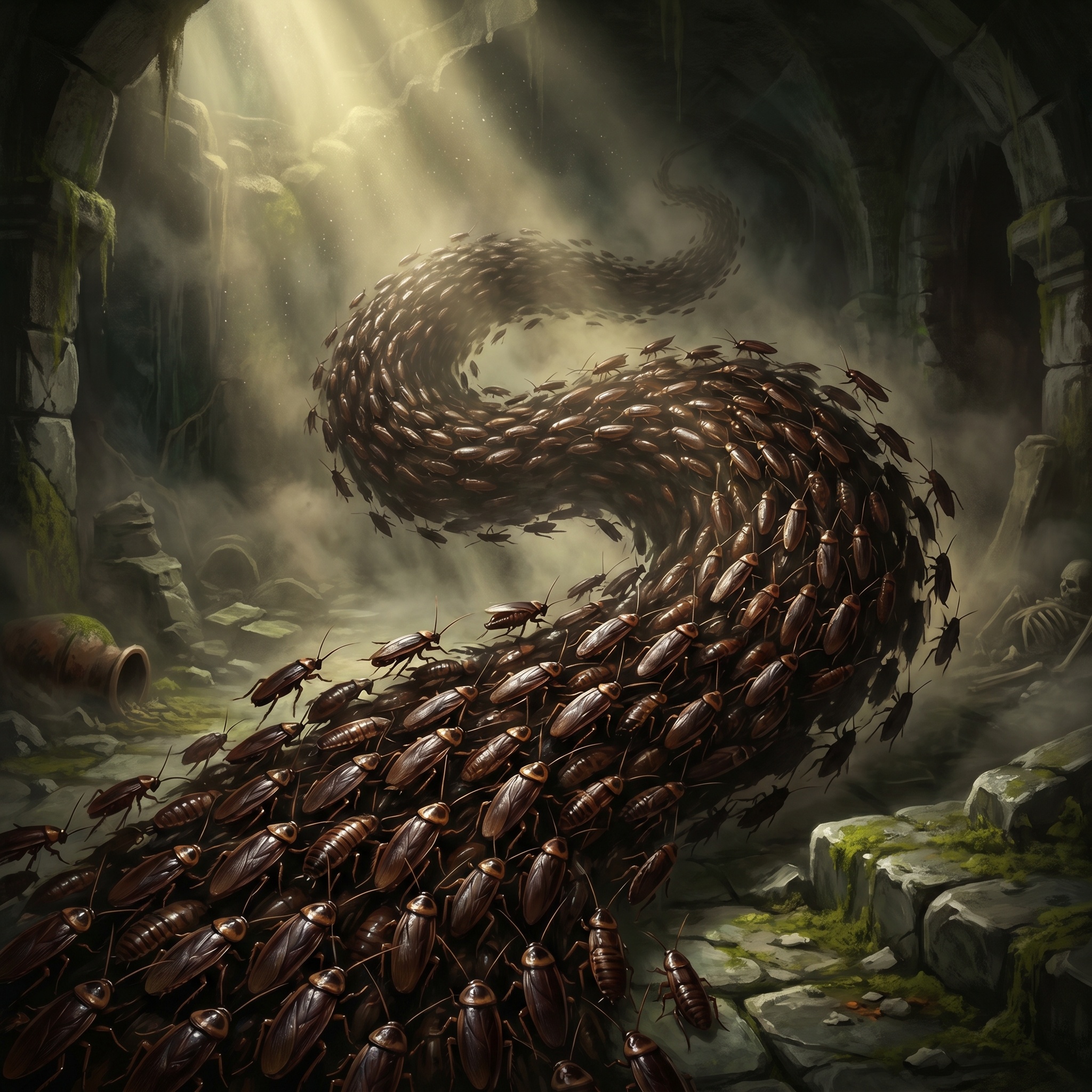
Role: Minion Hazard Swarm Where It Appears: Kitchens, ships' holds, granaries, anywhere food is stored long-term.
Cockroach Swarms do not fight. They contaminate. The danger is what they have crawled through before reaching the party's supplies.
Signs and Knowledge: Survival or Medicine (Average): identifies infestation before food is eaten.
Cockroach Swarm (Minion)
- Group Size: One swarm per kitchen/hold.
- Skills: Stealth 4, Fortitude 4.
- Attacks: None meaningful.
- Abilities: Supply Contamination — For each round the swarm occupies a food or water supply, roll Average Fortitude for anyone who eats from it within the next day. Failure causes a minor illness (1 Bane to checks for a day).
- Abilities: Indestructible Persistence — Dispersed by fire, stomp, or direct attack but reforms from survivors within hours unless all nesting sites in the building are eliminated.
- Soul: No claimable coin exists; at death canon does not specify (default).
- Tactics: Occupies supplies. Retreats from light. Returns.
- Encounter Use: Ships and urban scenes. Use to make provisioning matter.
- Harvesting and Trade: No value. Pest control reward possible in urban settings.
Variants
Ship Infestation: Has spread through the entire hold. Food supplies are compromised unless cleared before port.
Corpse Beetle Swarm
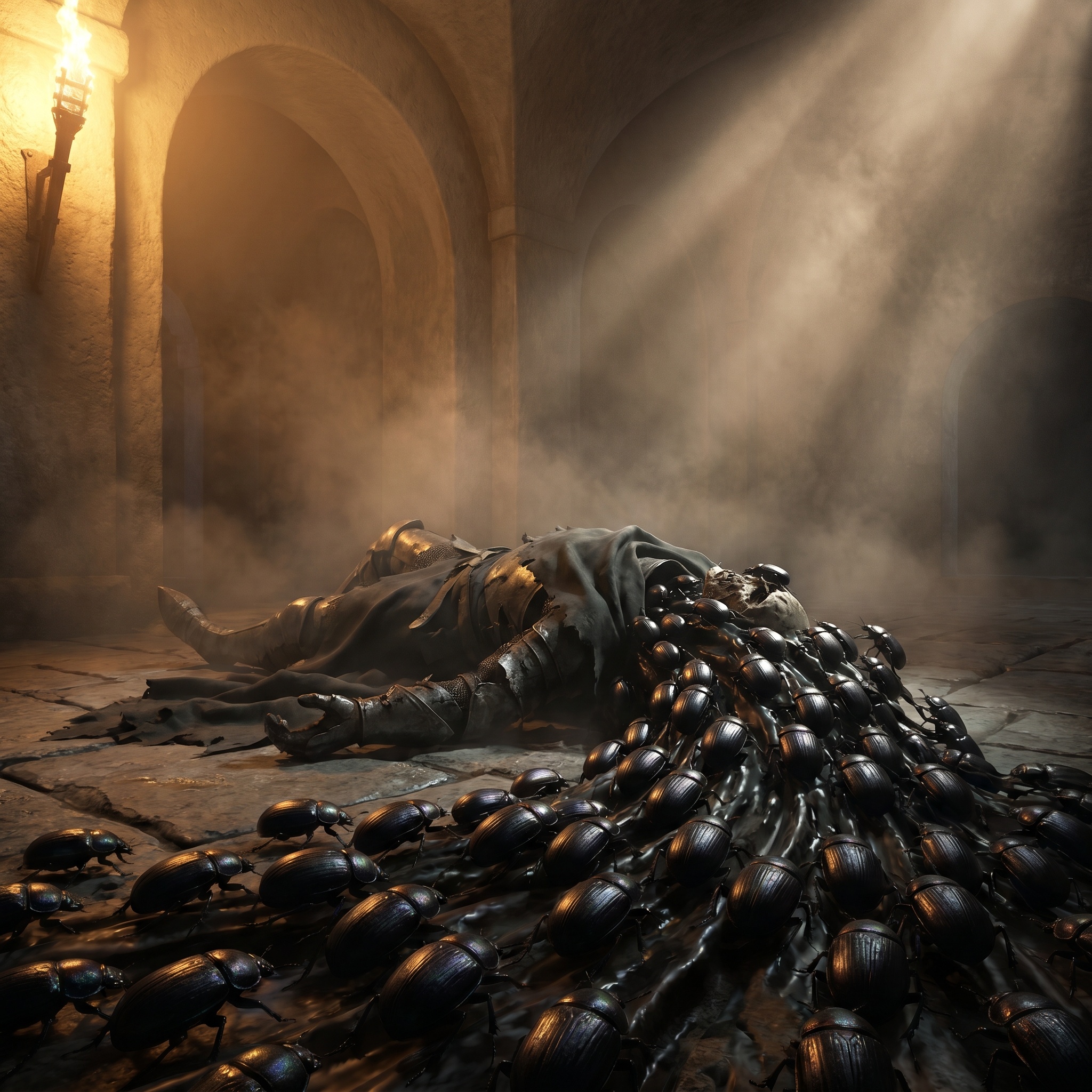
Role: Minion Swarm / Hazard Where It Appears: Battlefields, tombs, plague pits, corpse wagons.
Corpse beetles are ordinary carrion eaters until magic, neglect, or mass death produces a colony too large to fear the living.
Corpse Beetle Swarm (Minion)
- Group Size: One swarm per corpse cluster.
- Skills: Unarmed 3, Perception 2, Fortitude 3.
- Attacks: Biting Carpet (Unarmed; Damage 5; Crit 5; Bleeding 1).
- Abilities: Swarm Body - Single-target melee and ranged attacks add 1 Bane unless they cover an area.
- Abilities: Carrion Surge - Add 1 Boon while fighting on corpses or fresh blood.
- Abilities: Dread - Fear 1.
- Soul: No claimable coin exists; at death canon does not specify (default).
- Tactics: Flood the nearest warm body, scatter from flame.
- Harvesting and Trade: No standard harvest. Rare corpse beetle oil can be collected from huge colonies for 100-250 gold Flargons.
Echo Bat Swarm
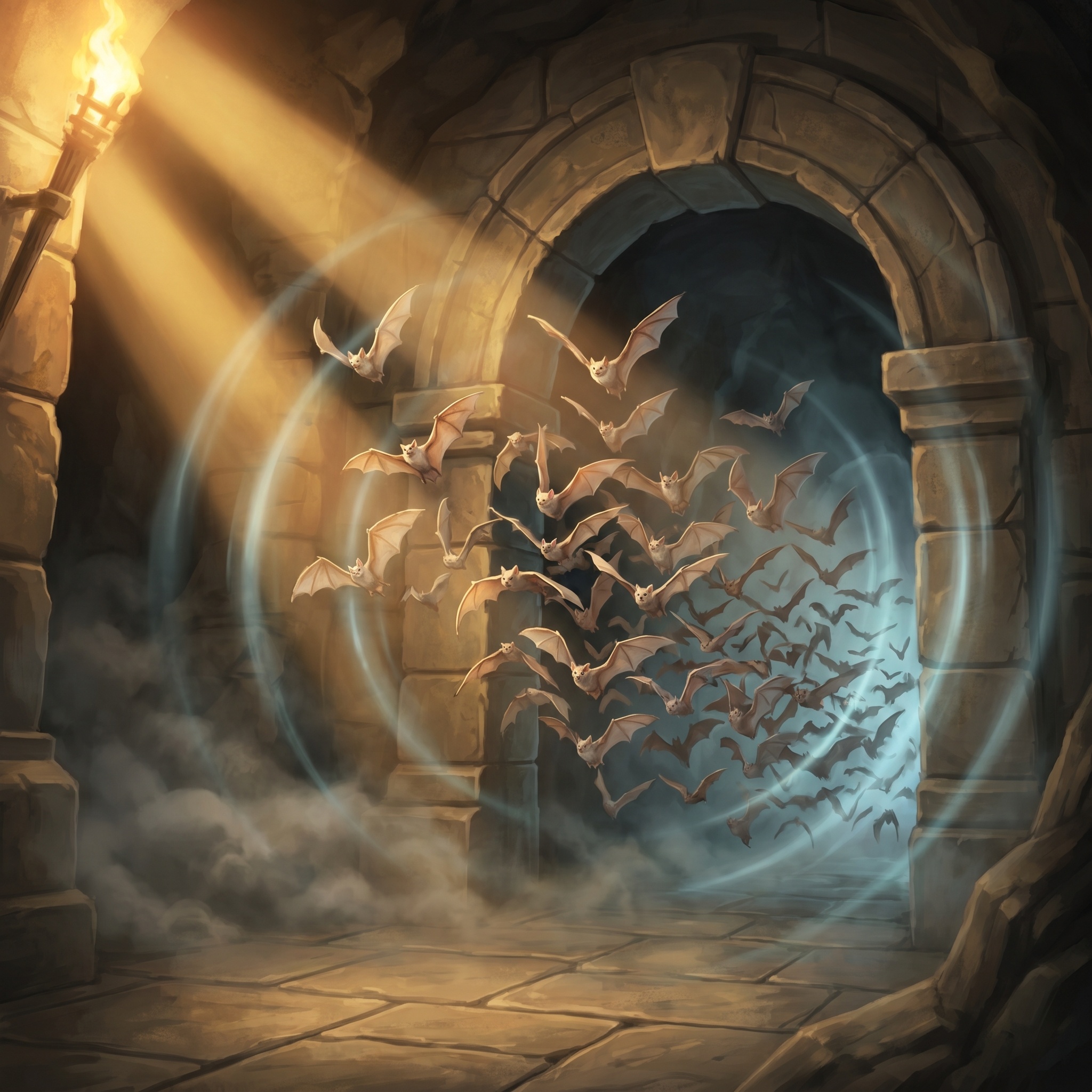
Role: Minion Swarm / Disruptor Where It Appears: Caves, towers, belfries, old cisterns.
Echo bats disorient prey with overlapping calls. They are harmless alone; in a swarm, they turn coordination into pain.
Echo Bat Swarm (Minion)
- Group Size: One swarm.
- Skills: Reflexes 4, Perception 4, Unarmed 2.
- Attacks: Biting Cloud (Unarmed; Damage 3; Crit 5).
- Abilities: Disorienting Echo — Creatures in the swarm's zone add 1 Bane to Perception, Leadership, and spellcasting concentration checks.
- Soul: No claimable coin exists; at death canon does not specify (default).
- Tactics: Swirl around light and sound, flee from thunderous noise.
- Harvesting and Trade: No meaningful harvest.
Giant Centipede
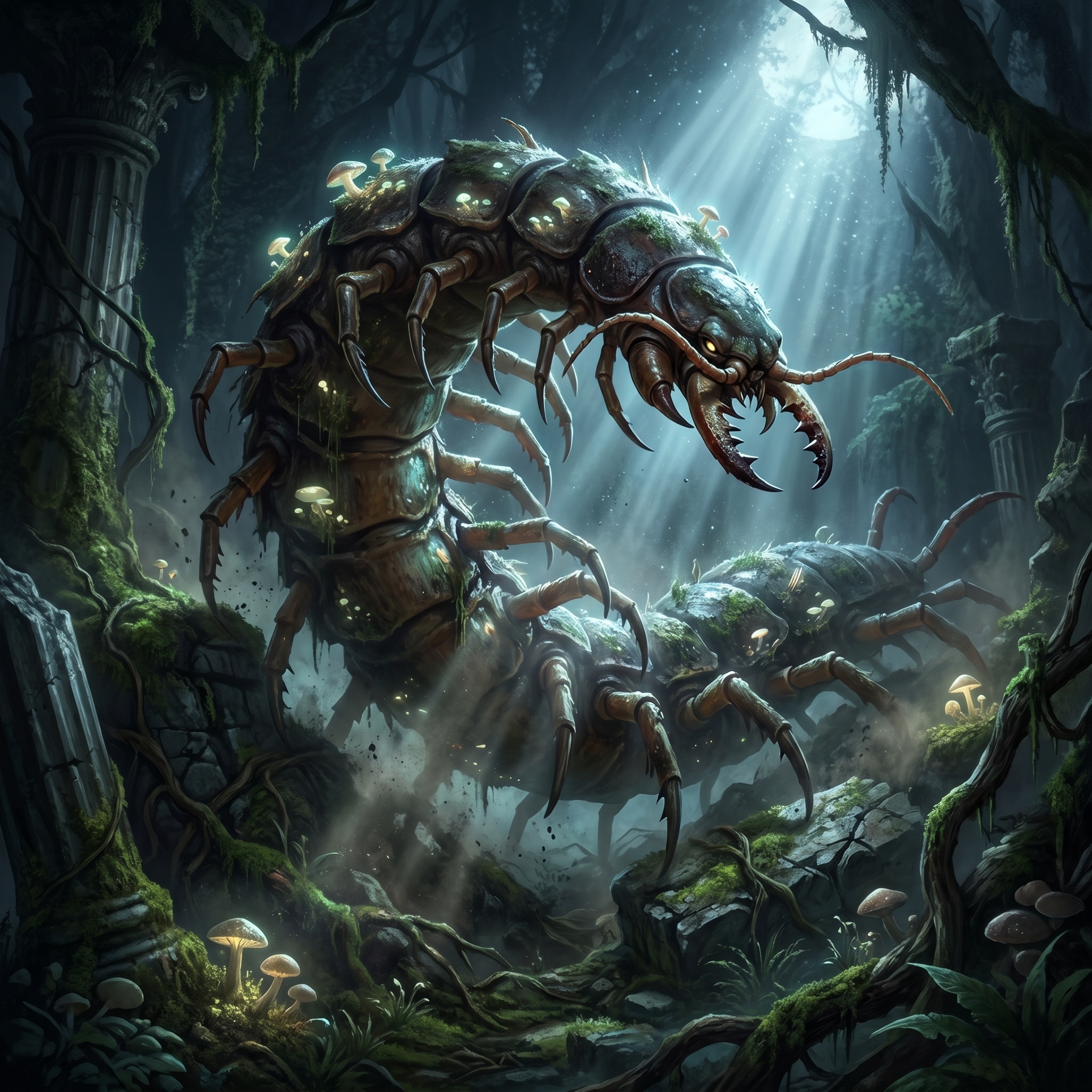
Role: Elite Ambusher Where It Appears: Dungeon floors, deep caves, ruins, underground passages.
A Giant Centipede does not need to be fast or clever. It is long, armored, venomous, and occupies the exact space a party most wants to cross.
Signs and Knowledge: Survival or Adventuring Lore (Average): identifies centipede habitat and recognizes the clicking sound of movement.
Giant Centipede (Elite)
- Skills: Unarmed 3, Stealth 3 in stone, Athletics 4, Fortitude 4, Perception 3.
- Attacks: Mandible Bite (Unarmed; Damage 7; Crit 4; Pierce 1; Poison 2 on any Wound).
- Abilities: Many-Legged — Cannot be knocked Prone. Ignores difficult terrain.
- Abilities: Body Block — Its length fills a passage; creatures attempting to move past make Average Athletics check.
- Soul: No claimable coin exists; at death canon does not specify (default).
- Tactics: Waits in tight passages, bites the lead character, attempts to prevent retreat with its body.
- Encounter Use: Chokepoints, tunnels, passages too narrow to fight effectively.
- Harvesting and Trade: Venom gland sells for 400–1,000 gold Flargons (Hard Medicine). Chitin segments for 150–400 gold Flargons as craft material.
Variants
Cave Centipede: Elite, gains Stealth 5 underground and Poison 3. The older ones are as long as a room.
Giant Fly Swarm
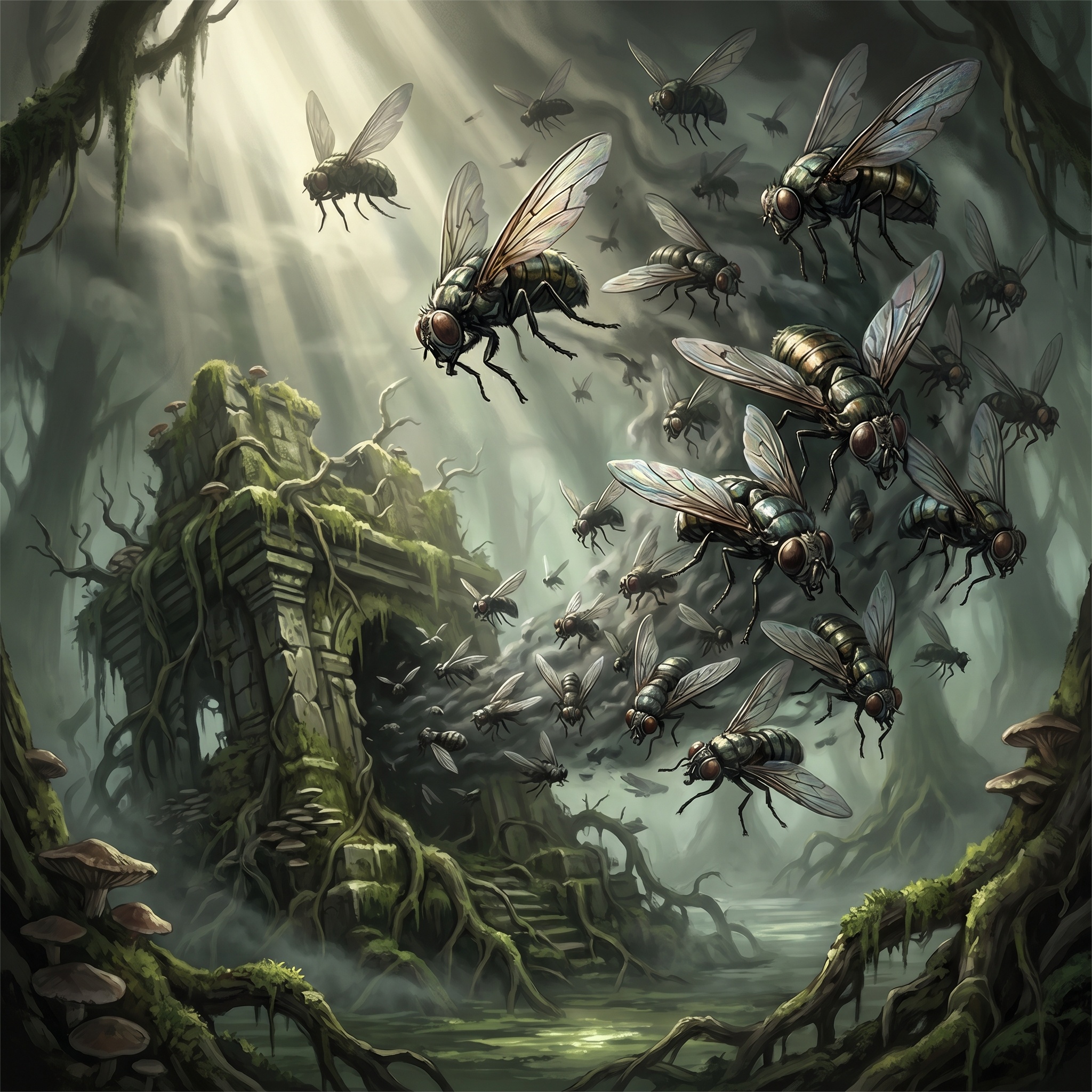
Role: Minion Hazard Swarm Where It Appears: Battlefields, plague sites, corpse pits, anywhere decay is active.
A Giant Fly Swarm is not physically dangerous at first. It becomes dangerous by transmitting everything it has touched to everything it lands on.
Signs and Knowledge: Medicine (Average): understands the disease vector and treats exposure correctly.
Giant Fly Swarm (Minion)
- Group Size: One swarm.
- Skills: Perception 2, Fortitude 2.
- Attacks: Pestilent Cloud (Fortitude; Damage 3; Crit 5).
- Abilities: Disease 1 (Corpse Fever) — A creature wounded by Pestilent Cloud makes an Average Willpower check. Failure brings fever within 24 hours; the target adds 1 Bane to Fortitude and Medicine checks and adds 1 Bane to any check to recover Wounds until the fever ends. Recovery requires one extended rest away from corpse-rich terrain. Cure by Average Medicine, burning or cleansing the source bodies, fever herbs, or suitable divine healing removes the effect.
- Abilities: Swarm Body — Standard.
- Abilities: Persistent — Re-emerges at start of next round from corpses in the scene unless the bodies are burned.
- Soul: No claimable coin exists; at death canon does not specify (default).
- Tactics: None. The swarm does not pursue; it occupies corpse-rich terrain.
- Encounter Use: Active battlefields and plague sites. Use to make resting near bodies costly.
- Harvesting and Trade: No value.
Variants
Plague Swarm: From a mass grave site. Replace Corpse Fever with Disease 2 (Mass-Grave Fever) — A creature wounded by Pestilent Cloud makes a Hard Willpower check. Failure brings violent fever and delirium within 24 hours; the target adds 1 Bane to all checks and adds 1 additional Trial Die to Medicine checks made to treat injuries or infections. Recovery requires two extended rests away from the infected site after the source bodies are burned or blessed. Cure by Hard Medicine, consecration of the mass grave, antitoxin prepared from the site, or suitable divine healing removes the effect.
Giant Rat
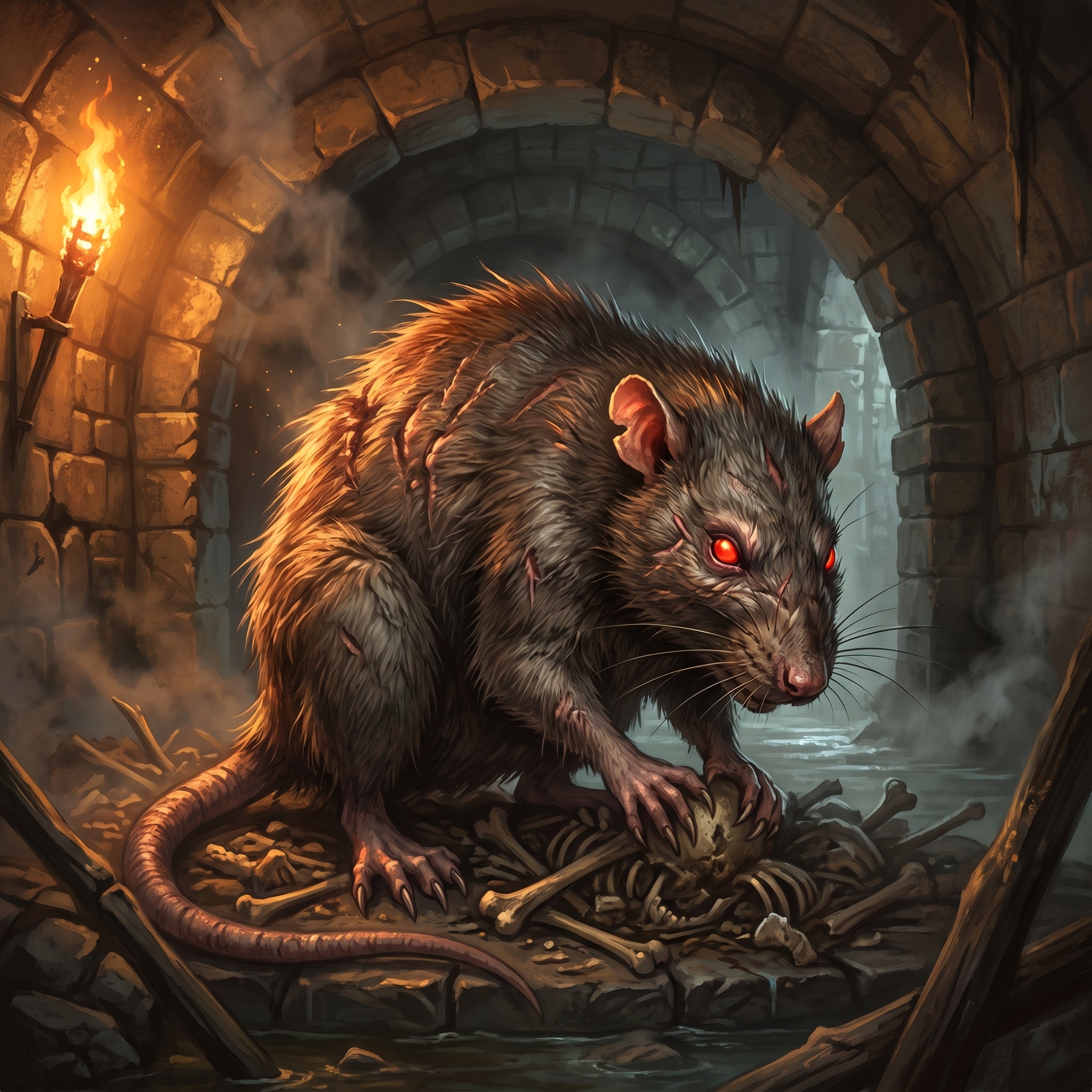
Role: Minion Vermin Where It Appears: Sewers, dungeon cellars, granaries, anywhere humans store food.
Giant Rats are the most common dungeon animal. They are not dramatic. They are persistent, numerous, and significantly more willing to bite than their ordinary cousins.
Signs and Knowledge: Survival (Average): identifies rat sign — droppings, gnaw marks, runways in dust.
Giant Rat (Minion)
- Group Size: 3–12.
- Skills: Unarmed 2, Stealth 3, Athletics 3, Perception 3.
- Attacks: Gnawing Bite (Unarmed; Damage 4; Crit 5).
- Abilities: Disease 1 (Rat Fever) — On 2 Boons from a Gnawing Bite that wounds the target, the target makes an Average Willpower check. Failure brings fever within a few hours; the target adds 1 Bane to all checks until the end of their next extended rest. Recovery requires one extended rest with clean water and food. Cure by Average Medicine, common fever herbs, antitoxin, or suitable divine healing removes the effect immediately.
- Abilities: Swarm Attack — When attacking a target already bitten by another rat this round, add 1 Boon.
- Soul: No claimable coin exists; at death canon does not specify (default).
- Tactics: Swarming the smallest or most isolated target. Retreat from bright fire.
- Encounter Use: Storage areas, food supplies, companions who are already hurt. Use them to make resting somewhere feel costly.
- Harvesting and Trade: No harvest value.
Variants
Plague Rat: Minion. Replace Rat Fever with Disease 2 (Sewer Plague) — On 2 Boons from a Gnawing Bite that wounds the target, the target makes a Hard Willpower check. Failure brings fever, shakes, and swollen glands within a few hours; the target adds 1 Bane to all checks and cannot recover Wounds from ordinary rest for two days. Recovery requires two extended rests in clean conditions after symptoms begin to fade. Cure by Hard Medicine with clean supplies, antitoxin, fever herbs from a trained healer, or suitable divine healing removes the effect. A single cluster is a public health problem.
Glassweb Spider
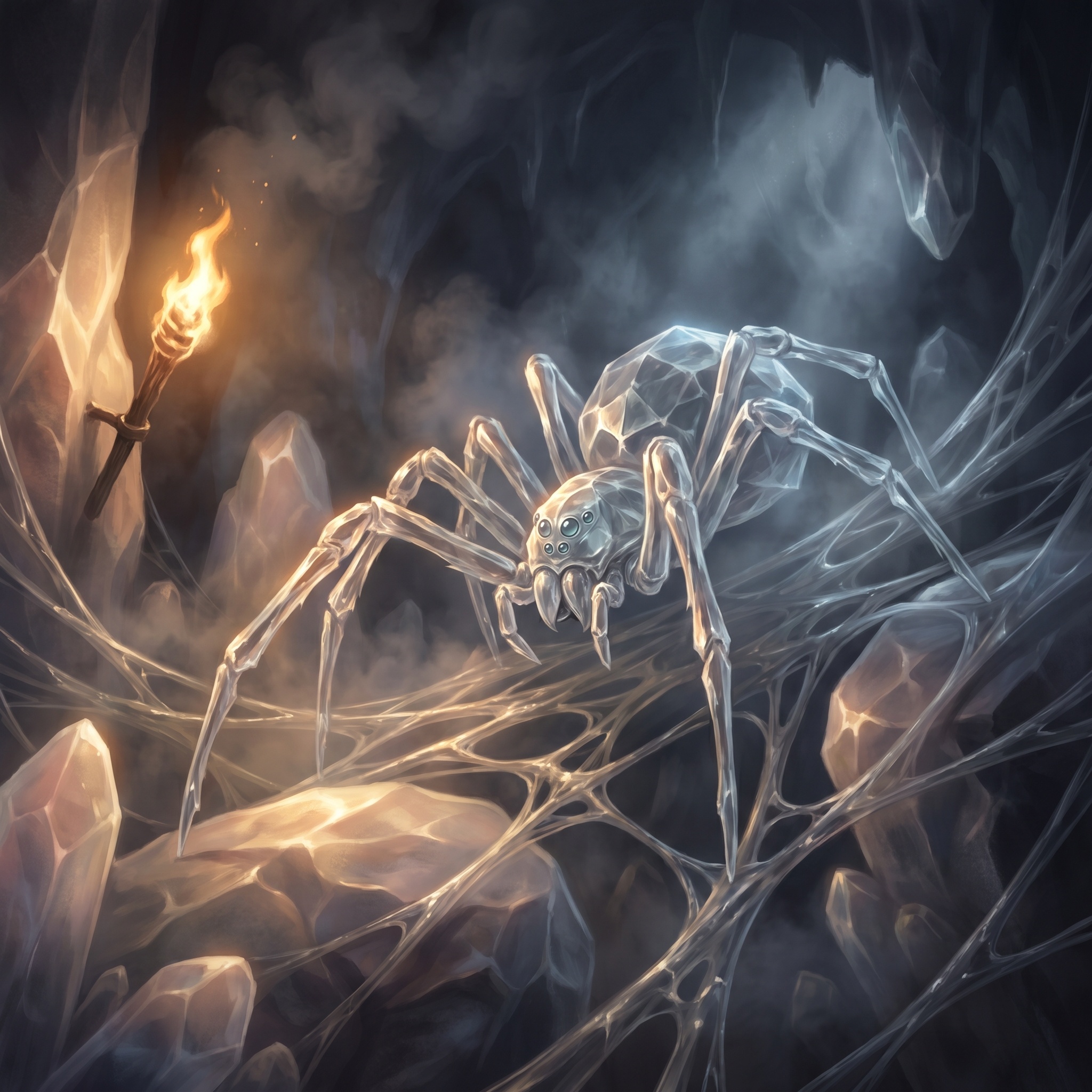
Role: Minion Ambusher / Controller Where It Appears: Crystal caves, abandoned mines, arcane glasshouses.
Glassweb spiders spin nearly invisible strands that cut skin and ring softly when disturbed. They are not intelligent, but colonies shape entire chambers into lethal instruments.
Signs and Knowledge: Perception (Hard) sees the web before contact. Natural Philosophy (Hard) identifies valuable silk.
Glassweb Spider (Minion)
- Group Size: 4-12.
- Skills: Stealth 4, Reflexes 4, Perception 3, Unarmed 2.
- Attacks: Glass Bite (Unarmed; Damage 4; Crit 5; Poison 1); Cutting Web (Heavy Ranged; Damage 4; Crit 5; Range Short).
- Abilities: Nearly Invisible Webs — Entering webbed terrain without detecting it causes Damage 4 and Immobilized until an Average Reflexes or Athletics check frees the target.
- Soul: No claimable coin exists; at death canon does not specify (default).
- Tactics: Let webs do the work, then swarm trapped prey.
- Encounter Use: A room hazard that becomes a creature fight.
- Harvesting and Trade: Intact glass silk sells for 400-1,000 gold Flargons per colony to lens-makers and ward-crafters. Harvest requires Craft or Survival (Hard).
Lantern Leech
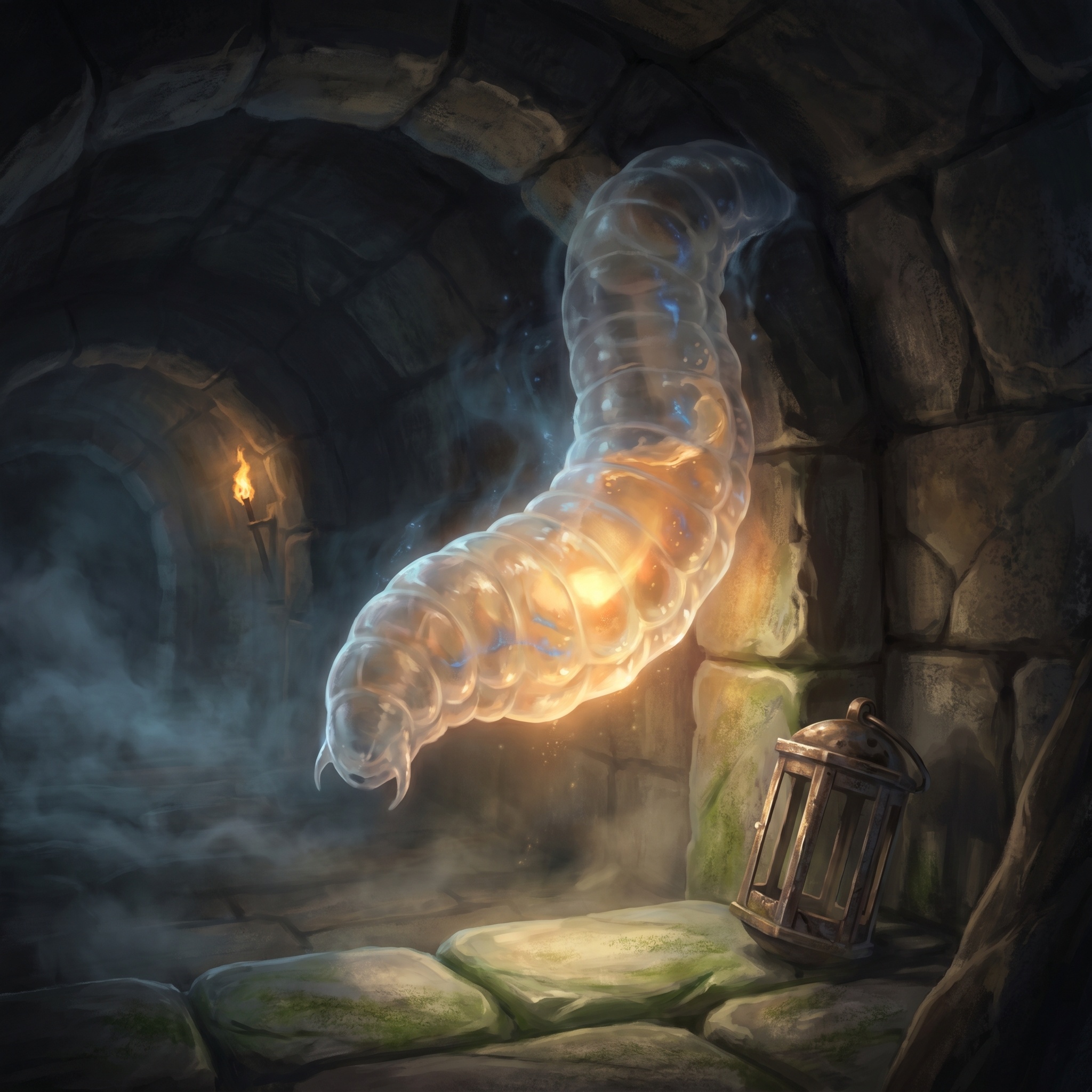
Role: Minion Lurker / Resource Drain Where It Appears: Wet caves, cisterns, sewer ruins, old magical laboratories.
Lantern leeches feed on oil, warmth, and faint magical charge. They are rarely lethal alone, but they make darkness arrive at the worst time.
Lantern Leech (Minion)
- Group Size: 4-15.
- Skills: Stealth 4, Reflexes 3, Perception 2.
- Attacks: Clinging Bite (Unarmed; Damage 2; Crit 5; Stun 1).
- Abilities: Drink Light — As an Action, the group dims or extinguishes one mundane light source at Engaged range. Magical lights require an Average Willpower check by the leeches.
- Abilities: Cling — Removing attached leeches costs a Maneuver and an Average Reflexes check.
- Soul: No claimable coin exists; at death canon does not specify (default).
- Tactics: Drop on light carriers, drink lamps, scatter when burned.
- Harvesting and Trade: Glow sacs sell for 100-350 gold Flargons per swarm to ink-makers and night-fishers.
Needle Worm
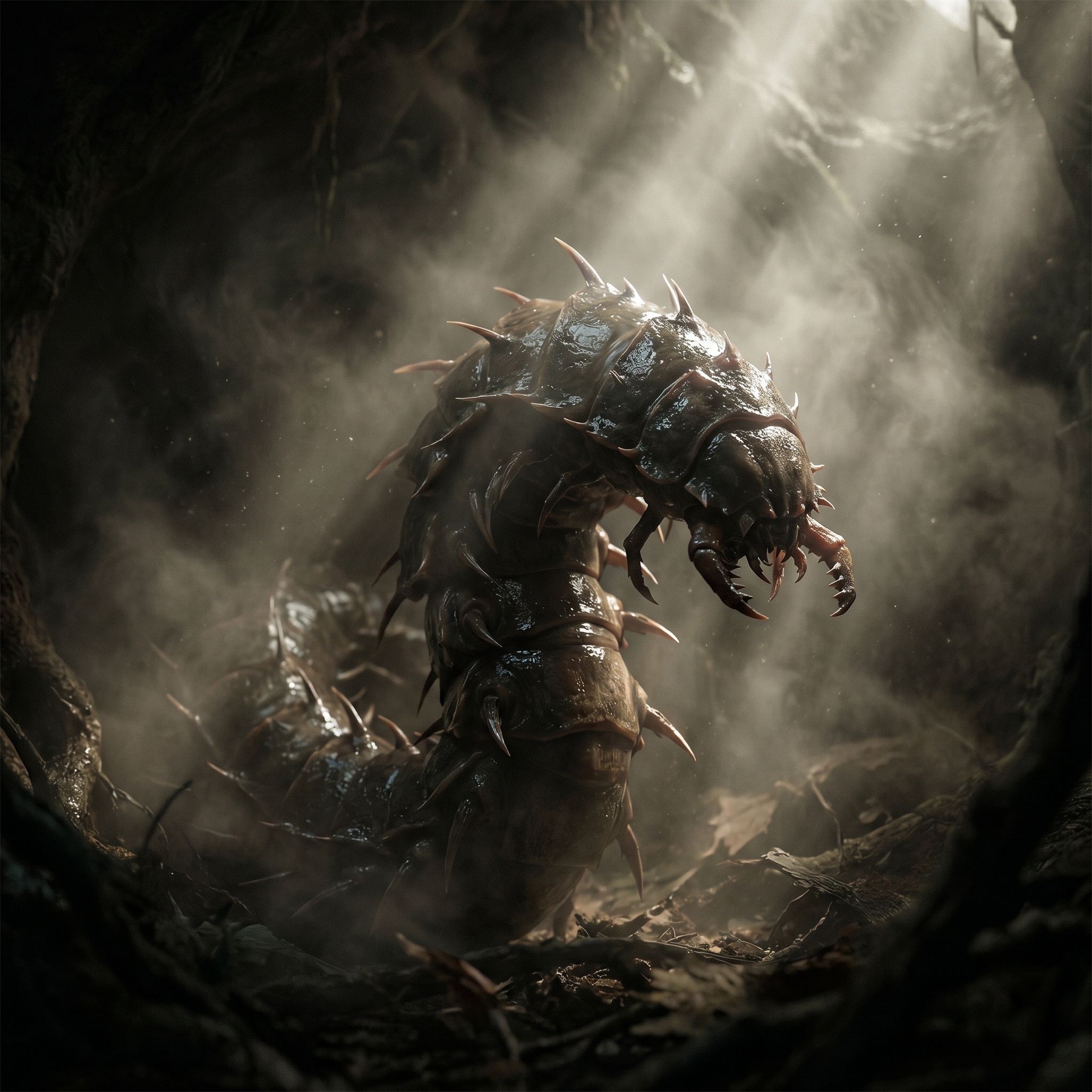
Role: Minion Parasite Where It Appears: Stagnant water, mud, uncured animal hides, contaminated food.
A Needle Worm is too small to see until it has been inside for a day. By that point it has already established a route.
Signs and Knowledge: Medicine (Hard): identifies Needle Worm infection before stage two symptoms appear.
Needle Worm (Minion)
- Group Size: One infestation per character.
- Skills: Stealth 5, Fortitude 4.
- Attacks: None directly — infection only.
- Abilities: Needle Worm Infestation — Contact with contaminated water or consuming infected material requires a Hard Willpower check. Failure establishes the parasite. Stage 1: no symptoms for two days; the character is infected but suffers no immediate penalty. Stage 2: after the next extended rest, the character makes a Hard Fortitude check each day or loses 2 maximum Wounds from wasting. Stage 3: after another failed daily check, the character makes a Severe Fortitude check each day or begins dying from organ damage. Recovery does not occur naturally while the parasite remains. Cure by Hard Medicine with appropriate antiparasitic ingredients at Stage 1 or 2 halts the infestation; Stage 3 requires Severe Medicine or suitable divine healing to remove the parasite and stop the dying process.
- Soul: No claimable coin exists; at death canon does not specify (default).
- Tactics: None. It is a passive hazard.
- Encounter Use: Contaminated water sources. Jungle rivers. Food that has not been properly treated.
- Harvesting and Trade: No value. Medical study interest only.
Variants
Mass Infestation: Multiple characters affected simultaneously from one source. Creates a secondary clock for the entire party.
Prism Newt
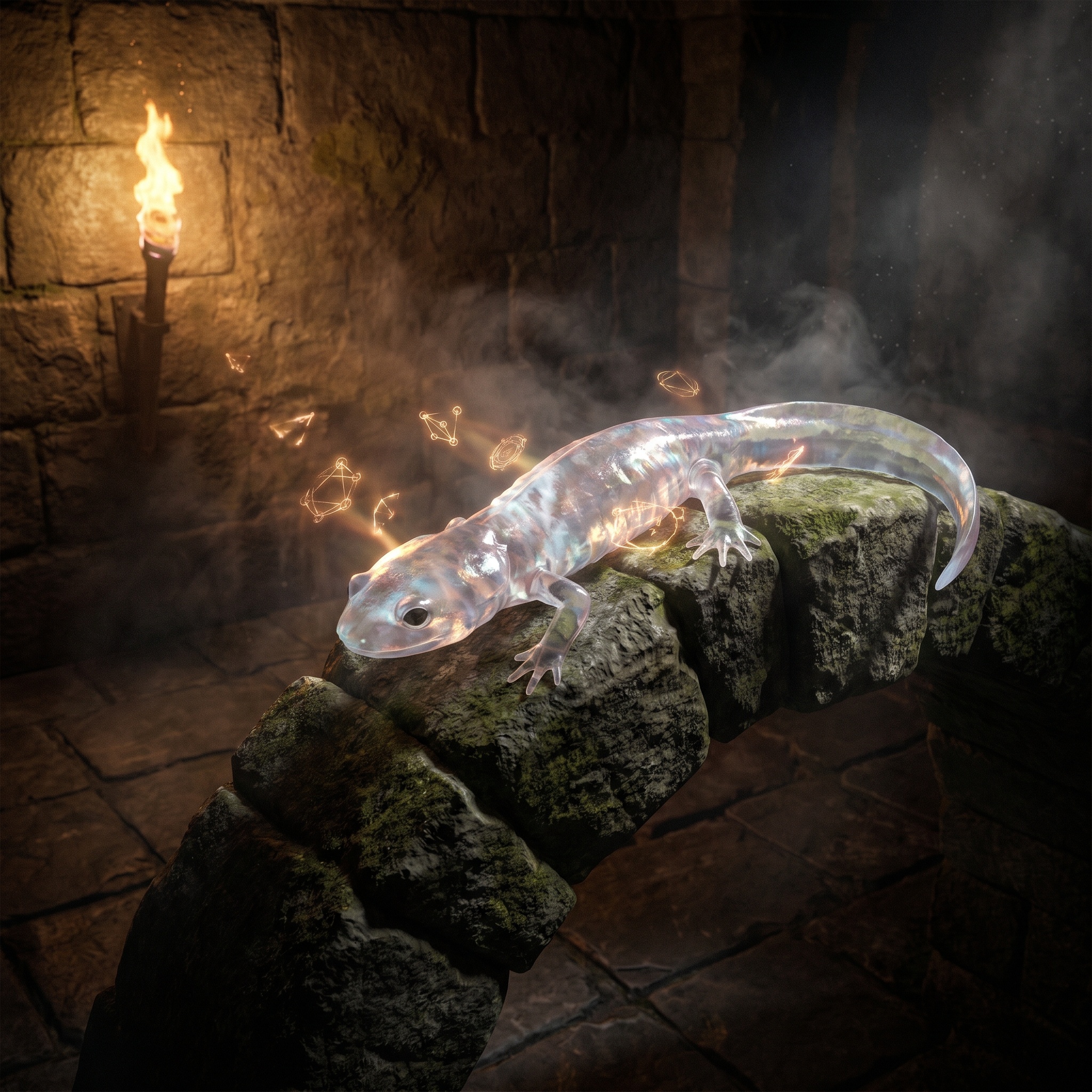
Role: Minion Arcane Pest Where It Appears: Prism Dragon territories, arcane pools, dead magic sites.
Prism newts feed on minor enchantments. Wizards find them charming until they eat the ink off a scroll.
Prism Newt (Minion)
- Group Size: 4-20.
- Skills: Stealth 4, Reflexes 4, Perception 3.
- Attacks: Tiny Bite (Unarmed; Damage 1; Crit 6).
- Abilities: Nibble Enchantment — Given one uninterrupted round, impose 1 Bane on a minor magic item until repaired.
- Soul: No claimable coin exists; at death canon does not specify (default).
- Tactics: Hide in packs, eat charge, scatter from mundane predators.
- Harvesting and Trade: Live specimens sell for 200-600 gold Flargons to careful enchanters.
Rat Swarm
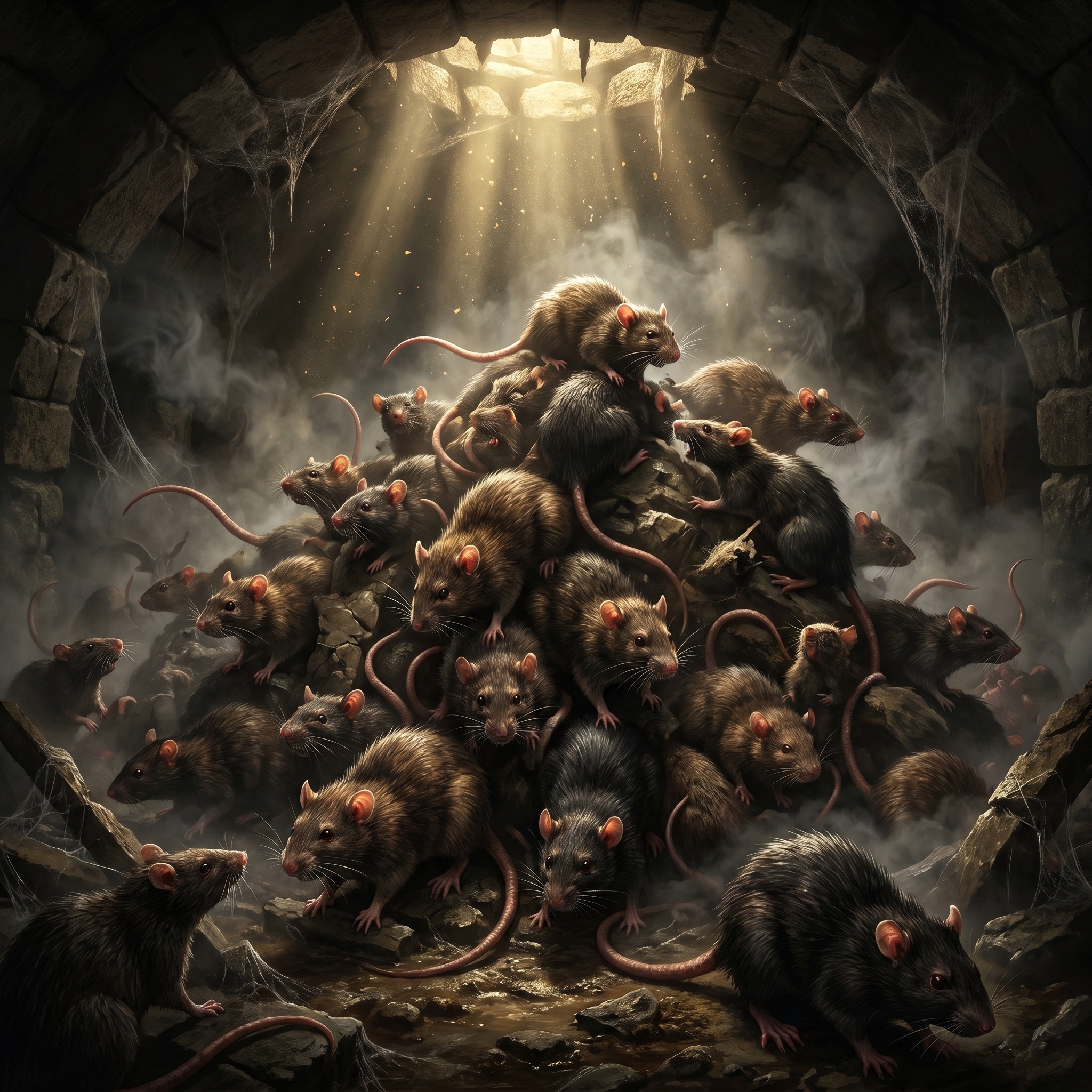
Role: Minion Vermin Swarm Where It Appears: Cellars, sewers, mass nest sites, anywhere a rat population has exploded.
A Rat Swarm is not individual rats. It is the floor moving.
Signs and Knowledge: Perception (Average): hears the swarm before contact — a wet chittering sound that gets louder.
Rat Swarm (Minion)
- Group Size: One swarm.
- Skills: Unarmed 3, Fortitude 3, Perception 2.
- Attacks: Biting Carpet (Unarmed; Damage 5; Crit 5; Bleeding 1; affects all Engaged creatures simultaneously).
- Abilities: Swarm Body — Single-target attacks add 1 Bane. Area attacks deal full damage.
- Abilities: Disease 1 (Grub Fever) — A character Engaged with the swarm for more than one round makes an Average Willpower check. Failure brings a crawling fever by the next rest; the target adds 1 Bane to Stealth, Perception, and sleep-related recovery checks until the fever ends. Recovery requires one extended rest after the character is cleaned and the bites are dressed. Cure by Average Medicine, boiling or cleansing the wounds, bitterroot paste, or suitable divine healing removes the effect.
- Soul: No claimable coin exists; at death canon does not specify (default).
- Tactics: Flows toward warmth and food, engulfs, retreats from sustained fire.
- Encounter Use: Cellars, nests, anywhere the party has camped without clearing the area first.
- Harvesting and Trade: No value.
Variants
Plague Swarm: The swarm itself has visible swollen bodies. Replace Grub Fever with Disease 2 (Swollen Grub Fever) — A character Engaged with the swarm for more than one round makes a Hard Willpower check. Failure brings fever, itching swelling, and ruined sleep by the next rest; the target adds 1 Bane to all checks and cannot recover Strain from the next extended rest. Recovery requires two extended rests in clean shelter after all bites are dressed. Cure by Hard Medicine, alchemical wash, bitterroot paste prepared by a healer, or suitable divine healing removes the effect.
Rot Moth
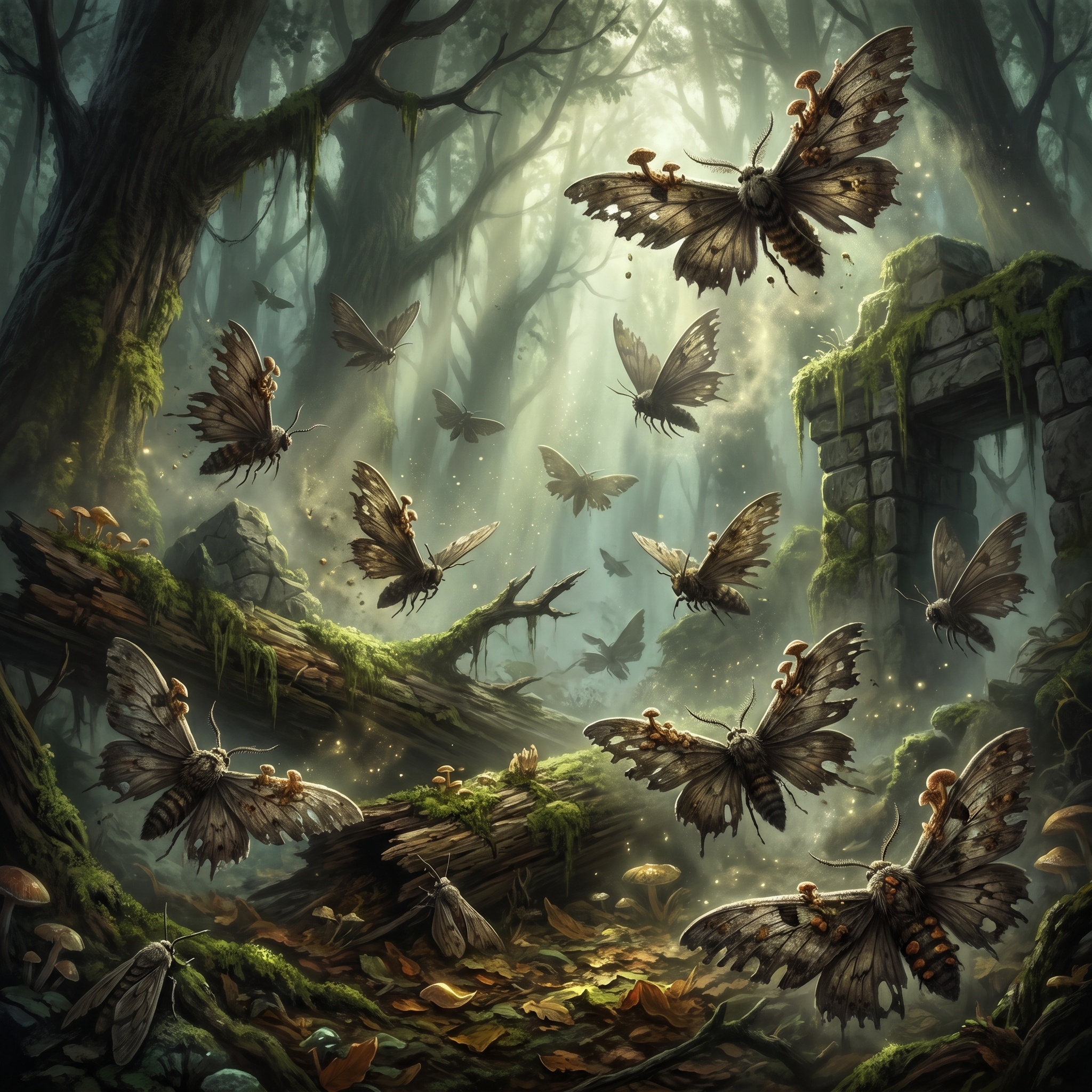
Role: Minion Hazard Swarm Where It Appears: Crypts, plague sites, abandoned places full of organic decay.
Rot Moths eat cloth, leather, and preserved food. A colony that has been in a sealed room for ten years has been eating everything in it.
Signs and Knowledge: Survival or Craft (Average): identifies moth damage before it reaches equipment.
Rot Moth (Minion)
- Group Size: One colony.
- Skills: Stealth 3, Fortitude 3.
- Attacks: Material Damage (Special; each round the colony occupies the same space as equipment or provisions, one random item suffers 1 Durability damage — see Craft rules for equipment degradation).
- Abilities: Equipment Hazard — Not a combat threat. A colony discovered in a camp has already damaged one stored item per day of exposure.
- Soul: No claimable coin exists; at death canon does not specify (default).
- Tactics: None. Feeds until disturbed.
- Encounter Use: Sealed rooms, long-stored supplies, old gear caches. Makes looting feel like salvage.
- Harvesting and Trade: Wing dust has minor ritual value (50–100 gold Flargons) to certain incense-makers.
Variants
Hungry Colony: Equipment damage is 2 Durability per round. Has been sealed in here for years.
Rust Eater
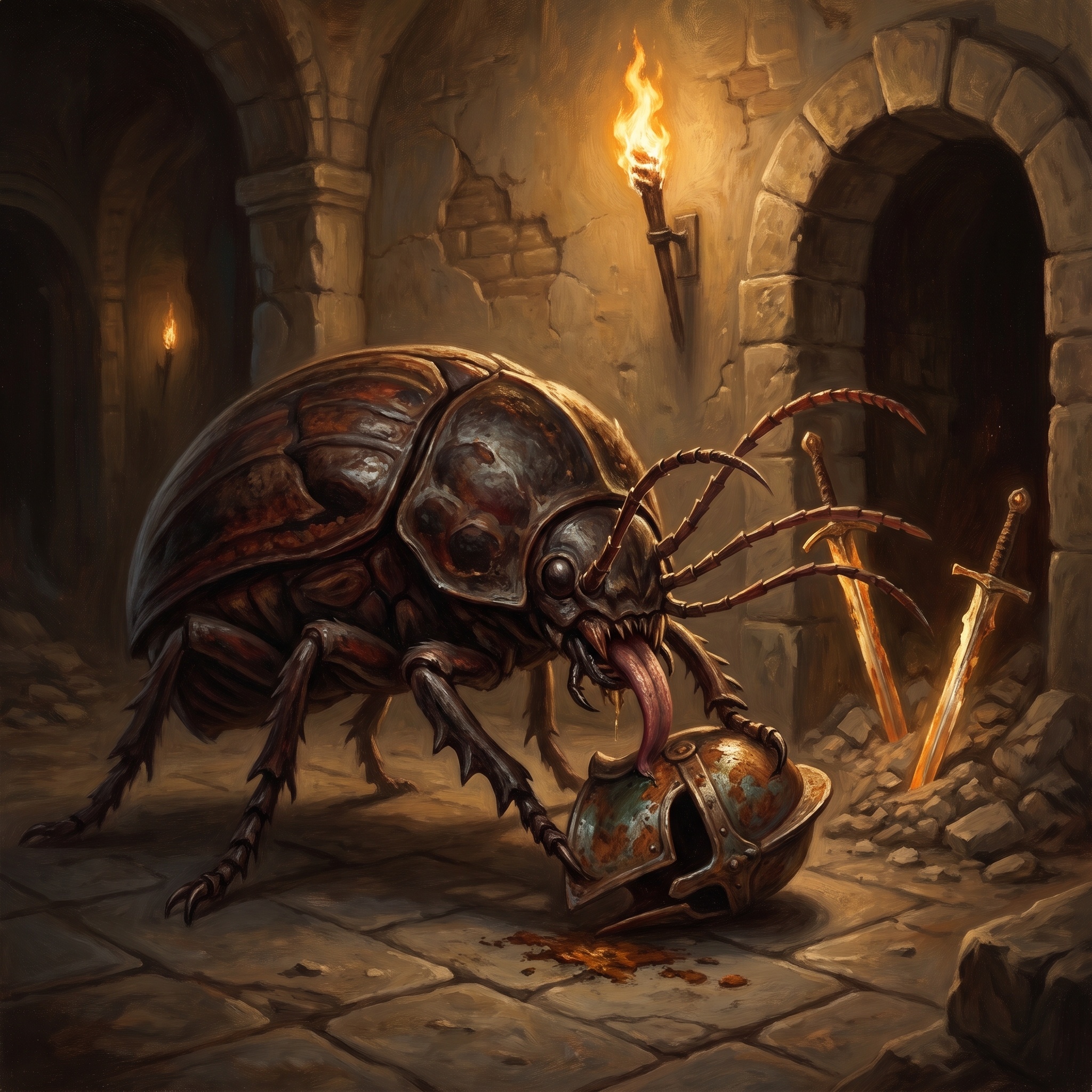
Role: Elite Gear Hazard Where It Appears: Mines, armories, old battlefields, metal-rich dungeons.
What It Is
Rust eaters are not malicious; they are hungry for worked metal. Unfortunately, armor, swords, locks, tools, and coin all smell like food. A rust eater looks like a low, beetle-snouted quadruped with twitching antennae and a hide dusted in orange flakes. It is more pest than monster until it gets into a caravan, armory, or knightly encampment.
Their presence changes an adventure's logistics. A single rust eater can turn a locked dungeon into a broken one, or a prepared expedition into a scramble for backup weapons. They should threaten gear, leverage, and timing more than lives.
Ecology and Behavior
Rust eaters prefer old mines, battlefields, collapsed workshops, and places where iron-rich water runs over stone. They graze on ore if they must, but worked metal has a sharper taste. Rivets, hinges, mail links, buckles, blades, and coin edges draw them first.
They travel alone or in mated pairs unless food is abundant. Dwarven roads, abandoned forts, and siege sites may host whole colonies. Rust eaters avoid fire, loud hammering, and polished bronze treated with bitter oils. Miners sometimes use trained rust eaters to locate buried metal, then regret it when the animal reaches the support pins.
Signs and Knowledge
Natural Philosophy or Adventuring Lore (Average) identifies orange dust and bitten rivets. Craft (Hard) protects gear before contact.
Other signs include locks with softened teeth, armor straps left intact around vanished plates, orange powder in corners, and a sour metallic smell. Animals with bells or iron shoes may panic before people notice the threat.
Rust Eater (Elite)
- Skills: Reflexes 4, Perception 3, Survival 3, Unarmed 2.
- Attacks: Corroding Bite (Unarmed; Damage 5; Crit 5); Antenna Touch (Unarmed; Damage 0; Crit n/a).
- Abilities: Metal Hunger — On a successful Antenna Touch, exposed mundane metal takes damage. Armor loses 1 Resistance until repaired; weapons add 1 Bane until cleaned and treated.
- Abilities: Scent Worked Metal — Detects significant worked metal at Medium range.
- Soul: No claimable coin exists; at death canon does not specify (default).
Tactics
A rust eater dashes toward the richest metal source, often ignoring flesh until struck. It touches armor with its antennae, bites loose metal, and retreats through gaps too small for armored pursuers. If wounded badly, it flees with whatever it has already corroded rather than fighting to the death.
In play, make the danger visible before it becomes punitive. Let the party see a ruined helmet, a half-eaten door hinge, or a pack mule's buckles failing. The encounter works best when characters can adapt: throw a scrap shield, switch to wood or bone tools, lure the rust eater toward a barred gate, or let it solve a locked obstacle at a price.
Harvesting and Trade
| Component | Value | Use | Harvest |
|---|---|---|---|
| Digestive nodules | 350-800 gold Flargons | Ore testing, counterfeit aging, controlled corrosion | Natural Philosophy (Average) |
| Antennae | 200-500 gold Flargons | Metal-detection charms and miner's tools | Medicine or Natural Philosophy (Average) |
| Rust powder glands | 100-300 gold Flargons | Patina dyes, sabotage kits | Craft (Average), stains everything nearby |
Variants
- Ore Grazer: Larger, slower, and less aggressive; often used as a living metal detector.
- Forge Pest: Heat-tolerant urban strain that infests smithies and eats nails from roof beams.
- Warfield Rust Eater: Armored by battlefield scraps and more likely to defend a chosen feeding ground.
Skull Wasp Swarm
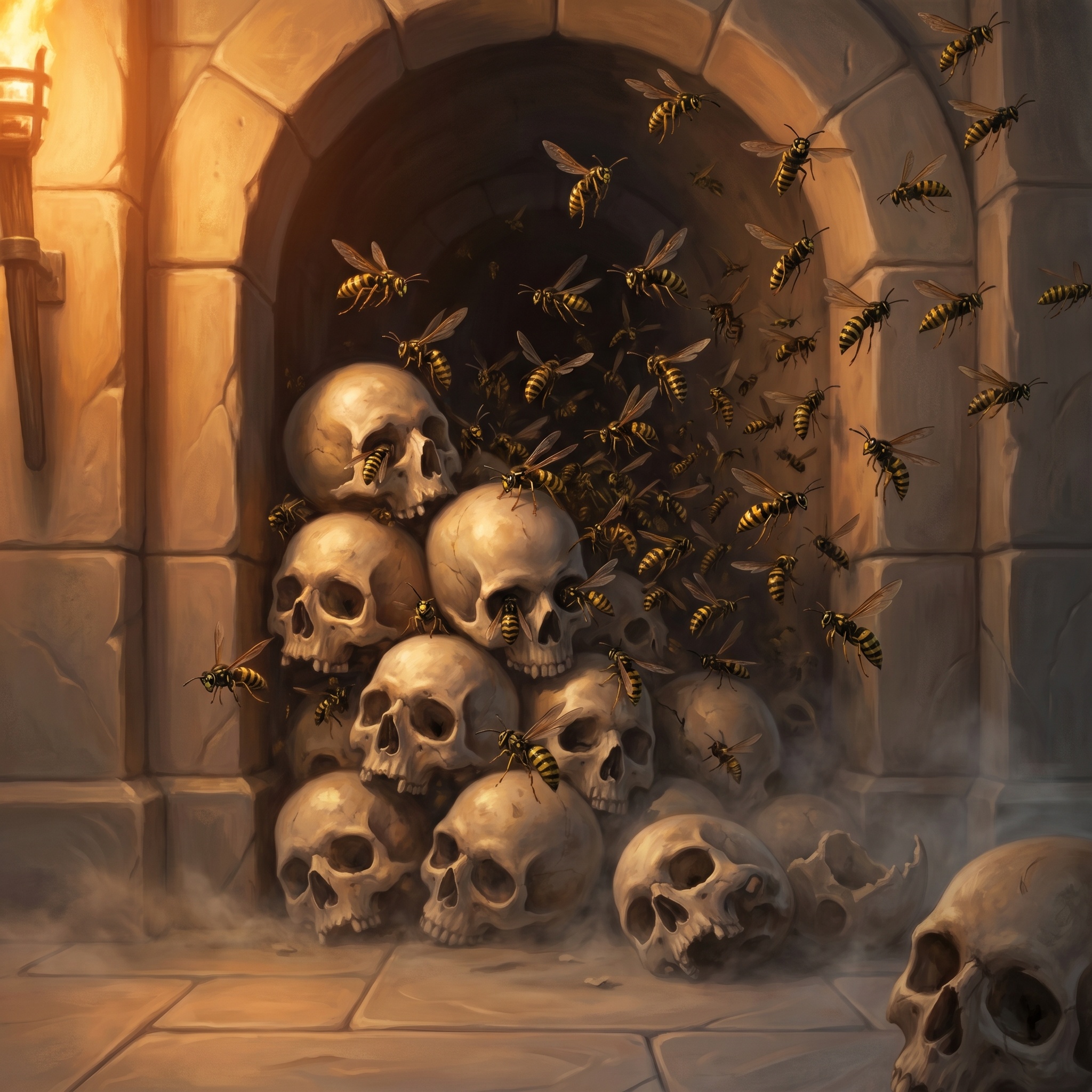
Role: Minion Swarm / Morale Hazard Where It Appears: Ossuaries, execution fields, old shrines, dry tombs.
Skull wasps build paper nests from bone dust and old funeral cloth. Their sting causes panic more than poison, which is enough in a tomb corridor.
Skull Wasp Swarm (Minion)
- Group Size: One swarm.
- Skills: Unarmed 3, Reflexes 4, Perception 2.
- Attacks: Panic Sting (Unarmed; Damage 3; Crit 5; Poison 1, Stun 2).
- Abilities: Swarm Body - Non-area attacks add 1 Bane.
- Abilities: Funeral Panic - Fear 1 in an ossuary or tomb. Targets stung there add 1 Bane to Readiness checks until the swarm is dispersed.
- Soul: No claimable coin exists; at death canon does not specify (default).
- Tactics: Pour from skulls, blind and panic, retreat into cracks.
- Harvesting and Trade: Nest comb sells for 150-400 gold Flargons to fear-toxin alchemists. Smoke required for safe harvest.
Spider Swarm
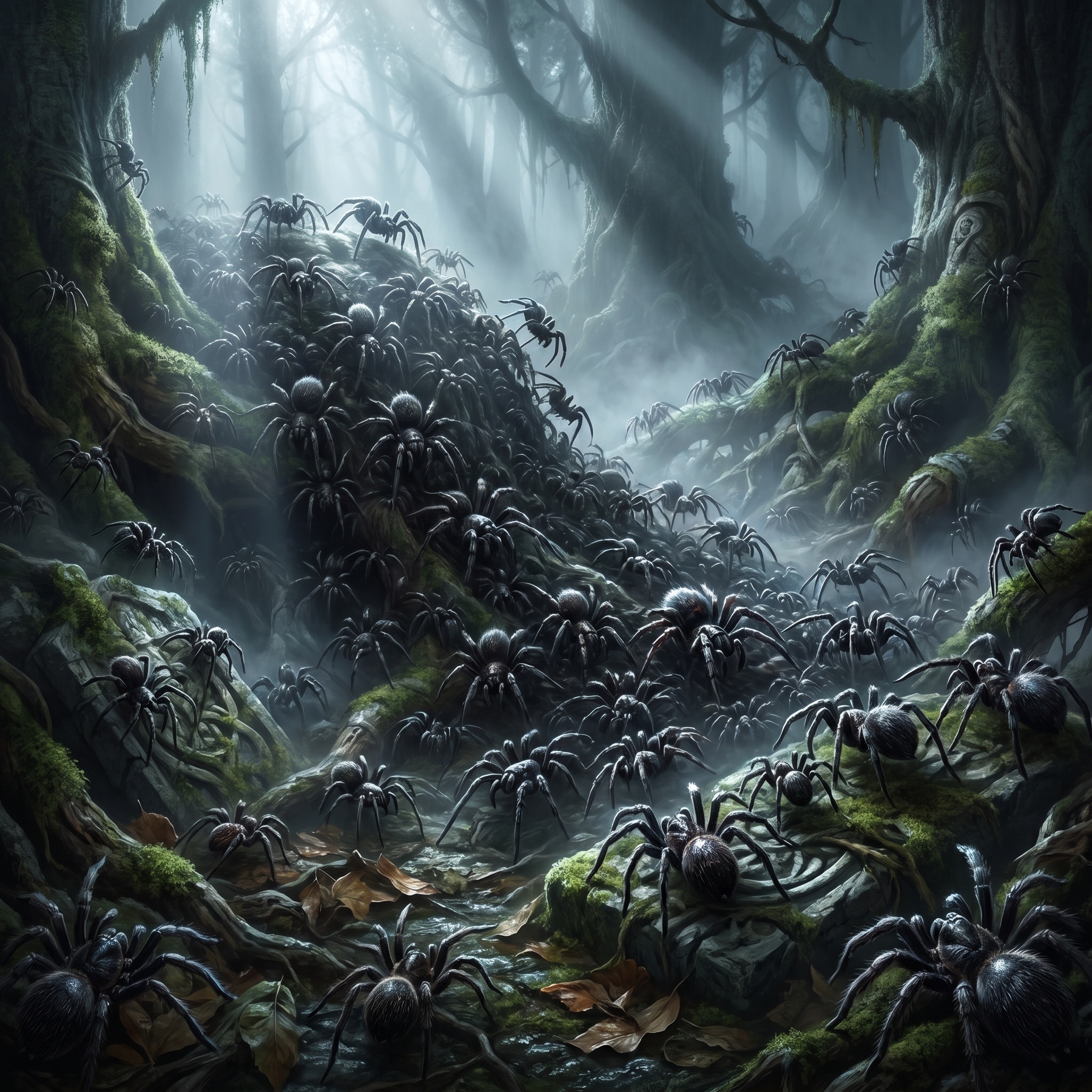
Role: Minion Vermin Swarm Where It Appears: Cave systems, old attics, collapsed ruins, anywhere spiders have gone unchecked for years.
Small spiders are not dangerous individually. The ceiling producing a carpet of them that drops when disturbed is a different situation.
Signs and Knowledge: Perception (Hard): notices the mass before it falls.
Spider Swarm (Minion)
- Group Size: One swarm.
- Skills: Stealth 4, Unarmed 2, Fortitude 2.
- Attacks: Biting Wave (Unarmed; Damage 4; Crit 5; Poison 1 on 2 Boons).
- Abilities: Swarm Body — Single-target attacks add 1 Bane. Area attacks deal full damage.
- Abilities: Distraction — While in contact with the swarm, all checks that require concentration add 1 Bane.
- Soul: No claimable coin exists; at death canon does not specify (default).
- Tactics: Drops from above, covers the nearest target, retreats from fire.
- Encounter Use: Use to make something the party is already doing harder.
- Harvesting and Trade: No value.
Variants
Venomous Swarm: Poison 2 on any successful hit, not just 2 Boons.
Stone Tick
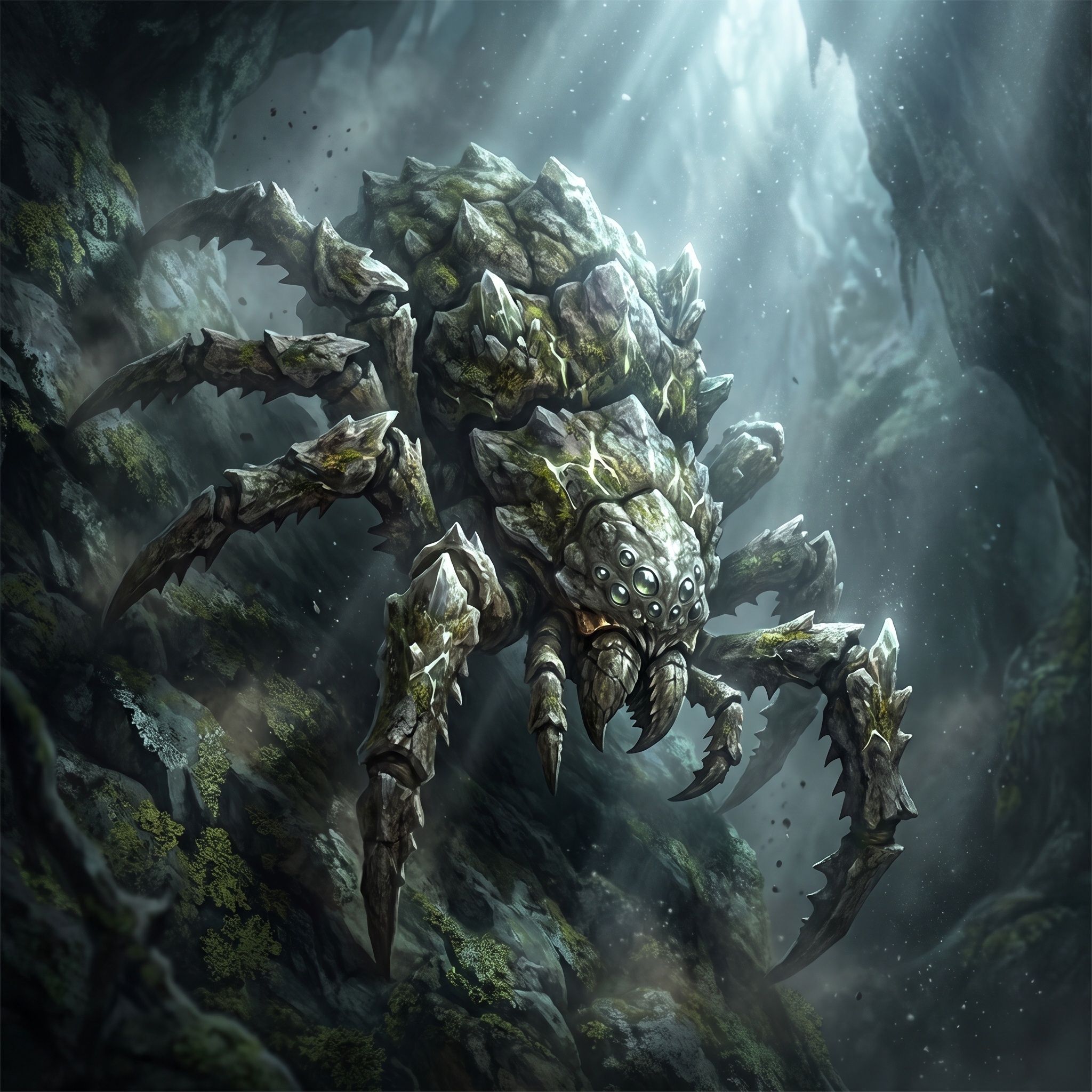
Role: Elite Parasite / Hazard Where It Appears: Rocky outcrops, cave mouths, animal trails near boulders.
A Stone Tick looks like a pebble until it moves. At full size it is close to a fist, and it drinks until it cannot.
Signs and Knowledge: Survival (Hard): notices a Stone Tick before contact on rocky terrain.
Stone Tick (Elite)
- Skills: Stealth 5 on stone, Fortitude 4.
- Attacks: Bite and Attach (Unarmed; Damage 3; Crit 5; Attached — drains 3 Wounds per round; Hard Survival to remove without triggering disease).
- Abilities: Stone Camouflage — Indistinguishable from pebbles while motionless; Severe Perception to spot.
- Abilities: Disease 2 (Tick-Borne Fever) — On removal with 2 Banes, or if the attached tick is crushed against the wound, the target makes a Hard Willpower check. Failure brings fever and joint pain within a day; the target adds 1 Bane to all checks for three days and adds 1 additional Trial Die to checks to travel, climb, swim, or force-march. Recovery requires three days of rest after the tick is fully removed. Cure by Hard Medicine, careful extraction followed by antiseptic herbs, alchemical antitoxin, or suitable divine healing removes the effect.
- Soul: No claimable coin exists; at death canon does not specify (default).
- Tactics: Waits on rocky surface, attaches to passing warmth.
- Encounter Use: Cave mouths, animal trails, anywhere the party rests on stone. The damage is the detection failure.
- Harvesting and Trade: No harvest value. Removal for medical study earns 50–200 gold Flargons from healers.
Variants
Bloated Stone Tick: After feeding, doubled size. Releasing it triggers a blood burst — Damage 4 at Engaged range.
Wasp Nest
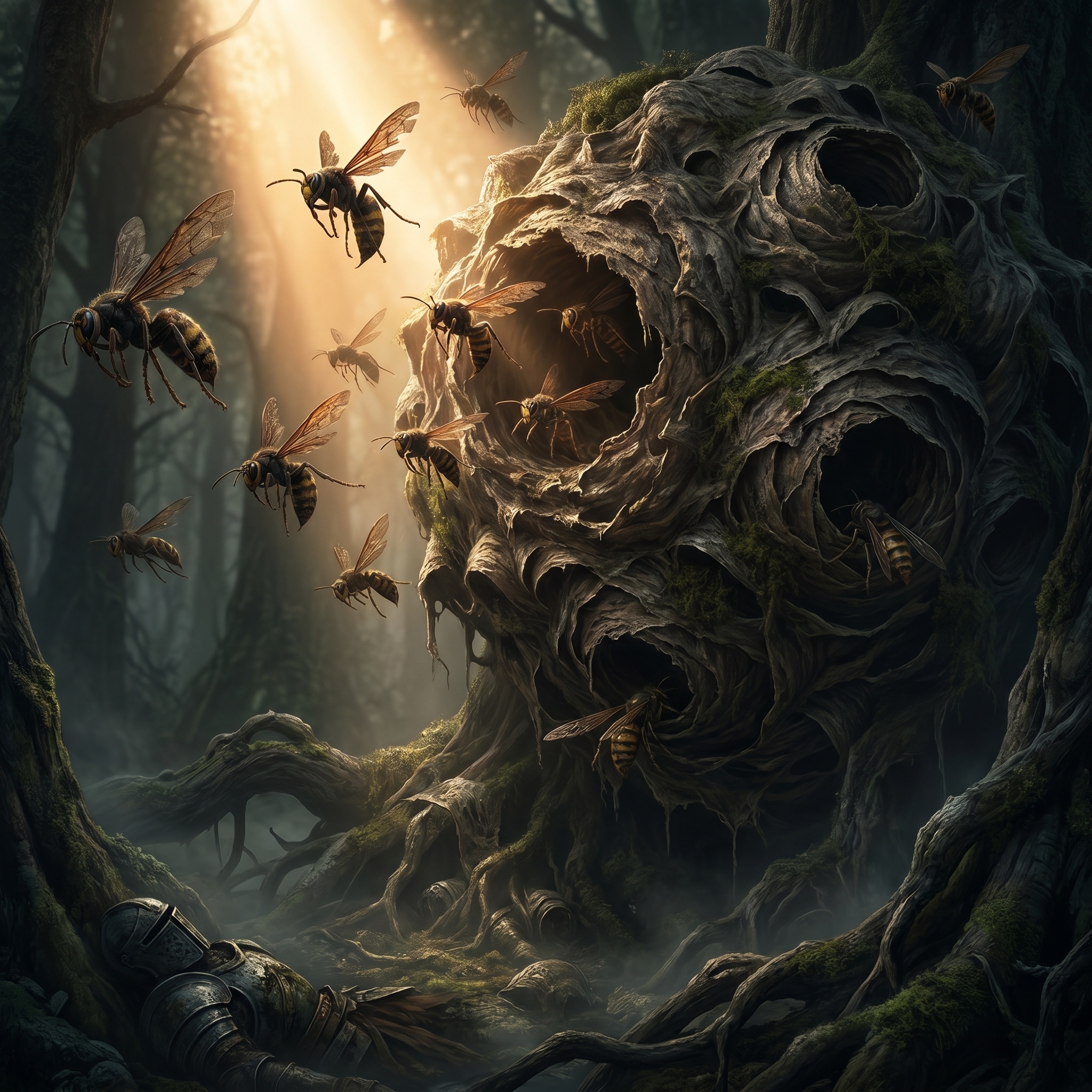
Role: Minion Hazard Swarm Where It Appears: Old buildings, hollow trees, abandoned ruins, anywhere someone put something warm near a nest.
The wasp nest is not the threat. Disturbing the wasp nest is the threat.
Signs and Knowledge: Survival (Average): notices the nest before triggering it.
Wasp Nest (Minion)
- Group Size: One swarm per nest.
- Skills: Unarmed 3, Reflexes 4, Perception 2.
- Attacks: Mass Sting (Unarmed; Damage 4; Crit 5; Poison 1; affects all Engaged creatures).
- Abilities: Swarm Body — Standard.
- Abilities: Trigger Condition — The swarm activates on contact with the nest or sudden loud noise at Engaged range. It does not pursue beyond Short range.
- Soul: No claimable coin exists; at death canon does not specify (default).
- Tactics: Swarms the trigger, stings, returns to nest if threat moves away.
- Encounter Use: Old buildings, climbing scenes, treasure rooms that have been sealed a long time.
- Harvesting and Trade: Nest comb has minor alchemical value (100–250 gold Flargons). Smoke required for safe harvest.
Variants
Giant Wasp: Elite, WND 16. One wasp rather than a swarm, with a Sting that inflicts Poison 3 (Hard Fortitude). Nest guardian.