Nothing in this chapter chases. An Ambush Cactus, a patch of Dungeon Mold, a stand of Tumblethorn, all of them wait, because waiting is what a rooted thing does instead of hunting. The danger is not speed, it is that most travelers do not think to check whether the terrain itself is the threat until they are already standing in it.
At the table: these work best as the reason a party gets careful about where they make camp. A short Survival or Adventuring Lore check before something reveals itself does more for the encounter than any amount of extra damage would.
Ambush Cactus
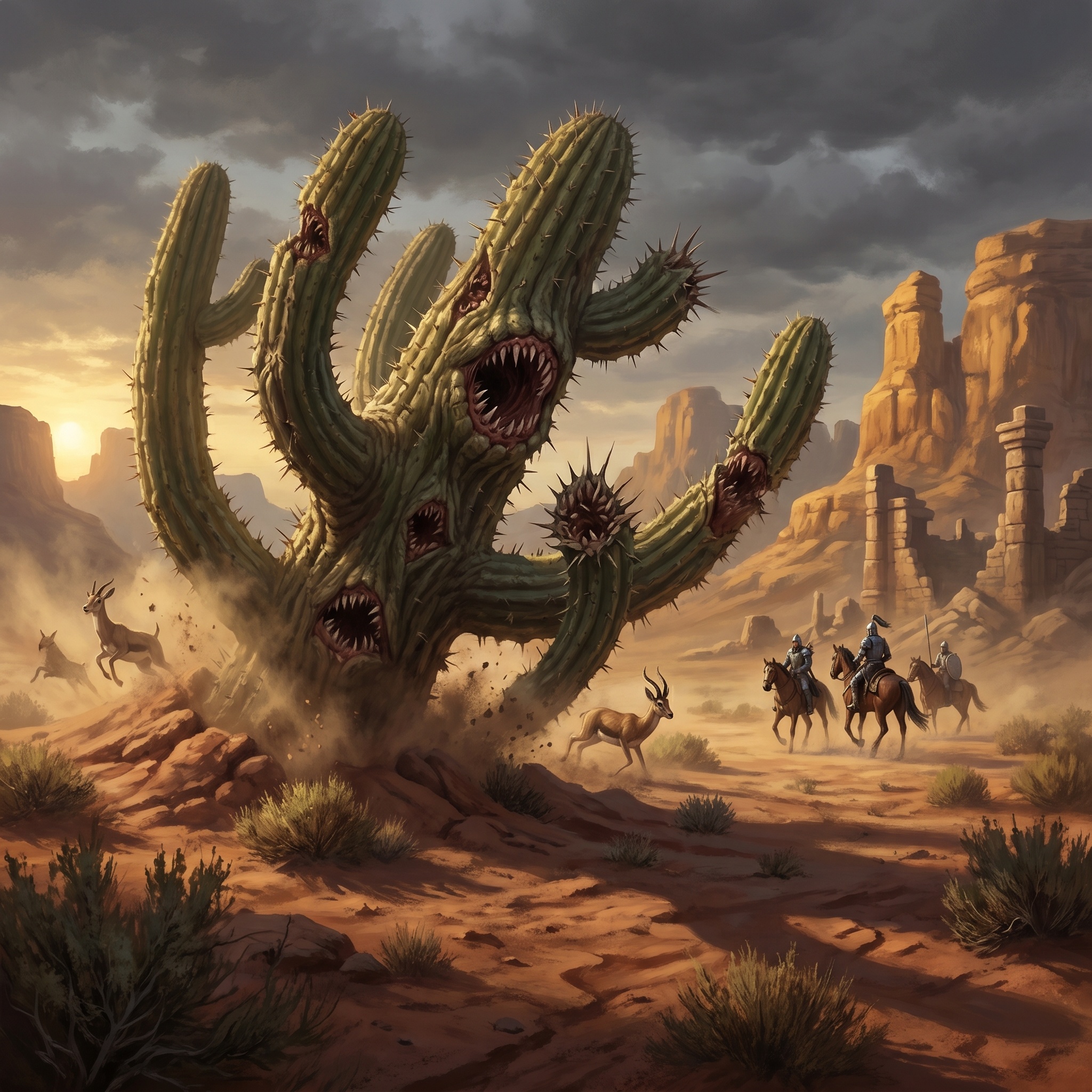
Role: Minion Ambusher Where It Appears: Jazirah desert flats, canyon mouths, dry trade roads. Source: Dort Monsters - Ambush Cactus.
Ambush Cactus (Minion)
- Group Size: 3-8.
- Skills: Stealth 3 while rooted, Perception 2, Heavy Ranged 2.
- Attacks: Spine Volley (Heavy Ranged; Damage 6; Crit 4; Range Short; Pierce 1); Hooking Barbs (Unarmed; Damage 4; Crit 5; Engaged).
- Abilities: Perfect Stillness — Before it attacks, identifying the cactus as a creature requires a Hard Survival or Adventuring Lore check.
- Abilities: First Volley — The group's first attack in an encounter adds 1 Boon. If the targets were unaware, add 2 Boons instead.
- Soul: No claimable coin exists; at death canon does not specify (default).
- Tactics: Wait until the center of the group enters Short range, fire one coordinated volley, then keep firing at mounts and exposed water carriers.
- Encounter Use: Use as a hazard with teeth. A field of Ambush Cacti should make scouting and local guides valuable.
- Variants: Needleblossom Cactus: spine attacks also inflict Burning 1 from irritant sap.
Dungeon Mold
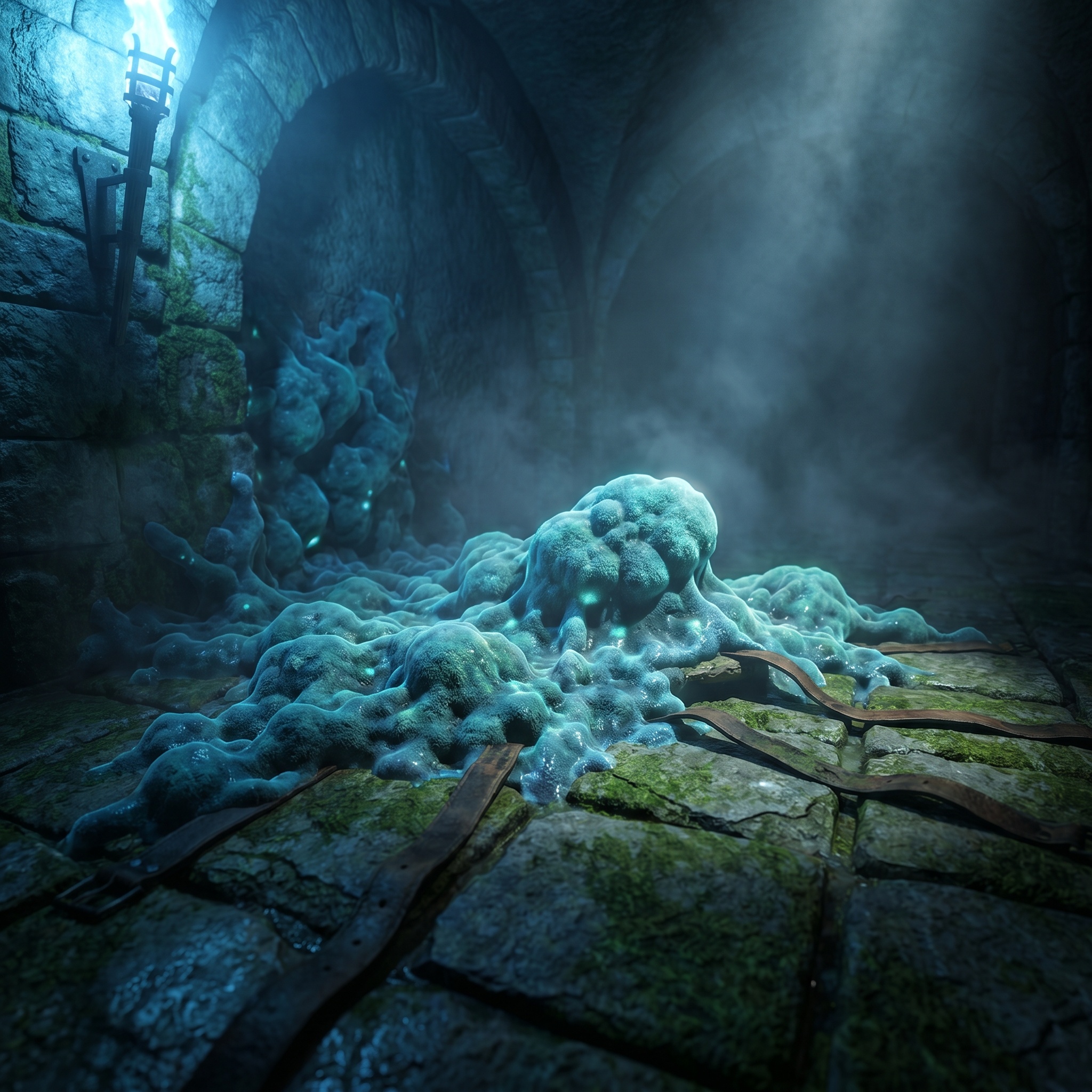
Role: Minion Hazard Where It Appears: Damp dungeons, sealed cellars, forgotten cisterns.
Dungeon mold is a colonial hazard, not a creature with intent. It blooms when disturbed, filling lungs and torchlight with spores.
Dungeon Mold (Minion)
- Group Size: One patch or room.
- Skills: Fortitude 4.
- Attacks: Spore Bloom (Fortitude; Damage 5 Strain; Crit n/a; Range Short; Poison 2).
- Abilities: Disturbance Trigger — First physical contact or fire exposure triggers Spore Bloom.
- Abilities: Clean Burn — Sustained careful fire destroys it; careless fire triggers it first.
- Soul: No claimable coin exists; at death canon does not specify (default).
- Tactics: None.
- Harvesting and Trade: Some alchemists buy live samples for 100-300 gold Flargons. Collection requires Natural Philosophy (Hard) and sealed glass.
Living Trapvine
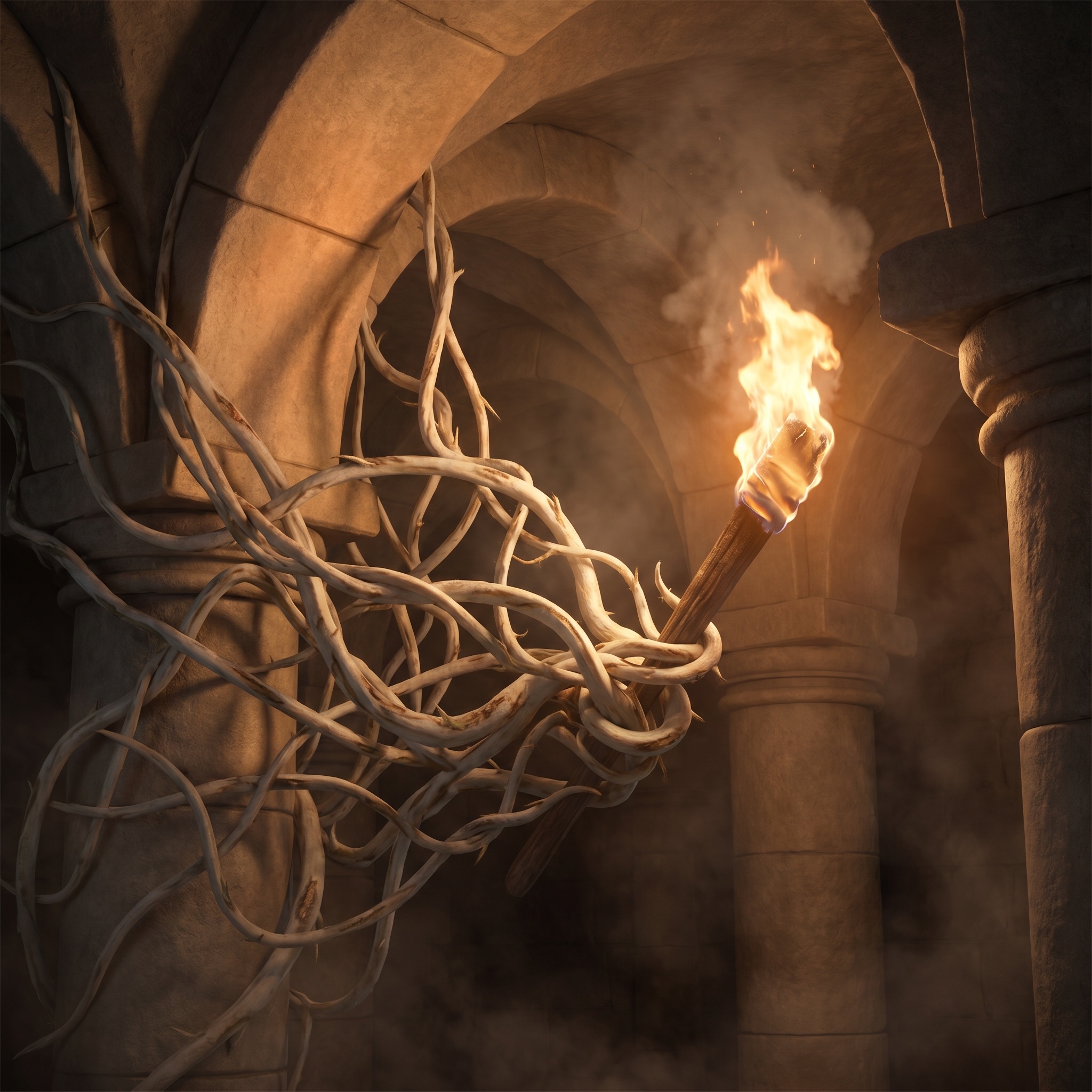
Role: Elite Controller / Ambusher Where It Appears: Overgrown ruins, wet dungeons, old greenhouses.
What It Is
Trapvines respond to heat, breath, and vibration. They turn doorways into snares and wells into throats. A living trapvine is not a single vine so much as a rooted ambush network, with pale runners threaded through cracks, hinges, drain channels, and old masonry.
It has no mind for negotiation, but it does have a predatory pattern. It learns where warm bodies pass, grows thicker there, and lets harmless small animals through often enough that the site looks natural until something person-sized enters the snare.
Ecology and Behavior
Trapvines thrive where water, darkness, and old structure meet: cistern mouths, greenhouse ruins, sunken courtyards, collapsed bathhouses, and shrine wells. The root mass hides in wet soil or masonry. The visible vines are expendable limbs.
They spread slowly unless fed blood, compost, or druidic magic. A ruin with trapvines may have unusually clean bones near wells, roots wrapped around door rings, and birds nesting safely above ground level where the vines cannot reach. Intelligent dungeon keepers sometimes cultivate them as living locks, though regular trimming is dangerous work.
Signs and Knowledge
Survival or Natural Philosophy (Average) identifies vines growing against the available light. Perception (Hard) notices tension in the runners before they strike.
Other signs include scuffed stones near doorways, old belt buckles caught in roots, water surfaces that ripple without wind, and a faint tightening sound when torches warm the air.
Living Trapvine (Elite)
- Skills: Stealth 3 as vegetation, Unarmed 4, Fortitude 4, Perception 3.
- Attacks: Constricting Vine (Unarmed; Damage 7; Crit 4; Grabbed on hit).
- Abilities: Rooted Network - Attacks may originate from any vine patch within Short range.
- Abilities: Tighten - Grabbed targets suffer 4 Wounds at start of their turn unless they escape with Average Athletics or Reflexes.
- Soul: No claimable coin exists; at death canon does not specify (default).
Tactics
A living trapvine grabs more than one target if it can. It pulls victims toward wells, pits, root masses, or patches where other vines can reach. It does not chase, but the rooted network lets it threaten a surprising amount of space from one hidden core.
The encounter should make the room itself feel hostile. Let characters cut runners, burn patches, brace doors open, or search for the heartroot. Destroying every visible vine may only buy time unless the root mass is found.
Harvesting and Trade
| Component | Value | Use | Harvest |
|---|---|---|---|
| Heartroot | 250-700 gold Flargons | Binding ink, restraint charms, living rope grafts | Survival or Natural Philosophy (Hard) |
| Tension runners | 100-300 gold Flargons | Trip-lines, snares, surgical cord | Survival (Average), must be dried under weight |
| Thorn sap | 150-450 gold Flargons | Contact irritants and pain tinctures | Medicine or Natural Philosophy (Average) |
Variants
- Well Throat: Rooted around a deep shaft and focused on pulling prey downward.
- Greenhouse Net: Covers glass walls and ceiling frames, making light a lure.
- Blood-Fed Trapvine: Faster, red-veined, and likely tied to sacrifice or battlefield runoff.
Slime Mold
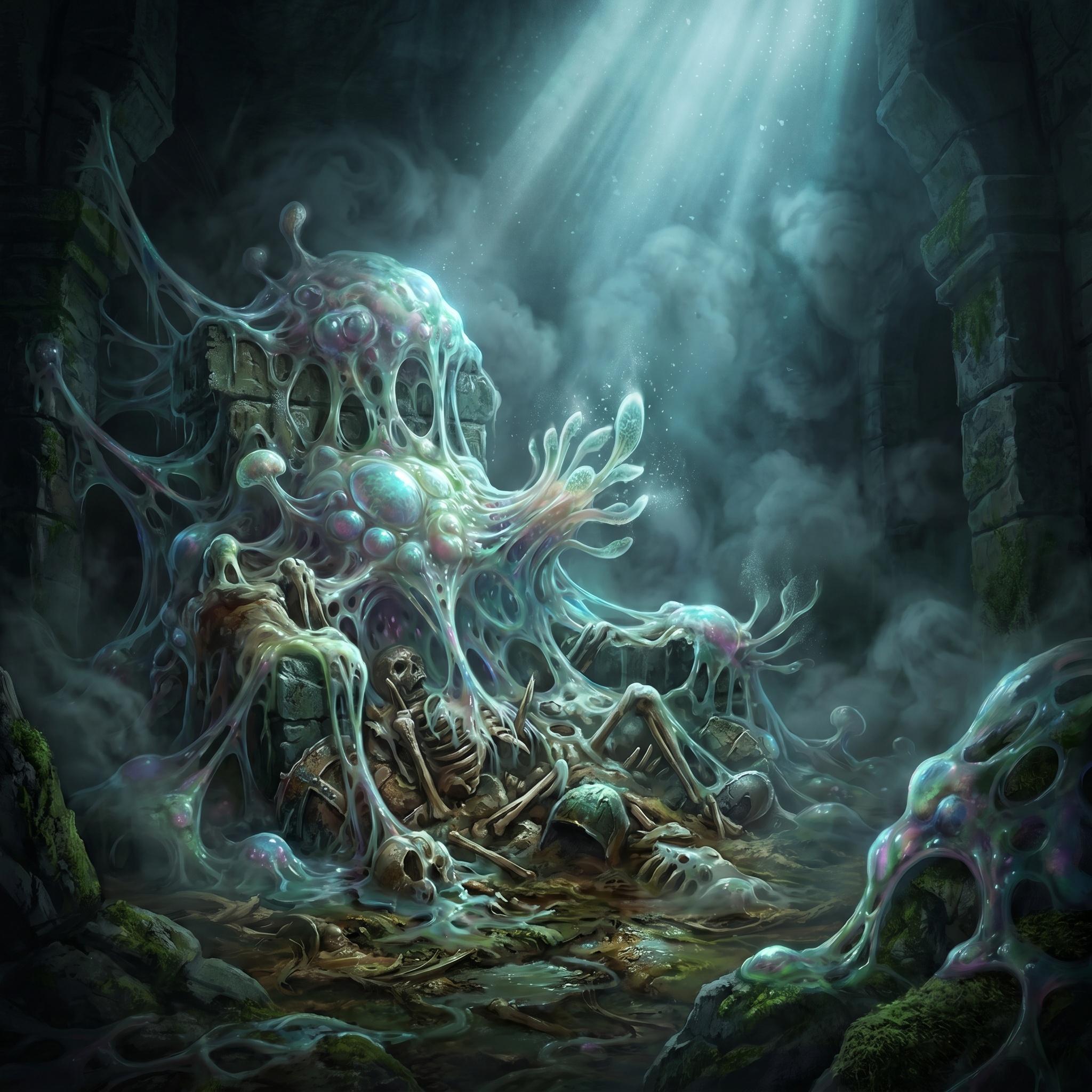
Role: Minion Dungeon Hazard Where It Appears: Damp underground passages, old siege tunnels, flooded basements.
Slime Mold is not alive in the way animals are alive. It is alive in the way a slow tide is alive: directional, patient, and eventually covering everything it reaches.
Signs and Knowledge: Natural Philosophy (Average): identifies slime mold from magical ooze; knows it spreads toward warmth and organic material.
Slime Mold (Minion)
- Group Size: One patch per room section.
- Skills: Fortitude 5.
- Attacks: Engulf (Unarmed; Damage 3 per round; Crit 5; against anything touching it — it does not attack, it contacts).
- Abilities: Passive Spread — Each round, expands into one adjacent space unless burned.
- Abilities: Resistant Body — Slashing and piercing attacks deal 0 damage. Fire, acid, and salt destroy it.
- Abilities: No Initiative — Slime Mold does not act in initiative order. It spreads at the end of each round.
- Soul: No claimable coin exists; at death canon does not specify (default).
- Encounter Use: Dungeon passages as a persistent hazard that changes movement options over time.
- Harvesting and Trade: Some alchemists pay 100–300 gold Flargons for intact samples in sealed glass.
Variants
Awakened Slime: Under some conditions, becomes semi-directed. Moves toward heat sources actively rather than passively.
Spineweed Cluster
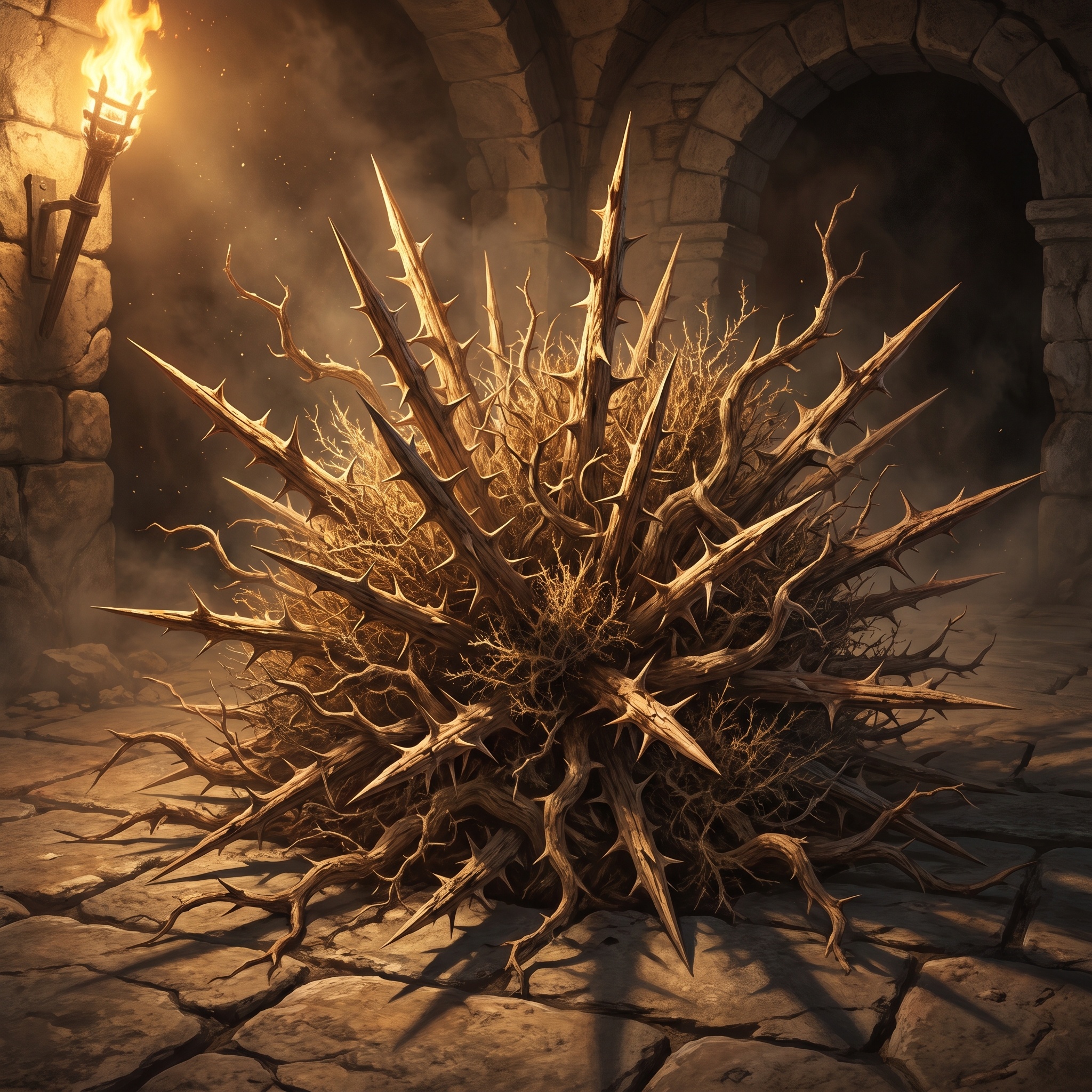
Role: Minion Trap-Swarm Where It Appears: Desert paths, canyon passes, abandoned camps, battlefield approaches. Source: Dort Monsters - Spineweed Cluster.
Spineweed Cluster (Minion)
- Group Size: 4-12.
- Skills: Stealth 4 while dormant, Heavy Ranged 2 for spine burst.
- Attacks: Spine Burst (Heavy Ranged; Damage 5; Crit 4; Range Engaged/Short; Pierce 1).
- Abilities: Dormant Hazard - A dormant cluster is detected with Average Survival if approached carefully, Hard if moving at speed, or Severe in a sandstorm or night march.
- Abilities: Triggered Burst - The first time a creature enters Engaged range, the cluster attacks immediately before initiative is rolled.
- Abilities: Harvested Spines - After safely clearing a cluster, a character can make an Average Craft or Survival check to harvest usable spine bundles for traps or ammunition.
- Soul: No claimable coin exists; at death canon does not specify (default).
- Tactics: Spineweed does not pursue. Its danger is placement and surprise.
- Encounter Use: Pair with intelligent enemies who know where it grows.
- Variants: Black Spineweed: Pierce 2, but easy to identify in daylight.
Tumblethorn
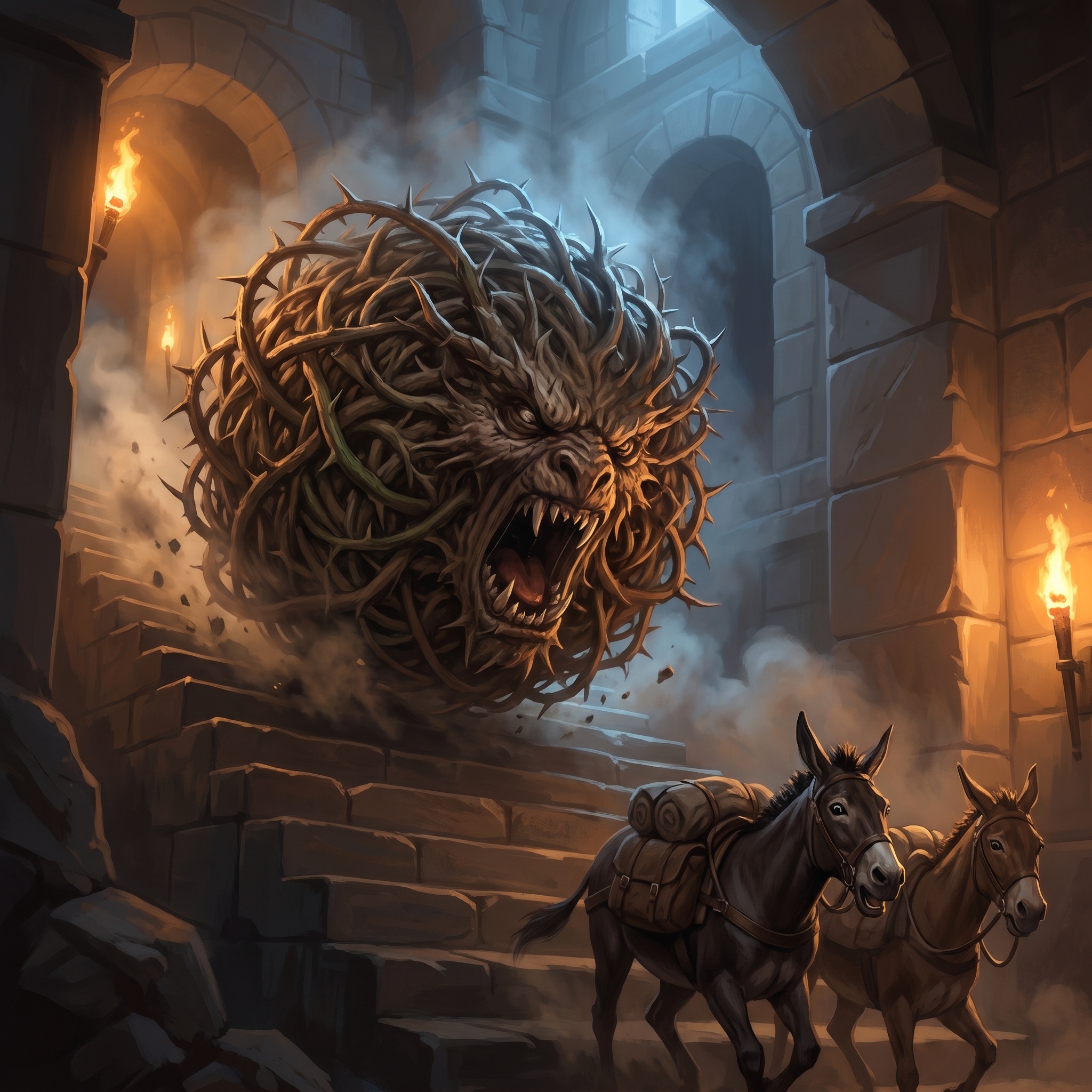
Role: Elite Bruiser-Harrier Where It Appears: Jazirah plains, dry scrublands, wind corridors. Source: Dort Monsters - Tumblethorn.
A Tumblethorn is not a tumbleweed that became dangerous. It is a predatory desert plant that uses the disguise of dead scrub and the momentum of open country to turn travel speed against travelers.
What It Is
At rest, a Tumblethorn is a four- or five-foot ball of dry branches, hooked woody limbs, and barbed spines. In motion, it unfurls into a larger lashing mass with thorn tendrils and a rolling core. It is fast for something rooted in plant logic, especially on flat hardpan or wind-polished desert.
It is mindless, but its body solves one problem well: detect vibration, build speed, knock prey down, and entangle anything still moving.
Ecology and Behavior
Tumblethorns drift with wind until vibration wakes them. They anchor briefly, orient toward movement, and roll. Windstorms make them more dangerous because they hide the scraping approach and can start the plant moving before prey notices anything.
They favor open plains, scrubland roads, and dry washes. Rocky ground, broken ruins, and narrow canyon turns slow them. Fire is the clean answer; cutting at close range usually means being cut back.
Signs and Knowledge
Field signs: thorn balls moving against wind, long scrape lines in dust, blood on dry thorns, animals refusing open flats after storms, thorn fragments embedded high on wagon wheels.
Survival or Adventuring Lore (Average): identifies likely Tumblethorn country and the risk after windstorms.
Survival (Hard): distinguishes dormant Tumblethorn from ordinary dead scrub before it activates.
Natural Philosophy (Average): knows fire is the most reliable countermeasure and that rocky ground limits rolling speed.
Tumblethorn (Elite)
- Skills: Athletics 4, Reflexes 3, Fortitude 3, Perception 2.
- Attacks: Rolling Impact (Unarmed; Damage 9; Crit 4; Knockdown on 2 Boons); Thorn Lash (Unarmed; Damage 6; Crit 4; Bleeding 1 on 2 Boons).
- Abilities: Build Speed - If the Tumblethorn moved at least one range band before attacking, Rolling Impact gains +2 damage.
- Abilities: Entangling Thorns - When Thorn Lash deals Wounds, the target makes an Average Reflexes check or is Immobilized until it spends a Maneuver and succeeds at an Average Athletics or Reflexes check.
- Abilities: Fire Answer - Fire attacks add 1 Boon against Tumblethorn and ignore 2 Resistance.
- Soul: No claimable coin exists; at death canon does not specify (default).
Tactics: The Tumblethorn charges, knocks prey prone, entangles anything still within reach, and rolls through the next target. It does not retreat unless burned. If denied speed, it lashes and waits for a path to open.
Encounter Use: Use slopes, narrow roads, panicked animals, wagons, and wind. A Tumblethorn encounter should move. The danger is not just damage; it is being dragged under wheels, into cactus, or across a dune edge.
Harvesting and Trade
Tumblethorn has modest value. Hunters and frontier guards harvest it because it is useful, not because it is rare.
| Harvest | Buyer | Check | Typical Value | Use | Complication |
|---|---|---|---|---|---|
| Hooked Thorn Bundles | Trapmaker, fletcher, caravan guard | Average Survival | 100-400 gold Flargons | Caltrops, bolt heads, snare teeth | Live thorns can twitch and cut careless hands |
| Rolling Core Root | Alchemist, plant scholar | Hard Natural Philosophy or Survival | 400-1,000 gold Flargons | Stimulants, motion-reactive traps | Useless if burned |
| Dry Lash Fiber | Ropemaker, hunter | Average Craft | 150-500 gold Flargons | Barbed cord, animal deterrents | Tangled bundles take time to pack safely |
Variants
Briar Bull: Elite, WND 30, Build Speed adds +4 damage, but Agility drops to 2.
Storm-Driven Tumblethorn: Elite, gains 1 Boon to movement and Rolling Impact during windstorms, but Perception drops to 1 outside wind.