The gods are not waiting to be petitioned. They have agendas, rivals, territory disputes, and genuine economic stakes in the world of mortals. The divine politics of the Shattered Domain are the world's most durable pressure system: the one that does not stop regardless of what the party does or does not do.
The Gods as Persons, Not Metaphors
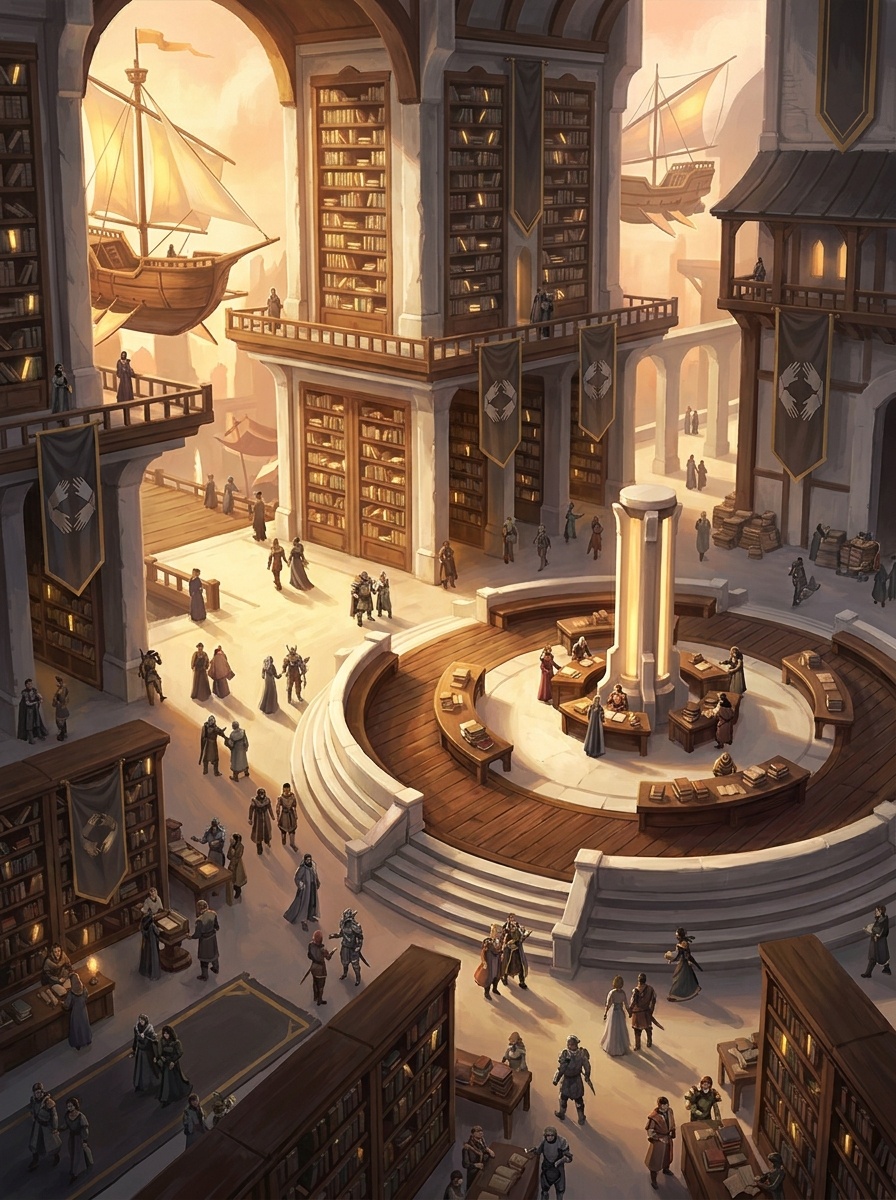
The Player Guide tells players that the gods are real and active. This chapter tells you what that means at the GM level: the gods are persons with specific goals, specific rivals, and specific tactics, and their interventions in mortal affairs follow from those goals with internal logic.
When you run a divine encounter (a priest receiving guidance, a faction acting in a god's name, a miracle happening or not), run it from that god's perspective. Echo's keepers build documentation networks because a god who emerged from collective need understands that truth without records can be denied. Oshala's inquisitors classify households because a god who believes order is cosmic law expresses that through registry. Nyxollox's death-keepers walk battlefields because a god who inherited death's witness-function sends practitioners to places of mass dying. Every divine action should feel like the expression of a person with a specific portfolio and a specific understanding of what that portfolio demands.
The Shattered Domain's Political Map
The gods organize the Shattered Domain into territories corresponding to their portfolios and power bases. At its center lies Godless: the island where souls with no genuine devotion end their journey, surrounded by an Ocean of Belief whose shoreline expands and contracts with the flow of mortal faith.
GM-facing truth the Player Guide does not state: divine territory is a live market. A god whose mortal population shrinks loses territory at the ocean's edge. A god whose population grows gains it. Every Oshalan conversion drive, every Echo charter school, and every Nyxollox battlefield presence is economic expansion as well as faithful service. The gods do not consider this cynical. They consider it the structure of things.
How to Use These Entries
Each entry below is self-contained. You should not need the Player Guide to run a deity's pressure at the table. The at the table section covers how the god manifests in play; the session question is the lens to apply each session; the GM tool is the specific mechanic or tracking prompt that keeps the pressure visible.
The Forbidden Grant is the covenant's hard edge: the thing each god will not empower when a working violates that god's deeper purpose. This never happens randomly and is never used as a tax on ordinary casting. Judge purpose, not loophole wording. A working that serves the deity's actual portfolio may pass even when the surface category looks close; a working that betrays that portfolio stays silent.
Echo
Positive alignment · Unity, knowledge, peace, communal memory, fairness · Clergy: Keeper (senior: Archive-keeper)
Forbidden Grant: Workings that erase, falsify, or hide communal truth: a memory struck from a witness, a record unmade, a crowd magically silenced for private gain. Echo's power builds shared memory; it will not be spent to destroy it.
Wants: Stable communities and accurate records. Echo's pressure manifests through documentation that matters at the wrong moment: a deed, a contract, an archived testimony, or a witness statement the party did not know existed.
At the table: The Accord wants to speak to the party after major public events. Echo's archivists will know more than the party expects about events they thought were private. The Accord's contract clinics identify infernal bargains before they become binding; its keepers earn standing by doing work, not by holding office.
The Accord has internal divisions that matter at the table. The Echoless use stability-language to justify destabilization when stability benefits the powerful. The Self-Echoers achieve personal peace and do nothing with it. The Harmonizers (the Chorus) are the most dangerous: a cult, not a heresy, that pursues enforced unity through mind-altering rites, coercive social pressure, and deliberate suppression of dissent while using Accord language perfectly. The Accord's test: Can anyone here leave freely? Can anyone here disagree openly? A fourth group, the Echoing Voices (the Voices), believe Echo is the collective will of mortals made manifest and keep communities in crisis to maintain the desperate longing they believe generates divine intervention.
In Irna: The Accord is civic infrastructure: archives, charter schools, and contract clinics are assumed to exist, as roads are assumed to exist. An Accord keeper in Irna holds professional credentials.
In Jazirah: The Accord operates through individual keepers at the edges of Ordered territory. The specific person doing the work is the whole of Echo's presence in a given district.
In Shoing: Echo's keepers earn standing by showing up and being useful, the same way everyone earns standing in Shoing. The archives are smaller and more oral. Echo operates at relationship scale.
Session question: Who needs accurate information to oppose what is about to happen, and is that information available?
GM tool: At the start of each session, ask whether any Event of Record happened last session. Echo's nearest archive is noting it. What does that produce?
Nyxollox
Positive alignment · Death, transition, the afterlife, the dignity of ending · Clergy: Death-keeper / Keeper of the Gate
Forbidden Grant: No working that animates the dead, binds a soul against its passage, or calls a soul back past the 24-hour judgment window. He will not grant Resurrection; he will grant Revive within the window while the soul still waits. Nor will he empower a working meant to forestall a death that is supposed to arrive.
Wants: Every dying person properly witnessed and every soul passed cleanly. The death-keeper who walks a battlefield without weapons, tending dying soldiers from both sides without asking which banner they followed, is the faith at its most essential.
At the table: Death-keepers show up at death sites, pursue infernal soul interception, and maintain visible presence at institutions dealing with mass death: hospitals, prisons, battlefields, plague sites, and portal arrivals at The Heavens. A death-keeper will notice if the party leaves bodies unattended after a fight in a populated area. The question they ask is "was this death witnessed?" not "was it deserved?"
The Order of Witness is the faith's practical discipline for making that question answerable: a rite, record, and set of arrangements establishing who attended the death, where the name was entered, and whether any sign of coercion, necromancy, or infernal interference touched the passage. A meticulous person can follow the Order of Witness before death by leaving clear instructions for who should attend them and what counts as a disrupted passage.
Nyxollox accumulates coin precisely when others expect him to lose it: every dignified death and every family that grieves without fracturing generates power for his vault. The faith deliberately rotates practitioners through bedside work, archival work, and training to prevent moral collapse.
The Spent problem intensifies near Silver Road transit points. A mass death in a region with no death-keepers produces an unmanaged cluster of Spent that a properly covered region would have prevented. Track unwitnessed deaths as a GM resource, not just flavor.
Session question: If many people die here, is anyone positioned to properly witness and protect those deaths?
GM tool: Track unwitnessed deaths in your notes. One death-keeper inquiry is flavor. Three is a pattern. Six is a case. A high Spent concentration near a city means a deity with local presence has been spending heavily: something significant is happening in the Shattered Domain.
Oshala
Negative alignment · Order, war, hierarchy, masculine authority as cosmic law, conquest as correction · Clergy: Cleric of the Order (male by doctrine)
Forbidden Grant: Grants divine power only to men in good standing within the Order who hold no other devotion. Women receive nothing. Nor does any cleric who bends a knee to a second god. The power is an instrument of hierarchy and does not pass to anyone the doctrine places outside the chain of command.
Wants: Conversion, classification, and the establishment of Order as the law of the cosmos. The registry is the primary weapon; inquisitors arrive when administrative capture fails or needs enforcement. Every conversion drive is economic expansion in the Shattered Domain's live market.
At the table: Oshalan expansion follows a consistent pattern: Manis arrive first with services and goodwill; Armenites follow when diplomacy reaches its limit; Nasallians consolidate with registries, patrol routes, and legal strangulation of competing worship. The first thing a new Quarter receives is not a sermon but a registry.
In Jazirah: The Order operates at full institutional capacity. All three sects are present. The household registries are complete. Ordered law is civic law.
In Irna: Mostly Nasallian method: establish a Quarter, build the registry, let the paperwork become infrastructure before the doctrine becomes visible. Armenites appear only when administrative consolidation has failed or the Order has already locked enough control to enforce publicly. If the party is seeing Armenites in Irna, the situation has escalated past the negotiation phase.
In Shoing: The Order's most powerful tool is registration. If you are in the registry, you are subject to Ordered law; if not, you do not exist in the Order's administrative structure. Shoing communities respond by stopping being in the relevant location. This is not recognized as a legal defense. The Order has failed here three times and will try again.
Session question: Is there uncertainty in this community that the Order can present itself as the answer to?
GM tool: Run Oshalan expansion as an incremental clock, not a dramatic invasion. Each tick represents one more institutional foothold. The party will likely spend more time preventing a Quarter from forming than fighting inquisitors after the fact.
Jula
Positive alignment · Peace, protection, life, measured reconciliation · Clergy: Keeper of the Peace; military arm: White Rose Legion
Forbidden Grant: No working used to strike first, to deceive in a negotiation meant to make peace, or to harm the helpless: prisoners, refugees, the wounded. Her power is protective; the moment it is turned to aggression, it withers.
Wants: Genuine peace: not suppressed conflict, but resolved conflict with both parties intact. The White Rose Legion is not a contradiction of Jula's portfolio. It is its most honest expression: a god of peace with an army is a god who takes peace seriously enough to defend it.
At the table: The Legion does not arrive after the violence. It appears when the conditions that produce violence have developed enough to be legible to Jula's practitioners. A Legion presence at a transit point, council hall, strike camp, or border crossing means Jula's people have assessed that the situation is close enough to irreversible harm to require visible peacekeeping. When the party arrives somewhere and finds a White Rose Legion presence they weren't expecting, the correct GM interpretation is: something is further along than the party knew.
The Legion uses force precisely and only to create conditions for negotiation. It does not conquer. It does not glorify violence. It mourns every life it takes. The Rite of Submission at a defeated faction's surrender is not humiliation; it is an offer: submit to peace, and we will build something together.
The Sanctuary Keepers who maintain true refuge and the Mediators of Deep Discourse who sit with traumatized parties for as long as it takes are less visible than the Legion but just as essential. Jula's temple sanctuary protocols are legally recognized in many jurisdictions; entering a Jula temple by force to extract someone under protection is among the most serious violations any party can commit.
Session question: Is there a point of genuine reconciliation here, and is anyone positioned to find it before it closes?
GM tool: When a conflict the party is involved in reaches a tipping point, decide whether the Legion would send an observer. If yes, introduce one: a single mediation-trained cleric with a White Rose badge and a genuine question about whether both sides really want this.
Themela
Positive alignment · Justice, truth, law, judgment · Clergy: Truth-keeper
Forbidden Grant: No working of deception. Illusions meant to mislead, magically forged evidence, compelled false testimony, anything that corrupts a proceeding or buries the truth: the channel does not open for them. Her gift is clarity, and it cannot be spent to manufacture a lie.
Wants: Fair verdicts and accurate testimony. Themela's truth-keepers pursue lies told under oath, fabricated evidence, and corruption in judicial institutions with the same relentlessness that Nyxollox death-keepers pursue infernal soul interception.
At the table: A character who makes a false statement before a Themela court will be remembered. A corrupt magistrate in a city where Themela's faith has any presence is under investigation. Evidence the party planted, suppressed, or falsified is a liability that will surface. Themela's faith demands pro bono legal aid from its practitioners, because justice that serves only those who can afford it is not justice.
The faith's taboos are among the most absolute in the pantheon: subverting justice through bribery, perjury, or evidence tampering goes beyond illegality: it is the most fundamental betrayal of the divine compact.
Session question: Is there a lie structurally embedded in this situation that, if it came out, would change everything?
GM tool: Treat false testimony as a ticking clock. Themela's ravens eventually read the full picture. The divine compact asks for the willingness to deliver a verdict that ruins your own allies when the evidence demands it.
Thulgard
Positive alignment · Community defense, building, the collective strength of ordinary people · Clergy: Wallwarden (military aspect: gate-warden)
Forbidden Grant: No working used to abandon a sworn post or the people protected; and none used to raze homes, break community defenses, or carry conquest past the line of protection. Turned to attack rather than shelter, the blessing goes still.
Wants: Communities with walls, stores, and trained neighbors who know what to do when the gate breaks. His coin is generated by unglamorous work: the wall repaired before it fails, the well dug before the drought, the training drill that no one noticed because nothing went wrong.
At the table: A Thulgard congregation means the town has an organized militia, a maintained food reserve, and people who have drilled together. When danger comes, Thulgard's influence is the bell, the drill, the stored grain, and the neighbor who knows exactly where to stand. It also means the party has an ally with organizational capacity if they earn the congregation's trust, and an obstacle if they undermine community defense.
The faith has no interest in glorifying violence. Fighting is grim work done because the alternative is worse. The Wall of Names in every Shield-hall, the continuous carving of everyone who died defending the community, is the faith's most sacred space.
Session question: What has this community prepared for, and what did it fail to imagine?
GM tool: Give prepared communities visible procedures. When danger comes, those procedures show Thulgard's influence concretely: not divine miracle, but collective human capacity organized in advance.
Jusannia
Positive alignment · Femininity, life, motherhood, childbirth, healing, the generative power · Clergy: Priestess / Mother-Keeper (exclusively female)
Forbidden Grant: Channels her power only through women. Men may follow as lay devotees but are never granted her workings. And she grants nothing used to harm a woman or child, to dominate the feminine, or to commodify the sacred functions of the body. Her gift is generative; it does not flow toward those who would injure what it exists to protect.
Wants: Women, children, families, and the wounded to survive with dignity rather than merely remain alive. The faith's internal tension between the Shalvanist Order (legal reform and courts) and the Gvankanian Order (combat training and force) does not weaken it: both arms agree on the core conviction that female bodies are sacred, not as objects to be controlled, but as sources of strength worthy of respect and care.
At the table: Jusannia's pressure appears through care networks: midwives, temple healers, mutual-aid houses, and people who know which doors open when official institutions have failed. A party that protects the vulnerable will find Jusannia's people already organizing recovery. A party that harms women or children discovers that soft networks can become hard boundaries very quickly. The faith's martial training barracks exist for a reason.
The faith has the deepest structural conflict with Oshala, whose household doctrine places women as subordinate property. In Ordered territories, Jusannia's temples operate with institutional hostility rather than license.
Session question: Who is recovering after the danger passes, and who is doing the work no one applauds?
GM tool: Track who the party helped recover, not only who they saved in combat. Jusannia's faith remembers after the danger has passed. Protections that kept the wounded alive, the families fed, and the vulnerable housed are as significant to this faith as the fight itself.
Talbar
Positive alignment · Commerce, contracts, fair exchange, the sanctity of a sealed deal · Clergy: Deal-keeper (senior: Master Keeper, Arbiter)
Forbidden Grant: No working that serves fraud or coerces an unfair bargain. And he withdraws entirely from any follower who has broken an agreement sealed under his witness: until that breach is answered, the channel stays shut.
Wants: Agreements to be fair, legible, and kept. Talbar is the primary counter-force to infernal contracts in the mortal world: his deal-keepers teach contract literacy, identify the red flags of predatory agreements, and actively intervene when they detect infernal bargains being negotiated.
At the table: Talbar's deal-keepers appear wherever infernal operations are active, because predatory contracts violate the sanctity of legitimate deals. They may be allies when the party needs a contract read, and obstacles when the party wants to break a bargain because keeping it became inconvenient. A contract sealed under Talbar's witness is specifically resistant to hidden-clause exploitation, because both parties had to speak their terms aloud in front of witnesses before signing.
The Trading House: a neutral ground embedded in commercial cities where negotiations happen under Talbar's witness, disputes over sealed agreements are brought for arbitration, and the registry records what was actually agreed to. The ritual of the Sacred Seal (candles lit, terms read aloud, signatures given together, tokens exchanged) is conducted in full view of witnesses because that visibility is the entire point.
Session question: Which agreement in this situation is unclear, unfair, or about to be violated?
GM tool: Put a Talbar deal-keeper one step behind every infernal contract thread. They arrive with precise questions and limited patience for heroic vagueness. A Talbar keeper can identify an infernal contract at a pre-signing review; they cannot unilaterally void it after signing. The process is long. The party's direct action is often faster.
Zopha
Positive alignment · Knowledge, intellect, wisdom, understanding, teaching · Clergy: Keeper (specialized: Keeper of Natural Sciences, etc.)
Forbidden Grant: No working that spreads deliberate falsehood, destroys knowledge, or preys on another's ignorance. Magic that teaches a lie, burns away hard-won learning, or exploits what someone does not know runs directly against her purpose.
Wants: Knowledge pursued honestly, especially where the edge of the known world becomes uncomfortable. Zopha descended to the mortal world and lived as a human, which shapes her faith's emphasis: not to give knowledge but to build the systems through which knowledge can accumulate, transmit, and grow.
At the table: Zopha's pressure appears through scholars, healers, engineers, and archivists who refuse to let ignorance remain convenient. Zopha-aligned NPCs are excellent routes to obscure or forbidden information, but the exchange is reciprocal. They want to know what the party has seen that no one else has documented. Every Circle academy has a shrine to Kater Barne, the woman born into servitude who was rejected by the Circle she sought and turned that rejection into the Comitatus Academia dedicated to educating commoners. The faith has not forgotten what it was capable of forgetting.
Session question: What fact is being avoided because learning it would create responsibility?
GM tool: When the party discovers an anomaly (a creature behaving wrong, a location with no explanation, an effect outside normal taxonomy), decide which Zopha practitioner hears about it first and what they offer in exchange for access to the party's direct observations.
Bridhel
Positive alignment · Music, dance, poetry, storytelling, creative inspiration, honest expression · Clergy: Muse (senior); keeper of the arts
Forbidden Grant: No working used to silence or censor expression, nor any that wields false art to compel or manipulate. Her power moves through honest creation and the freedom to share it; turned to suppress a voice, it does not answer.
Wants: Honest expression to remain free. Bridhel is the child of Amaterasu and Anansi: from Amaterasu, warmth and light that transforms suffering into growth; from Anansi, the understanding that reality is not fixed but fluid, that stories reshape the world in real time.
At the table: Suppressing Bridhel's faith does not make the feeling vanish; it turns it into resentment with rhythm and an audience. A censored play, a silenced singer, a banned festival can become a political front within sessions. The Muse Halls are explicitly anti-hierarchical: the child singing for the first time is doing Bridhel's work as much as the master musician. What the god opposes is not lack of skill but lack of honesty: art created for commodity without genuine feeling, the repetition of old forms without new vision, and above all censorship.
Session question: What truth is this community expressing through art because direct speech is too costly?
GM tool: Use Bridhel contacts to reveal the emotional truth of a location. What are people singing, painting, mocking, or refusing to perform? The answer usually contains something a straightforward investigation would miss.
Hesira
Positive alignment · The hearth, marriage, partnership, domestic continuity, covenant · Clergy: Hearthwarden (senior: Covenant-keeper; dissolution specialist: Release-warden)
Forbidden Grant: No working that binds a person in place or compels them to stay. Her covenant is chosen daily, never imposed. Magic that would trap someone in a home, a marriage, or a bond they wish to leave is precisely what she refuses.
Wants: Chosen bonds honored daily. The faith's founding insight: a fire that has gone out can be relit, and tending is the work that relights it.
At the table: Hospitality obligations are real in Dort. An NPC who has received genuine welcome from a Hesira household is not neutral in disputes involving that household. That loyalty may look irrational until the party understands the bond behind it. The Release-wardens exist to honor the completion of a covenant that has run its course; covenants can end, but they cannot be abandoned.
If the party accepts hearth-right, meal-right, or guest-right, they have entered a relationship with expectations attached. Those expectations go both directions. The faith's most important distinction: passion is Amador's domain, a legal agreement is Talbar's; Hesira governs the covenant, the thing reducible to neither.
Session question: What covenant has been maintained, neglected, or ended without proper honor?
GM tool: Track formal welcome. The party accepting hospitality from a Hesira-adjacent NPC or institution creates a bond the world will reference later. When a character fails to honor a covenant extended to them, let the faith notice, quietly, then less quietly.
Pollaran
Neutral alignment · War, conquest, martial resolve, honorable victory · Clergy: War Priest (senior: Master Strategist, High Cleric)
Forbidden Grant: No power for treachery, poison, a strike against the helpless or the fallen, or a deception used to win what an open field would not give. The warrior who reaches for his blessing by underhanded means reaches into silence.
Wants: Honorable conflict: strength tested openly, not victory stolen through poison, treachery, or cruelty to the helpless. His doctrine is lived rather than debated. Conflict is the truest test of character. Honor is the only thing worth dying for, and a dishonored life is a life Pollaran will not recognize.
At the table: Pollaran's pressure appears wherever soldiers, mercenaries, duelists, and weaponsmiths care about the difference between winning and winning cleanly. Pollaran-devout NPCs can respect enemies and despise allies, depending entirely on conduct. Warriors who die honorably in his service are taken to his territory in the Shattered Domain, where they train and fight without permanent loss.
Pollaran shares Jazirah with Oshala in what both sides call a non-war. The difference between them: Pollaran demands honesty about the true cost of war and treats a defeated enemy with respect; desecrating the fallen brings his curse. He does not sell people or break faith. This distinction matters to soldiers who have encountered both faiths and can tell the difference.
Session question: Who fought well, who fought dishonorably, and who noticed?
GM tool: After any major fight, ask who fought dishonorably and who fought well. The answer does not need to produce an immediate consequence. Pollaran-devout NPCs simply react to it, sometimes visibly, sometimes in ways the party will not understand until later.
Fujin
Neutral alignment · Wind, storms, chaos, authentic freedom, the divine value of being wholly yourself · Clergy: Storm-priest / wind-speaker (self-identified, never appointed)
Forbidden Grant: Nothing used to cage another's nature: no binding, no domination, no working that imposes order or conformity on an unwilling will. His power is the gust that breaks restraint; it cannot be spent to become the restraint.
Wants: Authentic action and the refusal of cages. Fujin carries the part of Ix's nature that was raw impulse and joy in motion, the refusal to be bound or settled. His teaching is short and dangerous: to be yourself completely, without apology, is to embody the god.
At the table: Fujin's pressure appears in storms, ship crews, rebels, performers, wild mages, and people who commit to a course before every variable is known. Fujin-devout NPCs notice hesitation less than dishonesty. They would rather see a bold mistake than a life spent asking permission from fear. The faith has no hierarchy and no central authority; its sacred sites are weathered monoliths raised at battlefields and storm-struck places. Fujin keeps no permanent temples; the attempt to build one is contrary to the faith.
Fujin's coin is heaviest where authenticity meets consequence: the warrior who charges overwhelming odds and dies in the attempt generates more than the one who survives by hedging.
Session question: Who is being asked to live smaller than their nature permits?
GM tool: When a player character makes a bold decision with incomplete information and follows through on it, let a Fujin-adjacent NPC or event tilt toward them. Deliberation is Fujin's enemy. The god rewards the leap.
Kraut
Positive alignment · Abundance through cultivation, the sacred harvest, the prosperity of the soil · Clergy: Harvester-priest / Seedkeeper (field-tender; soil-steward)
Forbidden Grant: No working that blights soil, poisons or withers crops, or turns the harvest into a weapon. Magic that salts a field or makes cursed and poisoned food is the inversion of everything he is, and the blessing curdles rather than answers.
Wants: Cultivation, sharing, and the prosperity that comes from soil treated as covenant rather than resource. Kraut's theology is blunt: the soil is alive and returns respect a hundredfold. Abundance shared multiplies; abundance hoarded rots. Labor is prayer, and there is no truer worship than the work of your hands in the earth.
At the table: Kraut's pressure is seasonal and rural. Smaling villages, farming compacts, seed-keepers, harvest traders, and rooftop gardeners all carry pieces of his faith. Harm to food systems rarely explodes immediately; it ripens into consequences. Infernal operations target farming communities with rot and barrenness as a matter of course. A field blessed by a Kraut seedkeeper is nearly impossible for infernal blight to corrupt.
Kraut-adjacent NPCs operate wherever food production and land management matter, which is everywhere that has a winter. Their planting compact wisdom is centuries deep: cooperative agreements between neighboring villages about what gets planted where, across what timescale. These compacts are administrative achievements most outsiders never bother to see because they look like farmers talking about turnips.
Session question: What has been planted, hoarded, wasted, or shared, and when will the result arrive?
GM tool: Run Kraut clocks in seasons. A damaged field, stolen seed store, or broken harvest compact should matter later, when food is short and memory is long. The divine compact generates coin through every successful harvest and, more heavily, through every act of sharing; this means preventing a harvest damages not just the community but Kraut's vault.
Ryujin
Neutral alignment · The saltwater sea, tides and currents, the creatures of the deep, safe passage · Clergy: Tide-speaker (land, recognized by connection to the sea, never appointed); coral-priest / wave-singer (merfolk)
Forbidden Grant: Nothing invoked through freshwater. Nothing to a cleric who has carried his name far inland from any tide. Nor will he empower a working that poisons the sea, enslaves its creatures, or abandons someone to drown. The covenant of mutual aid is the one line his power will not cross.
Wants: The saltwater sea respected as a living covenant: passage, mutual aid, tides, deep creatures, and the communities whose survival depends on them. Ryujin was not always a god; he was a sea-dragon of the deepest trenches when a shard bearing Ix's cyclical nature descended on him. He did not come to rule the sea as a king rules a kingdom. He is the sea's animating consciousness.
At the table: Ryujin's pressure appears through harbormasters, navigators, coastal temples, merfolk contacts, storm warnings, and the maritime habit of helping the drowning before asking who they are. The faith runs on two parallel structures: land-based tide-speakers who recognize that the ocean speaks to them, and the merfolk and marine communities of the deep. Both make decisions the other must honor. Those who break faith with the sea for an infernal promise of safe passage find themselves abandoned.
An inland cleric carries a small sealed vessel of saltwater; before invoking Ryujin's power in a freshwater context, they consecrate what water is available. This is practice, not a mechanical requirement, but clerics who skip it and don't feel something pull at the connection are either very disciplined or very mistaken about how much distance the compact permits.
Session question: What does the sea remember about the party's conduct?
GM tool: Treat every port as part of Ryujin's information network. If the party protects sailors, word travels between ports. If they abandon someone to the sea, that travels faster. Ryujin's coin is heaviest when the devotion is costly: the sailor who saves a stranger at real risk, the fisher who returns part of a catch while their family goes hungry.
Bethsia
Positive alignment · Anomalies, the breaking of natural law, the correction and restoration of order · Clergy: Rectifier (senior: Archive Keeper)
Forbidden Grant: No working that weaponizes a discovered anomaly, preserves one against patching for personal gain, or uses an anomalous effect to dominate others. Her power is discovery and correction; it does not flow toward those who would monopolize what the world cannot yet explain.
Wants: Anomalies found, documented, and corrected. Bethsia generates coin when mortals discover something impossible and share what they found. The faith demands documentation: a discovery kept secret produces no power for her vault. A discovery announced, tested, replicated, and reported generates heavy coin regardless of whether it was found by a trained scholar or a vagrant who tripped and missed the ground.
At the table: Bethsia's Rectifiers appear when impossible things happen. A character who witnesses, causes, or survives a clear violation of how the world works may find a politely thorough investigator asking detailed questions about exact conditions before anyone has finished processing the shock. They are not hostile; they are methodical. The faith is organized around investigation circles, each pursuing specific anomaly categories, each earning authority through the verifiability of its work. A well-worn research notebook carries more credential than any title.
The Rectifiers are excellent sources of information about regional anomalies, unusual creatures behaving wrongly, locations with no explanation, and any phenomenon outside normal taxonomy. The exchange is reciprocal: they will share their archive, and they will want access to whatever the party witnessed directly. What Bethsia ultimately does with a fully documented anomaly is patch it. That is not a threat. It is the job.
GM note: Bethsia is the mother of Themela. This is not common knowledge and both faiths treat the relationship as private rather than theological.
Session question: What has happened here that should not be possible, and who has already noticed?
GM tool: When the party triggers, witnesses, or survives an impossible effect, note it. First Rectifier inquiry is curiosity. Second is a formal interview. Third means the faith has opened a case file. If the anomaly is large enough, they will want to replicate it before Bethsia patches it. The party has a window. What they do with the anomaly before the patch arrives is their business.
Caminus
Positive alignment · The forge, all craftsmanship, mastery through labor, innovation · Clergy: Forge-priest (senior: Grandmaster / Exemplar)
Forbidden Grant: No working produced through plagiarized design, shoddy work made knowingly, or labor extracted without transmission of knowledge. Magic invoked through stolen craft or in service of profit that betrays the maker's integrity does not answer. The name on the work must belong to the person who did the work.
Wants: Authentic mastery pursued honestly and transmitted forward. Caminus generates coin through completed works of genuine quality, but heavier coin through teaching: the knowledge that passes from master to apprentice and enables a student eventually to surpass their teacher. A craftsperson who hoards their techniques and dies with them has committed a spiritual failure the faith considers as serious as shoddy work.
At the table: Caminus's forge-temples are workshops, not shrines. Every structural and decorative element of a forge-temple is made by master craftspeople and signed. The building is a demonstration of what mastery looks like across disciplines. Encounters with the faith happen through craft guilds, journeyman recognition ceremonies, disputes over attribution or plagiarism, and craftspeople who refuse commissions that would require compromising on quality.
Forge-priests can authenticate crafted objects: a Caminus-authenticated piece carries weight that changes negotiations, and a plagiarized piece carries liability that changes them differently. The faith maintains records of major works and the names of those who made them, centuries deep in some regions.
In dwarven communities: Caminus and Bronthe are often venerated together, representing two aspects of the same conviction: what can be made (Caminus) and what must hold (Bronthe). Dwarven forge-temples commonly contain both shrines. GM note: Caminus is the father of Themela. Same as with Bethsia, neither faith foregrounds this as theology.
Session question: Whose name is on the work, and did they make it?
GM tool: When a crafted object is central to a scene, attribute it. Who made this? Under what conditions? The question produces a trail: toward the maker, toward anyone who claimed credit they did not earn, toward the communities that remember which names belonged to which work. A Caminus forge-priest with authentication records and a dispute over authorship is a different kind of investigation than the party is usually equipped for.
Bronthe
Positive alignment · Stone, mountains, mines, foundations, the honest assessment of what bears weight · Clergy: Chisel-Priest (collective: the Holdfast)
Forbidden Grant: No working used to conceal structural danger, approve an unsafe structure for profit, or cover a crack rather than reinforce the stone beneath it. The blessing is for truthfulness about load capacity; it cannot be spent to make a lie about capacity look like truth.
Wants: Structural truth spoken clearly, especially when speaking it costs something. Bronthe's core demand is refusal: the Chisel-Priest who says no when the patron expects yes, who halts a project a lord has already announced, who condemns a structure someone prominent built. The faith exists because one mason did not refuse, and hundreds died under stone.
At the table: Holdfasts appear wherever stone determines survival: mines, quarries, fortresses, major construction projects, and cities with documented histories of collapse. They perform Load Rites before any structure they approve; they refuse to approve what they cannot honestly vouch for; and they document both decisions in the Inspection Ledger, a record the party can read to understand a location's structural history. The Load Rite mark (a small chisel strike in the foundation stone bearing the approving Chisel-Priest's identifier) is specific enough that a character who knows to look for it can determine when, and by whom, a structure was last inspected.
In play Holdfasts are specific obstacles and allies: an obstacle when the party wants to use a condemned structure, rush a blessing for political reasons, or move through a site the faith has flagged; an ally when someone powerful is claiming a fortress, mine shaft, or public building is perfectly safe and the party needs an honest assessment.
In Irna highlands: The Holdfast faith runs deep. In dwarven communities, Caminus and Bronthe are typically venerated together.
Session question: Who will be under this structure when it fails, and who signed off on it?
GM tool: Give major structures a Holdfast approval status: recent, lapsed, absent, or refused. An absent approval in a region with active Holdfasts is a flag. A refused approval that someone ignored is a liability. When a structure the party is using has a documented history in the Inspection Ledger, let them find it. The Ledger is thorough and does not omit inconvenient entries.
Divine Conflict as Adventure Architecture
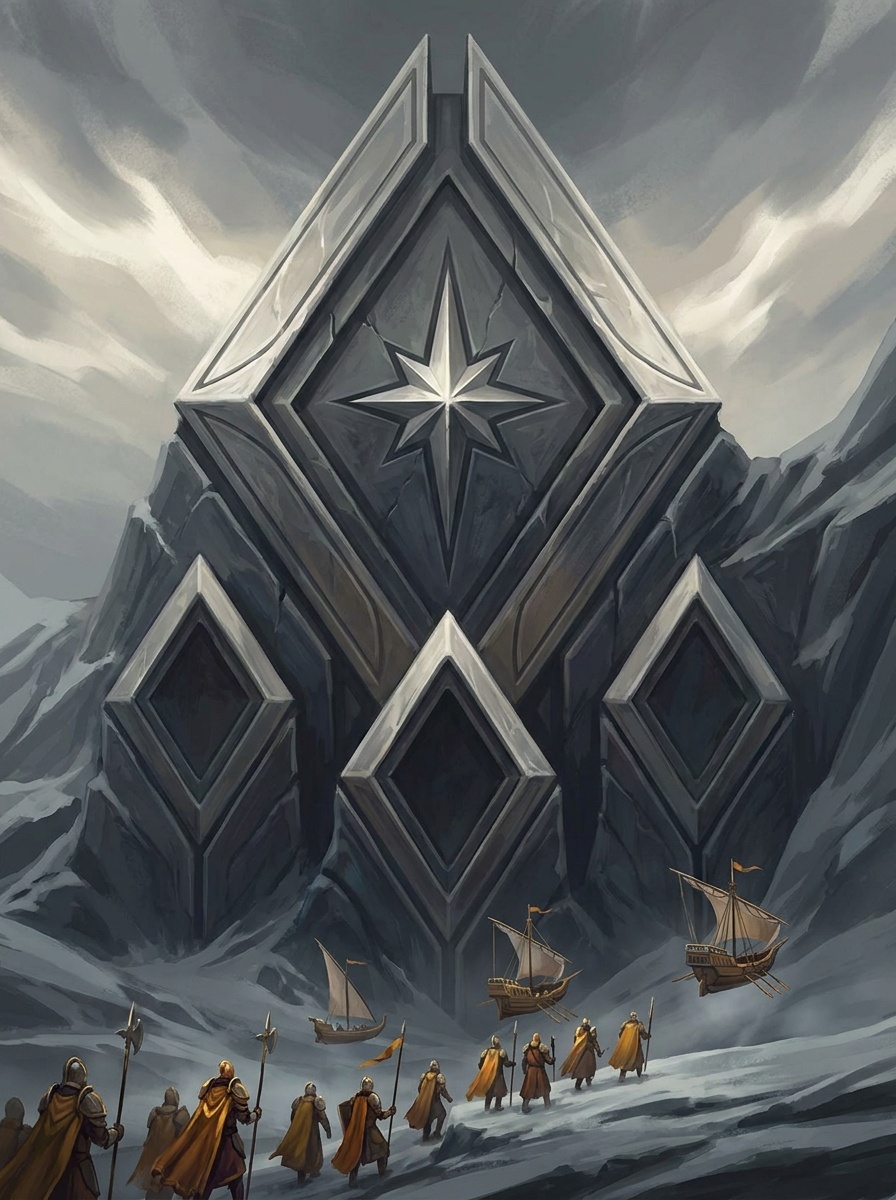
The most generative divine conflict in the setting is Echo versus Oshala: the two incompatible answers to the question of what an ordered community is for and who it belongs to. Every arc that runs through a city with both an Accord presence and an Oshalan Quarter is drawing from this conflict. Use it deliberately: the specific characters on each side are not abstractions. An Accord archivist who has been documenting the Order's expansion for fifteen years has opinions. An Oshalan registrar who genuinely believes the registry is civic service and is disturbed by what the Order has asked him to record has a conflict. Find the people inside the divine politics, and the divine politics will produce itself.
The infernal operations do not have a divine patron in the way Echo or Nyxollox does. They are parasitic on the legitimate divine economy, entities that have found a way to route soul coins around the intended system. This makes them resistant to the normal divine-conflict framing: they are not a faith with a theological position, they are a fraud with a business model. Run them accordingly. Their agents are not believers; they are professionals. Their contracts are engineered to be technically accurate and practically deceptive. Their escalation, when the party interferes, is operational rather than ideological: what is the cheapest response that neutralizes the threat?