Running Ix is not running a neutral world and waiting for the players to fill it. It is running a world with opinions, agendas, and a cosmological structure that has been grinding forward without the players for millennia. Your job is to play that structure honestly, including the parts that push back.
What Running Ix Is
An Ix campaign is a campaign about pressure. Not horror: the tone is competent people dealing with a world that has real stakes, not victims in a world designed to break them. The pressure comes from three places that never stop moving: the divine politics of the Shattered Domain, the soul economy that makes death matter in immediate and visible ways, and the planar geography that keeps the weird close to the surface of ordinary life.
Your job is not to engineer crises. The world generates them. The gods are active, the factions are moving, the rifts are opening and closing, infernal contractors are making agreements with desperate people, and the dead outnumber the living by a margin that grows every year. All of that is already in motion before the characters arrive. You are presenting a world that was here before the party and will continue after them unless they do something about it.
This is also not a grimdark setting. Characters can succeed, build relationships, earn genuine status, and leave the world better than they found it. The difference between Ix and an optimistic fantasy is that mattering costs something: not that mattering is impossible.
The GM's Three Jobs in Ix
Present the world honestly. When the players investigate, ask questions, hire sages, or consult priests, give them real answers. The world is knowable. The gods are not a mystery box. Factions have legible agendas. The cosmology has internal logic. A party that does the work of understanding Ix should be rewarded with genuine understanding, not with another layer of deflection. Secrets worth keeping come from the players' choices, not from the GM withholding setting material. If a character succeeds at a Hard Lore check about what Oshala wants from the province they're in, tell them. What Oshala wants is not a secret, what to do about it is the question.
Track the pressure systems. The gods are moving. Faction fronts are advancing or retreating. Infernal operations are in progress. The Spent accumulate near places where the dead are not properly managed. None of this waits for the players to engage with it. Your GM toolkit, faction clocks, divine agenda cards, planar pressure states, exists so you can track these systems without holding them all in your head. Chapter Six covers the tools. Use them before session one.
Play the world honestly when characters interact with it. When a character does something consequential, the world notices. When a god's cleric is killed, that god's agents investigate. When an infernal contract is broken, the counterparty sends a Pact Collector. When a soul passes without protection, the death-keepers note it. The players do not have to manage these consequences themselves: the world manages them. You are the world's proxy, not the players' antagonist.
What This Book Assumes
You have read the Ix Player Guide or will read it alongside this one. This book does not re-teach character creation, the dice system, or the rules the players use. It adds what the players' book deliberately withholds: the hidden agendas, the consequence systems, the faction machinery, and the full cosmological picture that gives player-facing public lore its backstory.
You have access to the Exodus NDS Core Rules for edge cases and extended mechanical reference. This book does not duplicate the core rules. It tells you how to apply them in an Ix context.
This book contains a starter adversary set adequate for the first chronicle and enough customization tools to build additional threats as the campaign grows.
How This Book Is Organized
Chapters Two and Three are the session-zero reads: how to run Ix and how to use divine politics as GM fuel. Read these before you build your first session.
Chapters Four through Seven are your pressure system references, soul coins, planar travel, faction clocks, relics. Read them when your campaign enters those domains or when a player's choices pull the relevant system to the front.
Chapters Eight through Eleven are the session tools: campaign structure, core rules reference, combat procedures, and a session walkthrough. Return to them as needed.
Chapters Twelve and Thirteen are practical starters: a first chronicle blueprint and a curated adversary set reprinted from the Ix Adversary Catalog, which is the canonical source for all Ix stat blocks, to get a campaign running without building everything from scratch.
A Note on Secrets
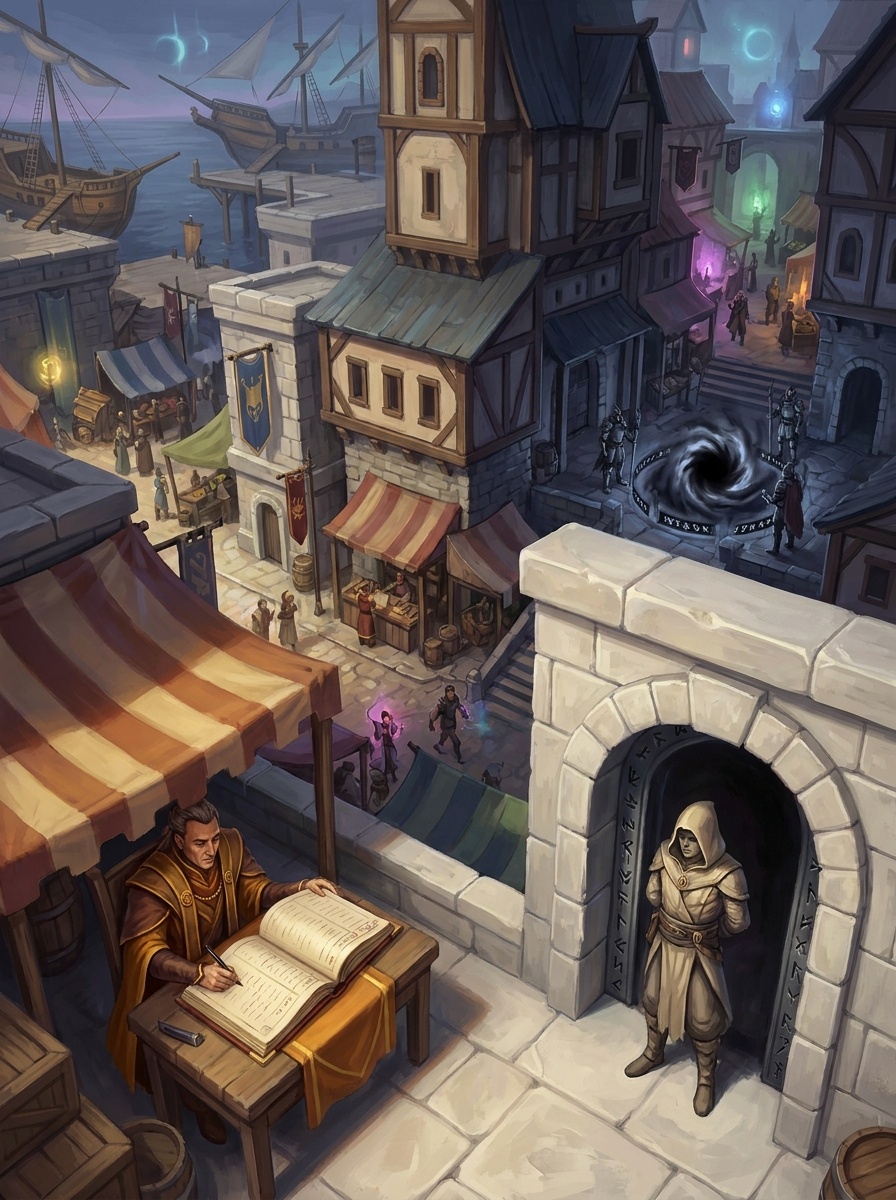
This book contains information players should not have before it arrives through play. The division is intentional and is labeled throughout. When a section is GM-only, it says so. When a section echoes player-facing material, it says that too.
Knowing what is behind a door changes what it means to open one. Do not hand this book to players who want to understand the setting better. Have them read the Player Guide's public cosmology chapters. If a player wants to know more about what the gods actually want, that is a campaign objective worth playing toward: not a reference lookup.